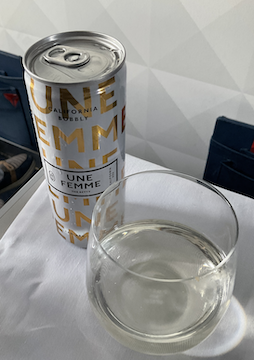
After a hiatus of two and a half years, Kathy and I returned to air travel. This time we were trekking to Portland with a stop in Minneapolis. We are meeting family to celebrate our 50th wedding anniversary. Being in a festive mood, I ordered a sparkling wine on the Baltimore to Minneapolis leg. A new arrival for Delta Airlines was the Californian Une Femme.
According to the can, the Une Femme wines are crafted by women winemakers to help improve the lives of women. Although in a can, this sparkling wine did not disappoint.
Multiple columns of tiny bubbles initially formed a centrifugal mousse on the wine’s surface. The sparkling wine, with 12% alcohol, had a straw color. Freshly baked bread aromas were also dominant on the taste. The wine also offered green apple on the taste. The finish was crispy. This sparkling wine can serve as an aperitif or pair with a myriad of dishes. I paired it with a lunch consisting of asparagus, chicken, cheese, olives, pesto and lettuce. It worked well with all the diverse entree offerings including the chick pea salad.
The Alto Adige wine growing region is located in Italy’s far north. The wine region includes low hills and high rises as well as various climates that include the Mediterranean climate and arid valleys.
This wine region includes 5,000 grape growers, who on the average, cultivate two and a half acres each. The elevations of the vineyards range between 650 and 3,280 feet. On average the regions experiences 300 days of sunshine. The vineyards are affected by warm air from the Mediterranean. It appears that the cold winds from the Alps are blocked from region by steep elevations.
The vineyard soils vary in composition and may include, mica, quartz, limestone, sandy marl and dolomite and volcanic soils. There are 400 wineries of which 12 are cooperative wineries. The coops produce 70 percent of the wine production. Cultivation of grapes takes place on 13,838 acres.
Approximately two-thirds of the wine production is white wine. The region cultivates 20 various grape varieties. The majority of grapes growing in the area include: Pinot Grigio, Gewurztraminer, Chardonnay, Pinot Blanc, Schiava, Pinot Noir, Lagrein and Sauvignon Blanc.
The Alto Adige DOC has several subzones including: Valle Isarco, Terlano, Meranese, S. Maddalena, Colli di Bolzano and Val Venosta.
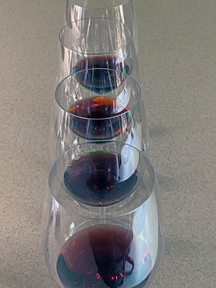
We were sent four samples, enough for a wine tasting, of four Schiava from four different producers in the Alto Adige wine region in Northern Italy. Schiava also know as Vernatsch.
During the wine tasting, “Terry asked, How do you entice Pinot Noir, Cabernet Sauvignon, Merlot or Syrah wine enthusiasts to drink Schiava.” The panel responded, “It is elegant. Schiava can be an alternative to a light bodied Pinot Noir. To show a new part of the wine world.”
Wines
Schiava from Alto Adige DOC, Italy
The 2020 Rottensteiner Kalterer See Auslese, Alto Adige DOC, was crafted from 100% Schiava grapes. The vineyard soil was composed of sand and sedimentary soils. The grapes were vinified in stainless steel tanks. This 12.6% alcohol wine had a translucent ruby color with a pink hue. Red berry fruits and mineral were noticed on the aroma. The taste included red raspberries. a hint of strawberries, minerals and baking spices. The wine had a medium body with mild tannins. The wine finish was fruity with some baking spices. The suggested retail price is $20.
The 2019 Gump Hof Vernatsch Mediaevum, Alto Adige DOC, was a translucent ruby color with a red hue. The Schiava grapes were grown in calcareous morainic soils. The wine was fermented and aged in stainless steel tanks. This 12.5% alcohol wine had an aroma of red berry fruits. The taste was reminiscent of red raspberries, red cherries and baking spices. The wine had a medium body with mild tannins. The crisp finish was fruity with a hint of baking spices on the aftertaste. This example of Schiava was very food friendly and can pair with breakfast, lunch and dinner meals. The suggested retail price is $24.
The 2020 Kurtatsch Sonntaler, Alto Adige DOC, was also crafted with 100% Schiava grapes. The grapes were grown in red sandy, loamy soil with dolomite, porphyry and clay minerals. The 12.5% alcohol wine had a translucent red color with a pink hue. The intense aroma offered red fruits. The taste included red raspberries, red cherries, a hint of strawberries and some baking spices. The wine had a medium/full body with mild tannins. It was suggested to serve the wine chilled to about 55º F. The finish was fruity. The suggested retail price is $29.
The 2018 Kellerei Bozen Moar, Alto Adige DOC, was a blend of Schiava 85% and Lagrein 15%. The grapes were grown on the slopes of Santa Maddalena in gravelly porphyry soils. The wine had an opaque dark ruby color and 13.5% alcohol. Red fruits were on the aroma whereas the taste reminded us of red raspberries, red cherries and baking spices. The wine had a medium full body with mild tannins. The finish had a nice blend of fruit and spices. The suggested retail price is $43.
All four wine samples were delicious and would make a great summer red for warmer temperatures. Consider chilling the wine and enjoy it as you would a rosé during the summer. Schiava is a good wine to use as an aperitif.
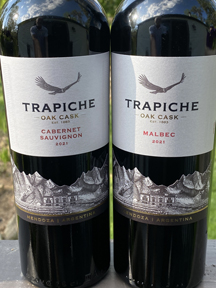
Recently, we received two wine samples from Trapiche Winery, one was a Malbec and the other a Cabernet Sauvignon. Trapiche Winery is well known for the Malbec wines it produces. Trapiche is located in Mendoza, Argentina. In addition to Malbec, Trapiche Winery also produces: Pinot Grigio, Syrah, Chardonnay, Cabernet Sauvignon, and Pinot Noir,
Trapiche Winery is more than a century old, as it was first established in 1883. In 2022, Trapiche vineyards are comprised of over 2,470 acres with grapes sourced from over 200 producers.
The wines produced by Trapiche are produced with sustainably grown grapes. Daniel Pi is the winemaker for Trapiche Winery.
Interestingly, the Trapiche Winery website includes information about the history of grapes noting that the Spanish conquistadors first transported grape varietals to South America in the 1700s. During the 1800s vineyards were planted in the Andes mountains foothills.
It is believed that Malbec arrived in Argentina in April 1853.
The grape industry suffered in the 1980s when the economy of Argentina collapsed. Then in the 1990s changes occurred including new technology and investment that allowed the wine industry to thrive.
When traveling to Argentina, consider a visit to the Trapiche Winery. Tours are offered every day.
Wines
Below are the wine notes for the two wine samples we received. Both wines retail for around $20. They would pair well with Memorial Day bar-b-cues.
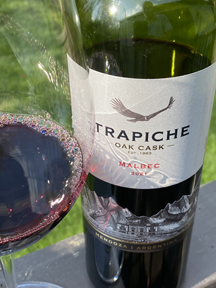
The 2021 Trapiche Malbec had an opaque dark violet color with a black hue. The color was highlighted with a dark ruby rim. The 13.5% alcohol wine was very aromatic. It brought back memories of a forest floor after a light summer rainfall. The aroma also was reminiscent of black fruits. On the taste black cherries were joined by black raspberries, violets, and an earthy background. On the finish the fruit yielded to baking spices.
The 2021 Trapiche Cabernet Sauvignon had a translucent dark ruby color with a violet hue. The young aroma expressed black fruits. The taste offered blackberries, cinnamon and cloves. The full bodied wine had medium tannins. On the finish, fruit yielded to baking spices. The 13.5% alcohol wine was aged in oak barrels for nine months.
Recipes from Trapiche
Be sure to check out the Trapiche Winery website for four special recipes. That include Sangria, Chicken Fajitas, Pork Carnitas and Guacamole. Perhaps one of these recipes along with a Trapiche wine would be perfect for celebrating Memorial Day.
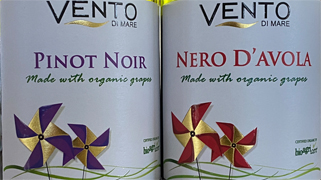
The 2021 football season is coming to an end on Sunday, February 13th with a clash between the Los Angeles Rams and the Cincinnati Bengals. For many, this is a day of parties and party foods. Chips, dips, finger foods, spicy relishes and a myriad of taste treats abound. What wine can pair with such a range of foods? We tasted two value wines from Sicily that would easily meet the Super Bowl party foods challenge.
The wines were made by the cooperative producer Cantine Ermes. The Pinot Noir and the Nero D’Avola were both in the Vento di Mare portfolio of value wines. Searching the net, both wines are priced in the low teens. For that price point you will experience easy drinking wines that are fruit forward from the aroma through the taste and onto the finish. Both wines range from medium to full bodied with mild tannins. They both would match with football party foods.
Both wines were crafted with organically grown grapes from the island of Sicily. The Pinot Noir reminded me of ripe red and black raspberries. The Nero D’Avola, a native red grape from Sicily, was reminiscent of red cherries and red raspberries.
If you have any left over wine, the next day is Valentine’s Day. These wines make excellent aperitifs and can pair well with pasta.
This week our focus is on the well-known grape variety Chardonnay.
Grape Variety: Chardonnay
Harvest of Chardonnay grapes
Species: Vitis vinifera
Chardonnay Styles: Chardonnay still wines are produced with oak and other Chardonnay still wines are unoaked. Chardonnay grapes are frequently used to produce sparkling wines. In the Champagne region, Chardonnay grapes are considered a primary grape for producing Champagne.
History: Dates back to the Middle Ages; research places the Chardonnay variety to have originated in France, particularly Burgundy.
Where it Grows: Chardonnay is well known in France, particularly Burgundy and Champagne. Chardonnay is also found in Italy, Chile, Australia, New Zealand, Argentina, Chile, Canada, South Africa and the United States.
Food to Pair: fruit, fish including salmon and halibut, crab, risotto, cheese, poultry
Interesting Tidbits:
In the Wine Trail Traveler book, …. We wrote, “When tasting a Chardonnay, first determine whether it has been aged in oak or in stainless steel. Then look for nuances in the wine including many types of fruit. Tasters may also note a buttery essence to the wine. Flavors of Chardonnay are influenced and dependent upon the climate where the grapes are grown.”
Note: ABC refers to people who enjoy wine but ask for “Anything But Chardonnay.”
Wine enthusiasts are often intrigued not only with the enjoyment of a well-made wine but are interested in knowing more about the makeup of a wine. To help people along the way, we have started writing short notes about wine grape varieties. This week the focus is on the ancient grape Pinot Noir.
Grape Variety: Pinot Noir
Domaine Lucien Jacob in Bourgogne
Species: Vitis vinifera
Pinot Noir Wine Styles: still wine, sparkling wine (especially champagne)
History: France is believed to be the origin of the Pinot Noir grape variety. The name Pinot Noir may have been from the French language. ( Pinot: pine and Noir: black)
Pinot Noir is an ancient grape variety that some claim dates back to the Ancient Romans in the 1st century. However, emphasis is placed on the mention of Pinot Noir in the 13th century.
The Pinot Noir grape is also related to Cabernet Sauvignon and Sauvignon Blanc. However; the parentage of Pinot Noir is unknown.
Where it Grows: Pinot Noir grapes enjoy cooler temperatures; this is one reason it grows well in Oregon, Burgundy and cooler parts of California, etc. Other areas we have visited that are important growers of Pinot Noir include Canada and New Zealand. The Pinot Noir grape is known to be difficult to grow partly due to the thin skin.
Synonyms we have come across: Pinot Nero (Italy) and Pino Crani (Croatia) When traveling wine enthusiasts may come across many other synonyms for Pinot Noir.
Food to Pair: Consider pairing a glass of Pinot Noir with pork, beef/veal, duck, salmon and mushrooms.
Interesting Tidbits:
Riedel, the producer of quality wine stemware has manufactured a special wine glass just for Oregon Pinot Noir. The top of the stemware is tulip shaped. Riedel also has produced a Burgundian Pinot Noir glass.
Did you know that August 18 was designated as Pinot Noir Day?
Wine enthusiasts are often intrigued not only with the enjoyment of a well-made wine but are interested in knowing more about the makeup of a wine. To help people along the way, we will be writing short notes about wine grape varieties. We are starting off with the grape Cortese.
Grape Variety: Cortese
Species: Vitis vinifera
Cortese Wine Styles: still white and rosé wines, sparkling wines
History: One source notes that Cortese was inventoried in 1614 at a castle cellar. Other sources date Cortese back to the mid 1600s; 1659 (in a document)
Last week I wrote a Prosecco blog about the delightful online Prosecco presentation we participated in earlier this summer. Below is a description of five wine samples we received for the online presentation.
It is interesting to note that while we conducted a wine tasting this past weekend, some of the participating wine tasters were discussing their preference for sparkling wines. Several mentioned that they prefer Prosecco over Champagne. Terry and I enjoy any sparkling wines that are well made. The Prosseco wines we enjoyed for the presentation were well-made wines
Below is a description of the five Proseccos we tasted. Terry also wrote a haiku for each wine.
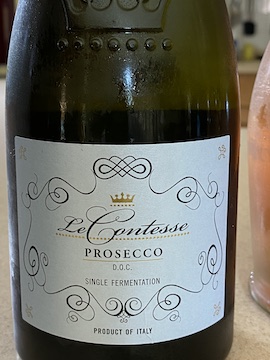
Le Contesse Prosecco DOC Treviso Brut
Produced with Glera grapes
Suggested Use: as an aperitif
Also pair with fish dishes
Serving temperature: 6-8C (42.8 – 46.4F)
Haiku:
Vibrant Prosecco Apples, pears, yellow citrus Await the palate.
Wine Trail Traveler Tasting Notes: The Le Contesse Prosecco DOC Treviso Brut had a light yellow color with light green hue. Multiple columns of small bubbles formed a circumferential mousse on the wine’s surface. The 11% alcohol Prosecco had an aroma that was fruity. The lively mouthfeel offered green apples, pears and citrus. There was a hint of freshly baked bread. The finish was crisp and cleansing. We used this Prosecco as an aperitif.
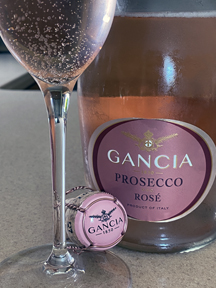
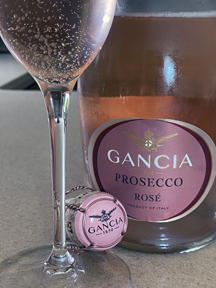
Gancia Prosecco Doc Rosé Millesimato 2020 Extra Dry
Grape varieties: Glera and Pinot Noir
Use as an aperitif
Pair with appetizers, risotto and vegetables, couscous, fish and meat
Also serve with raw fish, seafood and cheese
Serving temperature: 8-10C (46.4 – 50.0F)
Haiku:
Prosecco Rosé Lively in glass and mouthfeel Creamy berry fruits.
Wine Trail Traveler Tasting Notes: The Gancia Prosecco Doc Rosé Millesimato 2020 Extra Dry had a pink color with light orange hue and 11% alcohol. Multiple columns of small bubbles formed a total surface mousse on the wine’s surface. This rosé was crafted with mostly Glera grapes and a bit of Pinot Nero (Pinot Noir) for color. The aroma reminded us of red berry fruits. The creamy and lively mouthfeel added to the red raspberry and strawberry notes. Although the wine had 17 g/L residual sugar, it seemed drier. The finish was crisp and fruity. Although we started the wine as an aperitif, we also paired it with baked chicken and vegetables.
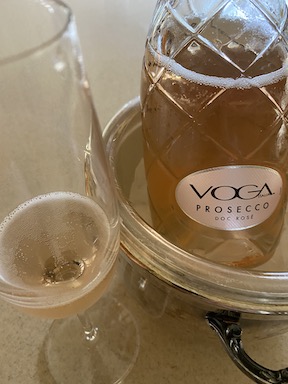
Voga Prosecco DOC Rosé Extra Dry Millesimato 2020
Produced with Glera (90% and Pinot Nero (10%)
Pair with appetizers, white meats or an an aperitif
Also can be used for cocktails
Haiku: Columns of bubbles Rise pinkish colored surface New festive rosé.
Wine Trail Traveler Tasting Notes: The Voga Prosecco DOC Rosé Extra Dry Millesimato 2020 had a salmon color with pink hue. The 11% alcohol wine had multiple columns of small bubbles forming a central and circumferential mousse on the wine’s surface. The rosé Prosecco was composed of 90% Glera and 10% Pinot Nero. The aroma included apple and red berry fruits. The lively mouthfeel was accompanied with notes of apples, red raspberries, citrus and a faint hint of freshly baked bread. The finish was crisp and palate cleansing. We drank this rosé Prosecco with friends using it as an aperitif.
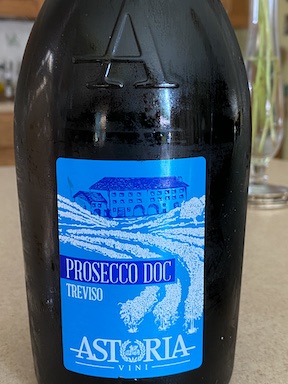
Astoria Prosecco DOC Treviso Extra Dry
Produced with Glera grapes
Serving temperature 6-8 C (42.8 – 46.4)
Haiku: Creaminess mouthfeel The sparkling Glera dances Aperitif for all.
Wine Trail Traveler Tasting Notes: The Astoria Prosecco DOC Treviso Extra Dry had a light yellow color with a green hue. Multiple columns of bubbles formed a central and circumferential mousse on the wine’s surface. The 11% alcohol wine, crafted entirely of Glera grapes had a slight aroma that offered fruit and flowers. The mouthfeel was very creamy with notes of apple and citrus. The finish was crisp with fruit yielding to a bit of mineral. We used the wine as an aperitif shared with friends.
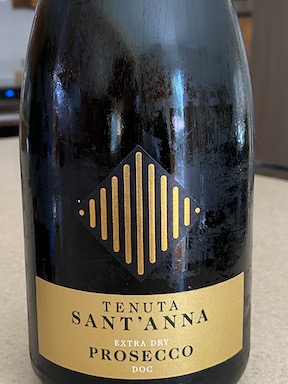
Tenuta Sant’Anna Prosecco DOC Extra Dry
Produced with 100% Glera
Serve with appetizers and starters involving light cold cuts and cheeses
Serving temperature: 6 – 8C (42.8 – 46.4)
Haiku:
Lively and creamy Santa Anna Prosecco Brings on a smile.
Wine Trail Traveler Tasting Notes: The Tenuta Sant’Anna Prosecco DOC Extra Dry was crafted entirely with Glera grapes. The 11% alcohol Prosecco had a straw color. Multiple columns of small bubbles formed a central and circumferential mousse on the wine’s surface. The intense aroma offered flowers and fruit. The mouthfeel was both lively and creamy. The taste reminded us of peaches, green apples and citrus. The finish was crisp and fruity.
If you have not tried a Prosecco sparkling lately, be sure to look for Proseccos at your local wine store. When shopping for Proseccos be sure they are authentic Proseccos with the government seal.
In mid-July 2021, we took part in an online Prosecco presentation and tasting. This online presentation, that focused on Prosecco, was one of the best wine/winery presentations in which we have participated. The slides used for the presentation and the information conveyed were clear and concise.
The first screen image of the presentation showed the geographical Prosecco region, that is in northeast Italy.
The vast majority of the Prosecco vineyards are flat with only 7% located on slopes. Vineyard soils consist of sand, stone and calcareous.
Grape varieties allowed in the production of Prosecco include: Pinot Nero, Glera, Perera Verdiso and Bianchetta Trevigniana
We found the history of Prosecco to be very interesting as it dates back to 1382 when the wine was produced in the Trieste district within the city of Prosecco. Another screen image also noted that at the beginning of the 16th century “Pietro Bonomo studied Pliny’s Naturalis History (23 – 79 CE) & found the mention of a “Pucin” wine, the ancient Prosecco.
Later, in 1754, ‘Prosecco’ was noted as being produced in Friuli Giulia and Veneto. However it was in the 1800s that Professor Antonio Carpené and Professor Tullio De Rosa created a Prosecco sparkling wine.
More than a century later, in 2009, Prosecco DOC was recognized. The Prosecco D wine characteristics as well as labeling and presentation.
The development of a Prosecco Rosé began and was approved in 2020.
Today every bottle of Prosecco DOC and Prosecco DOC Rosé has a government seal.
Prosecco By the Numbers
24,450 hectares
11,460 grape growers
1,192 wine producers
347 sparkling wine houses
This results in 483.5 million bottles of Prosecco DOC. Recent figures show 16.8 million bottles of Prosecco DOC Rosé produced which is expected to dramatically increase in 2021.
77.8% of Prosecco is exported to countries including the United Kingdom, United States, Germany and France.
Prosecco is a delightful sparkling wine which is now also available as a rosé. Watch for a review of six Prosecco wines next week.
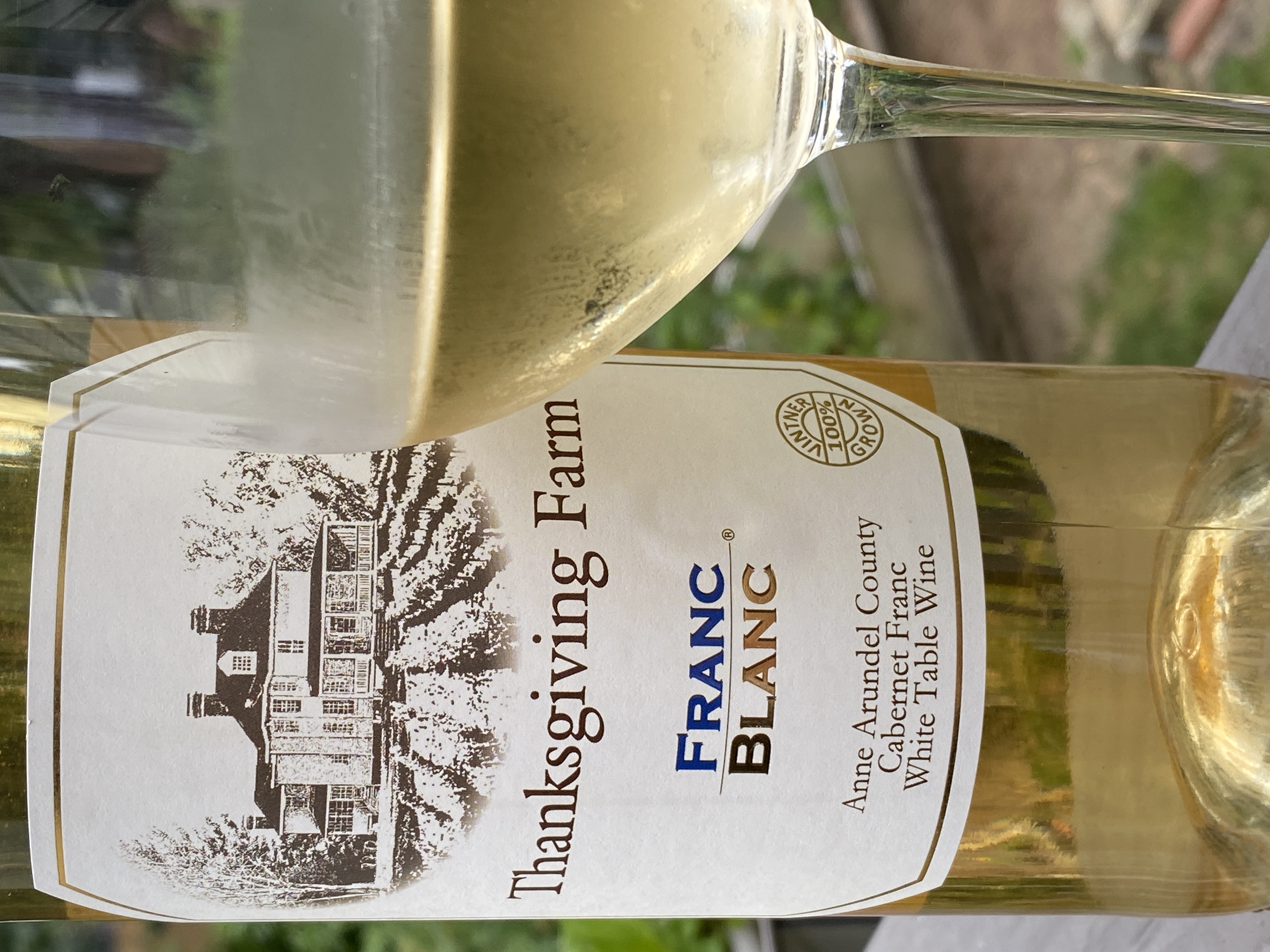
On Sunday, the last day of August, we made our first visit to a winery since the pandemic began. We were in search of a white wine produced with red grapes that we needed for a wine tasting class later this month. In addition to red and white wines, Thanksgiving Farm Vineyards & Winery emphasizes safety for visitors. To achieve that goal reservations are required and other safety/sanitary protocols are in place.
A unique Cabernet Franc Wine
While we had been there a few years ago, we were excited to make a return visit. We met Maureen Heimbuch who co-owns Thanksgiving Farm with her husband, Doug. The boutique tasting room remains the same with only the addition of a plexiglass-type screen. Due to Covid no wine tastings are offered at this time. Visitors may purchase a wine kit or bottle of wine to enjoy at a table outside.
Directly outside of the tasting room doors are several tables set up for visitors. A new addition since we had previously visited was the seating on the veranda of the historic home, near the tasting room. The white veranda wraps around the historic house. The veranda is large enough to accommodate several spaced out small seating arrangements. It is a very relaxing and delightful way to enjoy on a Saturday or Sunday afternoon.
Veranda at Thanksgiving Farm
While we enjoyed the wines and relaxing views of the vineyards, we watched swallowtail butterflies flitting about the butterfly bushes planted nearby.
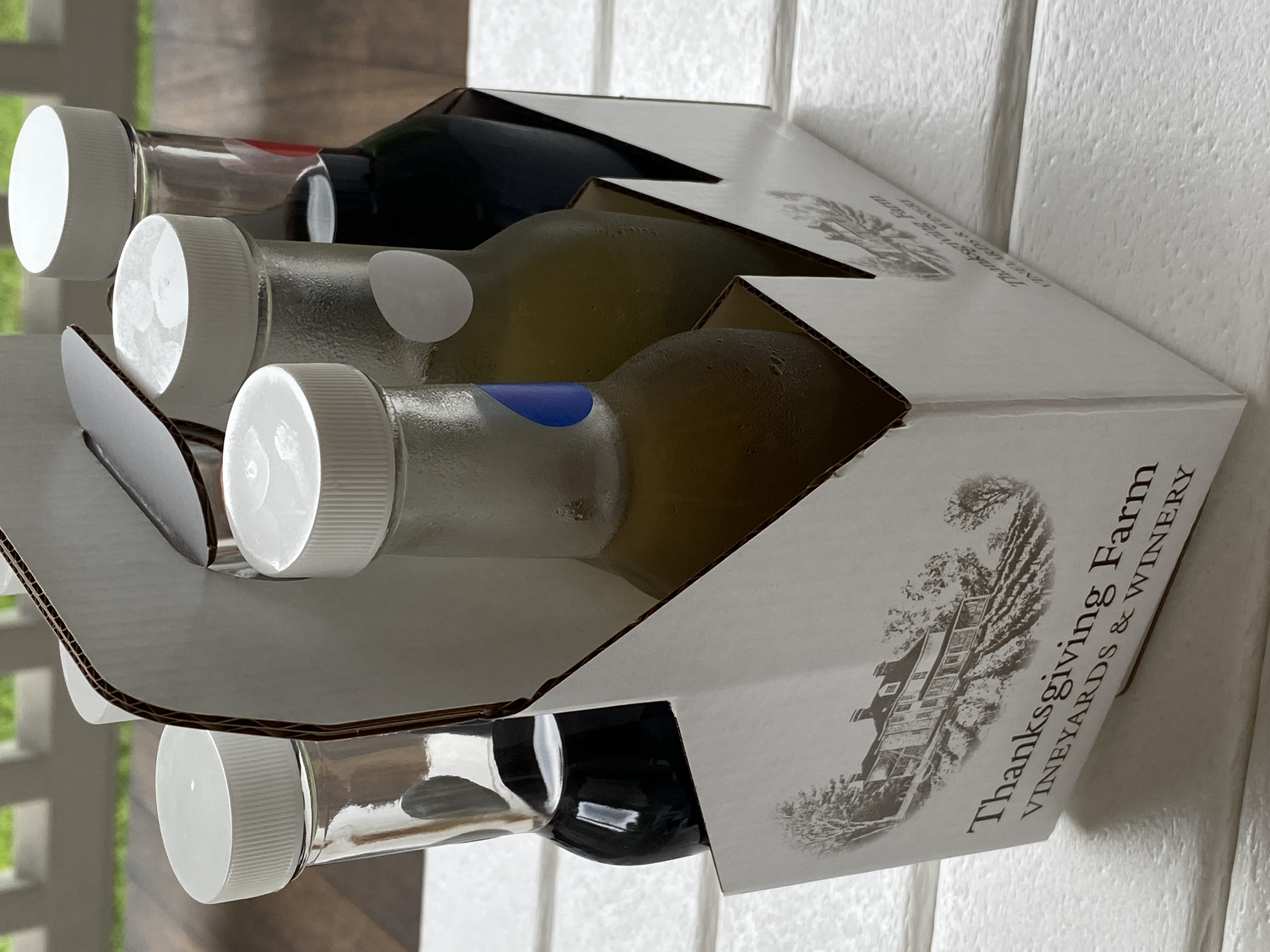
Maureen offered us a wine kit with six bottles of wine, accompanied with small pretzel packages and bottles of water. Rather than the typical wine tastings offered to visitors, due to Covid, Thanksgiving Farm changed to small six packs of their wines available for sale. At this time the six pack of wines consisted of two whites and three reds and a dessert wine. Each bottle holds 5 ounces of wine. Each six pack is enough for up to four people. The $45 price for the six pack includes tax.
Thanksgiving Farm Wines
Maureen guided us to a seating area on the veranda which overlooked a large lawn leading to a vineyard in the distance. At this time of the year the grapes are covered with white netting protecting them from birds. As we enjoyed the wines in the six pack, we watched a bird of prey glide over the vineyards, thus protecting the grapes from small birds or voles.
Good to Know About Thanksgiving Farm
Registrations are suggested. The winery is open most Saturdays and Sundays. Seatings are currently available from 12 to 2 and 3 to 5. The one hour between seatings is used to sanitize the tables and chairs. Currently only those over 21 are allowed on the property. Thanksgiving Farm wines are available at the winery in Harwood and in Anne Arundel County, Maryland wine shops. The winery also ships wine to the District of Columbia and Florida.
-1.5in.jpg)


 The 2021 football season is coming to an end on Sunday, February 13th with a clash between the Los Angeles Rams and the Cincinnati Bengals. For many, this is a day of parties and party foods. Chips, dips, finger foods, spicy relishes and a myriad of taste treats abound. What wine can pair with such a range of foods? We tasted two value wines from Sicily that would easily meet the Super Bowl party foods challenge.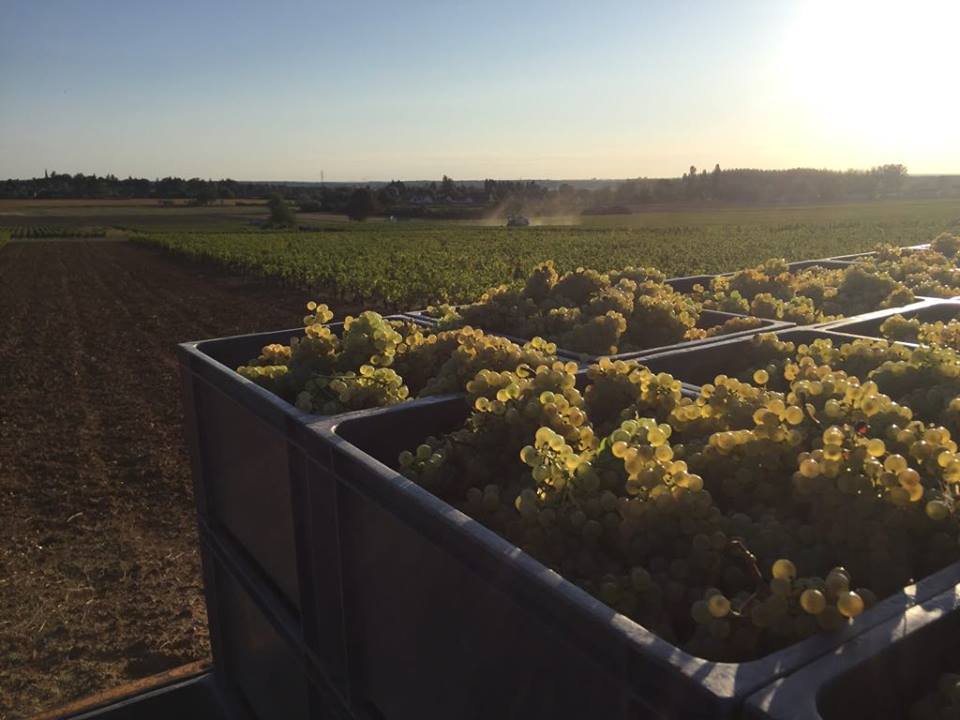

Wine Sip Notes: Pinot Noir
Wine enthusiasts are often intrigued not only with the enjoyment of a well-made wine but are interested in knowing more about the makeup of a wine. To help people along the way, we have started writing short notes about wine grape varieties. This week the focus is on the ancient grape Pinot Noir.
Grape Variety: Pinot Noir
Species: Vitis vinifera
Pinot Noir Wine Styles: still wine, sparkling wine (especially champagne)
History: France is believed to be the origin of the Pinot Noir grape variety. The name Pinot Noir may have been from the French language. ( Pinot: pine and Noir: black)
Pinot Noir is an ancient grape variety that some claim dates back to the Ancient Romans in the 1st century. However, emphasis is placed on the mention of Pinot Noir in the 13th century.
The Pinot Noir grape is also related to Cabernet Sauvignon and Sauvignon Blanc. However; the parentage of Pinot Noir is unknown.
Where it Grows: Pinot Noir grapes enjoy cooler temperatures; this is one reason it grows well in Oregon, Burgundy and cooler parts of California, etc. Other areas we have visited that are important growers of Pinot Noir include Canada and New Zealand. The Pinot Noir grape is known to be difficult to grow partly due to the thin skin.
Synonyms we have come across: Pinot Nero (Italy) and Pino Crani (Croatia)
When traveling wine enthusiasts may come across many other synonyms for Pinot Noir.
Food to Pair: Consider pairing a glass of Pinot Noir with pork, beef/veal, duck, salmon and mushrooms.
Interesting Tidbits:
Enjoy a glass of Pinot Noir soon!
Kathy