September 14, 2010 – 5:22 pm
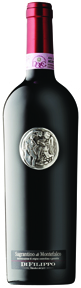 Had an opportunity to taste a 2006 Sagrantino di Montefalco DOCG from Di Filippo Winery in Cannara, Italy. I was searching for a wine with outrageous tannins. My scale of tannins range from zero tannins, to mild tannins, medium tannins, bold tannins and then outrageous tannins. There are also harsh tannins that are a bit of a negative. Aging often takes care of the harsh tannins. I’ve grown to like wines made from the Tannat grape, a black inky wine with those outrageous tannins. Now, I found another grape that has a purple inky color with outrageous tannins.
Sagrantino is an Italian grape indigenous to the Umbria region of Montefalco. Although there is small to no success in growing this grape elsewhere, it is home to the hilly area of Montefalco. The soils in these vineyards are sand, limestone and clay. Although this variety is relatively unknown, make an effort to check it out.
The aroma and tastes offer plum and cinnamon. The finish has outrageous tannins. One can feel the tannins on your teeth as your lips begin to pucker. This is a great wine paired with beef dishes.
Cheers,
Terry
September 14, 2010 – 3:51 pm
I’m from Michigan and probably biased when it comes to Riesling. In my opinion, some of the best Riesling in the world comes from Old Mission Peninsula. Yesterday, I tasted several Rieslings from grapes grown on OMP. The first Riesling was from 2 Lads Winery. This 2009 Riesling had a faint yellow color with a floral aroma. The taste was complex reminding me of a fruit salad. Some of the fruits in the mix included apple and peach with a hint of citrus. The wine finished fruity, slightly sweet with some citrus. The wine did not have the minerality associated with some of the Rieslings from New York’s Finger Lakes region. However this is not a negative for those who don’t like mineral Rieslings.
The next Riesling tasted was a Chateau Chantel semi-dry Riesling 2009. Although there was a slight floral aroma, the aroma was predominately peach. Peach was also the predominant fruit on the taste although there were hints of apple and a faint trace of minerality. The crisp finish was fruity. At Black Star Farms, Old Mission winery, the Arcteeros Riesling also had a floral and peach aroma. The peach taste was followed by a slightly sweet aftertaste accompanied by fruit. There was just a hint of effervescence that enticed the tongue.
I enjoyed these Rieslings and look forward to tasting Rieslings on Leelanau Peninsula.
Cheers,
Terry
September 14, 2010 – 8:12 am
It takes about five hours to drive from the Detroit, Michigan area to Old Mission Peninsula where there are about a half dozen wineries to visit. We visited Old Mission Peninsula early in 2008 and decided to make a return visit to Old Mission and its next-door neighbor Leelanau Peninsula. On the first day of our visit we stopped at Chateau Chantal where a large addition is being completed. The addition will enlarge the tasting room, provide a patio and increase the size of the winery. Expected completion will be October 2010.We stopped at the Black Star Farms site on Old Mission. Not as large as the main Black Star Farms on Leelanau Peninsula, this satellite winery has 88 acres of vineyards, a large tasting room and a good size winery operation. We visited with Chris at Two Lads Winery. This is one of the newer wineries on Old Mission Peninsula. Visitors will discover a winery that focuses on red wines although they also have some delicious white wines. The Two Lads facility has a modernistic facility and has made use of vibrant colors.
At this time of year, the Old Mission Peninsula winemakers are waiting for grapes to fully ripen and reach the brix levels needed for producing good wine. It won’t be long.
Consider visiting Old Mission Peninsula this fall. A couple of wineries have lodging including the delightful Chateau Chantal where the rooms are decorated with colors based on the reproduction paintings used in the rooms. Of course there are plenty of lodging sites available on the mainland in Traverse City.
Cheers! Kathy
September 13, 2010 – 9:11 am
Last night we had the opportunity to enjoy dinner at an upscale restaurant in Detroit. Despite the economy, Detroit is home to numerous excellent restaurants. Our host ordered a bottle of wine from Cakebread Cellars and a Caymus Cabernet Sauvignon. As to be expected both were very good wines but I preferred the Cakebread Napa Valley Cabernet Sauvignon 2006. This wine with 14.2 percent alcohol had lots of black fruit nuances on the taste and it offered a smooth mouth feel. This Cab had been aged in French oak for 20 months. The wine was a blend of Cabernet Sauvignon, Merlot, Cabernet Franc and Malbec.
Cheers! Kathy
September 12, 2010 – 9:24 am
Destin Charity Wine Auction Foundation (DCWAF) is an organization that benefits charities. It is located on the Emerald Coast of Florida (Panhandle of Northwest Florida.) According to the charity’s website the “sole purpose is to raise money for children in need through wine events.”
Several charities benefit from DCWAF’s fundraisers. These include Children in Crisis, Inc., Ronald McDonald House Charities, Sacred Heart Hospital on the Emerald Coast, Children’s Volunteer Health Network, and The Mattie Kelly Arts Foundation. Visit the DCWAF website to learn about these charities and others.
The DCWAF supports these charities through special events throughout the year. Events are wine related. The next two events this year are the Blind Wine Voyage on September 30. This Blind Wine Tasting Competition will take place on the SunQuest Cruise’s Solaris Yacht. For details visit the website. November 4 – 7 will be the Taste of the Beach. A variety of events will take place during these four days. For details of these events visit Taste of the Beach online.
If the opportunity arises wine enthusiasts may want to participate in some of the events sponsored by Destin Charity Wine Auction Foundation.
Cheers! Kathy
September 11, 2010 – 9:15 am
If you have pears and a bottle of Riesling on hand, you may want to try this recipe this weekend. The recipe can be prepared in advance as the pears can keep up to a week in the refrigerator. Enjoy!
Cheers, Kathy
California Riesling and Barlett Pears
Ingredients
1/4 of a lemon
1 750 mL bottle of California Riesling
1 3-inch piece of fresh ginger, peeled and sliced
1 c (250 mL) granulated sugar
4 T (60 mL) honey
3 ripe but firm California Bartlett Pears, peeled, halved and cored
Directions
- Squeeze the juice from the lemon into a medium-sized pot and add the Riesling, fresh ginger, sugar and honey. Place on high heat and bring ingredients to a boil, stirring frequently.
- Peel, halve and core the pears.
- When the mixture reaches a boil, place the pear halves into the liquid and cover the pot with a piece of parchment paper.
- Cook just until the pears are tender. To test, poke the pears with a sharp knife. If the knife slides in and out easily, the pears are cooked.
- Remove the pot from heat and allow pears to cool in the poaching liquid. If you’re concerned that the pears are too soft, remove them from the liquid and allow the liquid and pears to cool separately.
- Once the liquid has completely cooled, pour it over the pears. The pears can be stored in their poaching liquid for up to one week in the fridge.
These pears are delicious with a variety of cheeses.
Recipe provided by California Pears.
Website
September 11, 2010 – 8:15 am
I was a bit nervous having others taste the wine we recently bottled. I knew it was better than plonk, but would others agree. It was tested last night when we opened a bottle of the Cabernet Sauvignon/Merlot a 90/10 blend and a bottle of the Cabernet Sauvignon/Tannat an 80/20 blend. Both wines were recently bottled and curiosity got the better of us so we decided to have these two wines with dinner at Bucci Ristorante in Grosse Pointe Woods, Michigan.
Both Bucci and his wife Shpresa, along with my brothers tasted the wines and passed judgment. Bucci has a great palate and my brother, Tim, has a California Cabernet Sauvignon palate. The verdict was surprisingly good. Just because I liked a wine doesn’t mean that others would like it.
My brother, Todd and his wife Vicki liked the Cab/Merlot blend. This wine has mild tannins, light to medium body and a black fruit and spice taste. The wine is drinkable now however should be bottle-aged for some time.
The Cab/Tannat, however, was the clear winner for the evening. It too offered black fruit and spice taste, however there were more layers on the taste. There were bold tannins that Bucci, Shpresa, Tim as well as Kathy and I liked. Although this wine can benefit from bottle aging it is quite good now. It matched well with food. I recalled that a few California winemakers said that blending Cab and Tannat was not a good idea. That touch (20 percent) of Tannat bumped up the tannins and darkened the Cab a bit. The blend seemed to be married well. The Cabernet Sauvignon was sourced from Lake County while the Tanat was sourced from Virginia.
Although Kathy and I decided to make wine to improve our wine writing and interviewing, now we are faced with a decision of whether to continue to make wines. It’s motivational to hear positive comments about a wine from people who have a good palate for wine.
Cheers,
Terry
September 10, 2010 – 9:37 am
This week we visited an Ohio winery that has an intriguing beginning. The Gammie family owned the land during the Depression. At that time they grew vegetables. They discovered that the property located near Lake Erie was ideal for orchards. A small friendly fruit and vegetable market was thriving on the day of our visit.
Nearby a modern style tasting room and winery overlooks orchards and vineyards. This is the result of added value farming. In the distance there is a view of Lake Erie. Mac McLelland and Bill Gammi are co-owners of Quarry Hill Winery, a partnership that began in 2004.
Last night I began thinking about how nice this was that with the addition of the vineyards and winery, it is unlikely that this land will be developed with homes on ¼ acre lots, apartments or condos or perhaps even strip malls and the like.
Terry reminded me that when we visited wineries in Wisconsin, we had come across another winery with vineyards that had begun as an orchard and fruit market. Orchard Country Winery & Market is located in Fish Country, Wisconsin.
I remember that back home we had enjoyed visiting a nearby orchard where one could pick your own peaches. Does anyone remember Sewell’s Orchards? It didn’t last long as developers were quick to discover this property and develop it with housing. Today as one drives past the development one sees lovely homes with green grass but what was lost to the thousands who visited Sewell’s Orchards to pick peaches, apples and strawberries. Does a small green space make up for the loss of the experience of enjoying freshly picked fruit on a warm summer’s day? I don’t think so.
If you have an orchard near you, work to make it worth keeping as an orchard. One of the ways for orchards to remain without succumbing to development is to encourage vineyards to be planted and adding a winery.
Cheers! Kathy
-1.5in.jpg)


Local Wines in Restaurants- Why Not?
This week we stopped for dinner at a restaurant in Suttons Bay, Michigan. Suttons Bay appears to be a thriving small town on the edge of Grand Traverse Bay. There are numerous wineries on the Leelanau Peninsula and all are within driving distance of Suttons Bay.
Since we had been visiting and tasting wines in the area, at the restaurant we opted not to have wine with dinner. However, I was interested in the wine list. A full page of wines listed approximately 21 wines. Only three of these wines were from Leelanau Peninsula. The other wines were from California, Argentina etc.
With so many good wines produced in Michigan, why does a local restaurant feel the need to represent the whole world? It’s a good idea to have some other wines on the menu but shouldn’t a larger number of Michigan wineries be represented on the wine list? It’s all about agri-tourism. If we wouldn’t have been visiting wineries, we would not have been in Suttons Bay for dinner or to purchase gasoline. Both the restaurant and the gas station benefited because we were visiting wineries.
I like what the Michigan Grape & Wine Industry Council has done to help make a point about restaurants offering local wines. The Council has made available cards that say, “The meal was fine but would have been better if accompanied by a Michigan wine.”
If you support the drink local movement, then consider printing or writing a similar and friendly card for restaurants in your state that do not have local wines on their wine list.
Note: Wine Trail Traveler has a Facebook page. You can visit it here: Wine Trail Traveler Facebook Page.
Cheers! Kathy