About     FAQ     Contact      Advertise With Us      Press   

National Almond Day is February 16

It’s National Almond Day!

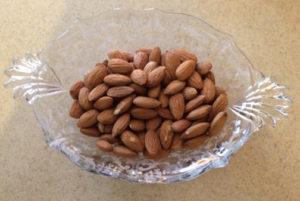
Today, February 16, is National Almond Day! Did you know that a large percentage of almonds are grown in California?

Almonds are used in numerous recipes. Almonds are also said to offer a variety of health benefits. To discover the history of almonds and its many attributes visit the National Almond Day website.


Below is a recipe from J Vineyards in California. The recipe requires almonds and Pinot Noir.

Cheers! Kathy

Chocolate Almond Shortbread with Pinot Noir Dried Bing Cherry Puree

Serves 65 cookies 1-1/2 inch each.

Ingredients

Chocolate Almond Shortbread:

8 ounces butter (at room temperature)
2 ounces granulated sugar
1 ounce powdered sugar
1 ounce cocoa powder
1 teaspoon vanilla
½ teaspoon salt
8 ounces all purpose flour
1 ounce chopped almonds

Pinot Noir Dried Bing Cherry Puree:

8 ounces dried Bing cherries (or other Fruit)
4 ounces J Pinot Noir
2 ounces water

Method

Chocolate Almond Shortbread:

In mixer on low speed blend butter, sugars, cocoa, vanilla and salt. Then add flour, and nuts. Roll out dough between two pieces of parchment paper to 1/8 of an inch.

Chill dough in refrigerator for one hour; this will make it easier to cut into desired shapes.

Bake 350º for 8-10 minutes.

Pinot Noir Dried Bing Cherry Puree:

Combine all the above in small saucepan and bring to a boil, then adjust heat to low and cook until cherries are soft, about 10 minutes. Pour into blender and puree.

Allow mixture to cool then place in a pastry bag for piping.

Cheers!
Kathy

Wine Importers Should Consider Wines from Domaine Ricardelle de Lautrec

Domaine Ricardelle de Lautrec Cabernet Sauvignon 2015

Domaine Ricardelle de Lautrec is a wine producer in France’s Languedoc Roussillon region. The winery is known for producing natural wines.

The winery has 50 hectares (123 acres)of vineyards. According to the winery website, the old Roman road (Via Domitia) crosses the vineyards. The Mediterranean influences the vineyards. The soils in the vineyards consist of gravel and clay-limestone. The summers are hot and the winters are cold. The red grape varieties growing in the Domaine Ricardelle de Lautrec vineyards include: Pinot Noir, Cabernet Sauvignon, Merlot and Caladoc. Caladoc is a cross between Malbec and Grenache. White grapes are Chardonnay, Muscat, Sauvignon Blanc and Viognier.

Lionel Boutié, a member of a fourth generation wine family, decided to farm the vineyards organically. The vineyards are labeled with AB certified by ECOCERT as well as the European Bio logo. The Domaine’s website notes: “Working in organic farming is above all a way of life. It is respect for the land, the product, the winemaker and the consumer.”

Wines produced by Domaine Ricardelle de Lautrec include: Muscat Sec, Sauvignon Blanc, Chardonnay, Viognier, Syrah, Pinot Noir and  Cabernet Sauvignon. The winery also produces several blends.

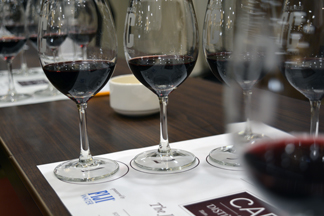
At the APVSA, Association for the Promotion of Wines and Spirits in North America, wine event earlier this year, I tasted two of the Domaine Ricardelle de Lautrec organic red wines.

The Ricardelle de Lautrec IGP OC Pinot Noir Red 2015 was a translucent red purple color. The wine offered red fruit notes and lots of tannins. The finish had tannins and wine had a long aftertaste.

Cabernet Sauvignon Organic Red 2015, with 13.5% alcohol, was a translucent dark red color. This dry wine offered notes of fruit particularly black fruit. There were notes of tannins. The wine had a long aftertaste. Domaine Ricardelle de Lautrec recommends matching this wine with roast beef, lamb or a plate of charcuterie.

Wine importers will want to consider wines from Domaine Ricardelle de Lautrec.

Cheers,
Kathy

Spiced Chocolate Cake with Macerated Berries Recipe

St. Francis Winery & Vineyards

This Spiced Chocolate Cake With Macerated Berries recipe is from St. Francis Winery & Vineyards in Sonoma, California. The recipe calls for 1/2 cup of St. Francis Port. The winery suggests matching this dessert with Zinfandel. If you have the time and are ready to bake a cake for Valentine’s Day, this might be a great one to try. Of course, this cake would be delicious any day of the year!

Spiced Chocolate Cake With Macerated Berries


Ingredients

14 ounces bittersweet or semisweet chocolate, chopped
1 ¼ cups unsalted butter
2 teaspoons ground cardamom
1 teaspoon ground cinnamon
½ teaspoon ground cloves
½ teaspoon ground white pepper
6 large eggs
6 large egg yolks
2 teaspoons vanilla extract
3 cups powdered sugar
1 cup all purpose flour
¼ cup granulated sugar
1 cup fresh blackberries
1 cup fresh raspberries
½ cup St. Francis Port
additional powdered sugar

Preparation

Place berries in a small bowl with granulated sugar and port. Gently toss all ingredients together, cover and store in refrigerator for at least one hour. The berries may be done up to four hours ahead of time. Generously butter eight ¾ cup soufflé dishes. Stir chocolate, butter, cardamom, cinnamon, cloves, and white pepper in a bowl, set over steaming water, until melted and smooth. Cool slightly. Whisk eggs, egg yolks, and vanilla in large bowl. Add in 3 cups powdered sugar, then chocolate mixture, then flour. Transfer batter to prepared dishes, filling to top and dividing equally. (Can be made 1 day ahead, cover and refrigerate.) Preheat oven to 425°F. Bake cakes until batter has risen above dish, top edges are dark brown, and centers are still soft and runny, about 15 minutes, or about 18 minutes for refrigerated batter. Run small knife around cakes to loosen. Allow cakes to rest in dishes 5 minutes. Using hot pad and holding dish very firmly, place plate gently atop 1 cake and invert onto plate. Repeat with remaining cakes. Dust with powdered sugar. Spoon the macerated berries onto each plate being sure to include some of the juices with each scoop of berries. Add your favorite vanilla ice cream for an even more decadent dessert.

Recipe provided by St. Francis  Winery & Vineyards in Sonoma, California.

Cheers!
Kathy

How Wine Enthusiasts Can Make the Most of Lent Part 3

This is the third part of a series where we are making suggestions for what you can give up for Lent if you are a wine enthusiast who observes Lent. However, as we worked on this series, these items may be good to give up permanently whether you observe Lent or not.

Give Up: Excuses

Don’t make excuses for not trying a wine or doing something wine related during Lent. Make time each day during Lent to do something such as enjoy a glass of wine, read about wine, write about wine or visit a winery.

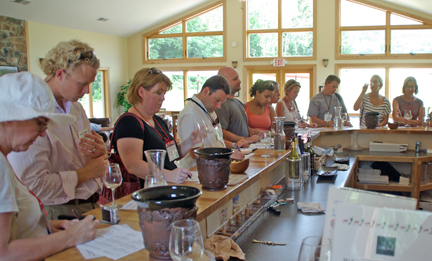
Give up excuses for Lent and visit a winery.

Give Up: Blame

Don’t blame a winery for a wine that has been mistreated. After purchasing the wine, did you leave it in the trunk of your car on a hot day? Where are you storing the wine in your home? Did you leave a bottle of wine opened for a day or two? Did you serve the wine in plastic cups?

We heard the story of a wine shop that stored a $600 bottle of wine on the second floor of the building without air conditioning during a hot summer. The unsuspecting wine buyer would not know until they opened the bottle.

Give up making comparisons

Give Up: Comparisons

Sometimes comparing things is not helpful. There is nothing to be gained by comparing the size of your wine cellar or wine refrigerator with your neighbors. Whether you have one bottle or twenty cases of wine, what is important is the enjoyment and wonder of the wine in each bottle. Do not compare the price point of the wines you drink and enjoy with the price point of what someone else likes to drink and enjoy.

Give Up: Worry

Do you worry about what wine to serve with food? Give up this worry during Lent. Although there are some standard practices of pairing wine and food, there are also exceptions. “Drink what you like” is an exception. Don’t worry about the wine you are serving. You can always serve the wine as an apéritif prior to the meal. If you have a sweet wine, serve it for dessert.

Don’t worry about buying a wine based on a point system. Some wonderful wines are available that don’t rate the 90+ points. The point systems are based on the judges palates which may not be the same as your palate. Only you know what you like.

Part 1    Part 2

Cheers,
Terry & Kathy

How Wine Enthusiasts Can Make the Most of Lent Part 2

In this series we are making suggestions for what you can give up for Lent if you are a wine enthusiast who observes Lent.

Give Up: Negativity

When other wine enthusiasts in a tasting room discover that we are writers, they’ll often talk with us about wine. Rarely do we hear someone commenting on a part of the country where the wines are not to their liking. But it does happen. While in a tasting room in the Prosser area of Washington, a wine enthusiast informed us that wines from Ohio are bad. This traveler was from Ohio. One can give up this type of negativity for Lent. Don’t say a wine is bad unless it has a fault and you understand what a faulty wine is. There are bad wines. But a wine isn’t bad because you don’t like it, it is bad because it is faulted. Some wine faults include aromas and tastes such as vegetal notes, rotten apples, vinegar, glue, soap, sulphur, rotten eggs, onion, cauliflower, horse, mold and cork taint. These are the things that make a wine bad. If you dislike a wine, your dislike doesn’t make the wine bad. You simply don’t like it. Condemning an entire state or wine region is a negativity that you can give up.

Some wine enthusiasts like to say a wine is bad when they mean they don’t like it.

Give Up: A Sense of Entitlement 

Some people have a sense of entitlement. How can a wine lover give up a sense of entitlement during Lent? Walk into a restaurant and order a bottle of wine for someone sitting at a table who you don’t know. The surprised look on their face is all you need to see and a delightful reward of its own.

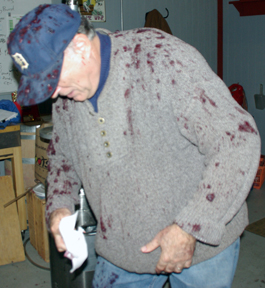
Give up a sense of fear. When making wine a basket press had a blow out and Terry was in the direction of the blow out. We all laughed about it later.

Give Up: Fear of Failure

How can a wine enthusiast give up a fear of failure during Lent? Make some wine! If you have never made a wine before, purchase a kit and make the wine. Don’t worry about failure. If you do not like the wine, you will have only made a couple cases. Consider adding a touch of Port to the wine to improve it; however, we have heard from some winemakers, “Why waste the Port?” You can always turn your wine into vinegar. If you do make a wine from a kit, purchase the most expensive kit. There seems to be a relationship between the quality of wine you can make and the price of the kit.

Give Up: Feelings of Unworthiness or Doubt

These are good to give up for Lent. Value your personal descriptions of wine. While in a tasting room an attendant asked a visitor what she tasted in the wine. She replied, “Bananas.” The tasting room attendant quickly responded, “No, that’s wrong.” This is a good way to turn someone off to wine for a lifetime. Rather than feeling unworthy or doubtful, stick up for your personal wine descriptions. If you feel that a wine has a taste of bananas, it has a taste of bananas for you. A personal wine description is personal and based on your life experiences of smell and taste, not someone else’s.

Part 1

Cheers,
Terry & Kathy

Try this Fresh Berry Cheesecake Recipe for Valentine’s Day!

Celebrate Valentine’s Day  Fresh Berry Cheesecake

Try this recipe for Fresh Berry Cheesecake for Valentine’s Day or any special day of the year. The recipe calls for 1 or 2 Tbsp Ferrari-Carano Eldorado Noir. This special recipe is provided by Ferrari-Carano Vineyards & Winery in Sonoma County’s Dry Creek Valley. 

Fresh Berry Cheesecake

Serves 8 to 10

Ingredients

Crust

1 cup brown sugar
2/3 cup finely chopped walnuts
1-1/2 cups all-purpose flour
1/2 cup melted butter

Filling

8 oz light cream cheese
1/4 cup sugar
1 egg
2 Tbsp half & half
1 Tbsp lemon juice
1 Tbsp vanilla extract

Topping

2 cups fresh assorted berries: black, red, raspberries, blueberries, thoroughly chilled (or thawed frozen berries with no added sugar)
1/2 cup blackberry preserves
1 or 2 Tbsp Ferrari-Carano Eldorado Noir

Directions for Crust

1. To make crust, combine brown sugar, walnuts, flour and melted butter and mix together until crumbs adhere when they are pinched together. Press into 10-inch tart shell with a removable bottom and bake 12 to 15 minutes in preheated oven at 350°. Cool.

Directions for Filling

1. For the filling, beat cream cheese and sugar with an electric mixer until light and fluffy. Add egg, half & half, lemon juice and vanilla and beat well.

2. Pour into crust and bake 20 minutes longer. Cool to room temperature before adding fruit.

Topping

1. In a small saucepan over low heat, thin blackberry preserves to a syrupy glaze with 1 or 2 tablespoons of Ferrari-Carano Eldorado Noir.

2. Pile fruit on top of cheesecake. Spoon preserves over it. Chill.

3. Bring to room temperature before serving. To serve, release sides of pan, transfer to serving platter and cut in wedges.

Recipe provided by Ferrari-Carano Vineyards & Winery

How Wine Enthusiasts Can Make the Most of Lent Part 1

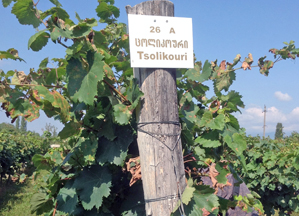
Tsolikouri grape vines in the country Georgia.

When I was a child I had to decide what to give up for Lent. Candy came to mind. Since I eat very little candy now, it does not seem right to give up something for Lent that I probably would not have anyway. Material goods are a challenge to give up for Lent. By the way, wine is not on our list of items to give up during Lent.

Last year, someone posted an image on Facebook that showed a list of non-material concepts that would be good to give up for Lent. Some of the items on the list included fear, impatience, worry and the need to please everyone. As Kathy and I looked over the list, we came up with examples of wine-related concepts for wine enthusiasts to give up for Lent.

Give Up: Fear

Try a wine from a grape variety you have never tried before. Don’t be afraid to try some of the thousands of varietal grapes that are used to make wine. Although the international grape varieties are most plentiful, with a little searching, you can try wines crafted with grape varieties that are new to you. Specifically look for wines from the country Georgia, Portugal, Italy and the lesser known areas of France. You may discover a wine that you like.

Cava made with Xarel-lo and Macabeo

Give Up: The Need to Please Everyone

It is unusual that a wine will please everyone at a dinner party. Everyone has their own likes and dislikes. However, there are some go to wines that pair well with occasions. At a Lenten dinner party serve a cava made from the traditional Spanish grapes Xarel-lo, Macabeo and Parellada. Don’t worry about needing to please everyone. Wine enthusiasts who prefer a blanc de blancs made with Chardonnay or a blanc de noirs made with Pinot Noir and Pinot Meunier may not be delighted with the cava, nor will people who don’t like bubbles. It is hard to please everyone, especially with a wine.

Give Up: Envy

Give up envy for Lent by purchasing a less expensive bottle of wine rather than a more expensive bottle of wine and donate the difference to a charity. Avoid resenting the less expensive bottle of wine and take heart that your donation will help others.

Give Up: Impatience

I actually learned not to be impatient while making wine. Make a mead and wait patiently for the mead to clear on its own. Hint: this might not happen until next Lent. After fermenting the mead and racking to a carboy, our mead was cloudy. It remained cloudy for nearly a year then cleared quickly, almost overnight. One has to be patient with wine. Patience extends beyond making meads. Purchase a case of a red wine and let it age for a decade or longer. This requires patience. After bottling our first barrel of Cabernet Sauvignon, I wanted to open a bottle every month. It was like a child and you want to see how the child is doing. After a year, though, I lost my impatience and decided to try a bottle once every six months or so. Luckily I now have a few cases left of the 2009 Paso Robles Cabernet Sauvignon.

Cheers,
Terry & Kathy

Champagne Francis Orban

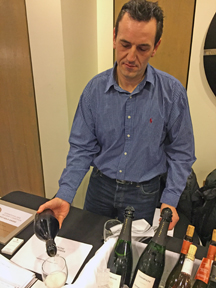
Francis Orban pours samples of his champagnes at APVSA tasting in Washington DC.

In January we attended a wine tasting put on by he APVSA, Association for the Promotion of Wines and Spirits in North America, tasting in Washington DC. Present at the tasting was Champagne Francis Orban. The champagne house has been in the business for four generations beginning with the founding by Léopold Orban in 1929. The generations continued with Gaëtan Orban, Pol Orban and now Francis Orban.

The family’s vineyards lie about nine miles from Epernay in the Marne Valley. The soils are composed of mostly clay-limestone. These vineyards are ideal for Pinot Meunier.

I met Francis Orban at the APVSA tasting. He grew up with both of his parents in the champagne business. In 1999 Francis completed his studies and joined the family business. In 2007 he started his own champagne house.

Champagnes

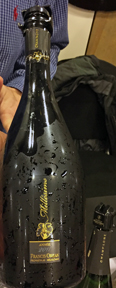
Millésime 2011

I tasted three champagnes. The Extra Brut was composed of 100% Pinot Meunier. The yellow colored champagne was aged for three years and had a dosage of 3 g/L. There were multiple columns of tiny bubbles forming a center mousse on the wine’s surface. The champagne reminded me of red berry fruits, citrus and freshly baked bread. This champagne can pair as an aperitif and with salmon and even grilled beef ribs.

The Brut Reserve was crafted with 100% Pinot Meunier. The gold colored champagne was aged for two years and had a dosage of 9 g/L. The champagne had multiple columns of tiny bubbles forming a mousse on the center of the surface. There were notes of yellow fruits and freshly baked bread. Pair this champagne as an aperitif or with grilled foods.

The Millésime 2011 was a blend of 80% Chardonnay and 20% Pinot Meunier. The yellow colored champagne aged for six years and had a dosage of 3-4 g/L. In the glass the champagne had multiple columns forming a center mousse. There were notes of apple, citrus and freshly baked bread. The champagne pairs with shellfish and beef dishes.

Champagne Francis Orban is looking for distributors in the United States.

Cheers,
Terry

Wines from Domaine Passot sas Rémy & fils

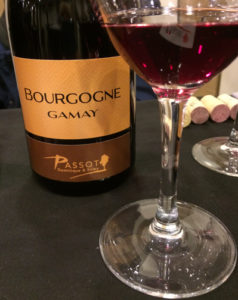
Domaine Passot’s Bourgogne Gamay from Domaine Passot

In January, when we attended the APVSA (Association for the Promotion of Wines and Spirits in North America) wine tasting in Washington, DC I had the opportunity to visit the table with several Domaine Passot sas Rémy & fils’ wines. While tasting the wines, I saw the intense enthusiasm that represents the Passot wines.

Domaine Passot is located in the Beaujolais region of France. The winery owns 11 hectares (27 acres) of vineyards in several locations.

At the APVSA “Wine at a Time” event, Domaine Passot was offering tastings of:

  • Chiroubles, Gamay 2017
  • Régnié Gamay 2016
  • Morgan Gamay 2016
  • Bourgogne Gamay 2014
  • Gamay ancestral methode demi-sec-Coup d’Bulles Rosé
  • Viognier 2016

The Bourgogne Gamay 2014 was harvested by hand and harvested from grapevines that averaged 50 years of age. The wine was a translucent reddish color. The wine offered a light earthiness with dark red fruit notes. The wine was medium-bodied with tannins and crispness. The finish was dry and the taste lingered on the palate. According to the winery website: “The Bourgogne Gamay is a new regional appellation since the 2011 vintage. The grapes that are used must be exclusively from Beaujolais crus.”

Morgan Passot 2016 was produced with hand harvested grapes from grapevines that averaged 46 years of age. The wine was a translucent red color. The Morgan Passot offered notes of fruit including plum. This full-bodied wine was dry with tannins. The finish had bold tannins with a long finish.

About Passot Remy et Fils

Dominique (owner) is the daughter of winegrowers. As a young girl she said that she would never marry a winegrower. Rémy (owner)  is the son of winegrowers and eventually found his calling to be a winegrower and winemaker.

By 1989, Dominique changed her mind and married Rémy. Dominique left her career as a hairdresser and became very involved with the wine growing. In 2014 many changes occurred. According to the website, “The owners of the vineyard where Dominique et Rémy worked in addition to their Domaine PASSOT, (SCEA de RAOUSSET – CHATEAU de RAOUSSET), wanted to sell their vineyards…Dominique and Rémy didn’t want to miss the opportunity and decided to create a Groupement Foncier Viticole (Financial Group for Wine production) to purchase 6 ha of vineyards for 3 crus with family and friends: Chiroubles – Fleurie – Morgon bringing the total area of the Domaine PASSOT to 11 ha.”

The Guest House

Tourists and winery visitors may want consider staying at the Domaine Passot’s winery guest house. This two-story vacation house offers three bedrooms, kitchen, dining/living room courtyard, swimming pool, courtyard and terrace. The Domaine Passot website has numerous pictures that show the wonderful ambiance of the house.

If we were planning to visit this region of France, we would definitely check out this location as a possible place to stay.

As with other wineries represented at APVSA, Domaine Passot is looking for importers.

Cheers!
Kathy

Champagne Froment Griffan

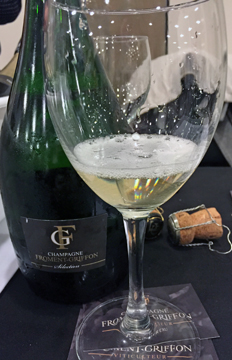
Champagne Froment Griffan Sélection at APVSA tasting in Washington DC, January 2018

At the APVSA, Association for the Promotion of Wines and Spirits in North America, tasting in Washington DC in January, I had the opportunity to learn about Champagne Froment Griffan. Marie Froment was at the tasting and answered some questions via email. Marie along with her husband Mathias own the champagne house. Marie wrote, “Our Champagnes are not imported in the US for the moment, but we think they can match well with this market, that’s why we are doing the tastings with the APVSA.”

Marie mentioned the couple’s family history in wine, “The Champagne FROMENT GRIFFON is a familial Champagne House, coming from my husband Mathias’ family. I, Marie, am coming from the Loire Valley. From Saumur, my family was also in  the wine industry. They were the owners of Gratien & Meyer in Saumur, and also Champagne Alfred Gratien in Epernay. Mathias and I met each other in Burgundy (Dijon) while doing our oenology studies. We are both oenologists. We are running the familial Domain together since more than 15 years.

“The Champagne House FROMENT GRIFFON is situated in Sermiers, one of the last villages to be classified as Premier Cru. Our family has been working our vineyard since 4 generations at least. It covers 4 famous crus of the Montagne de Reims, where the Pinot Meunier fully reveals its qualities. The Pinot Noir and the Chardonnay bring power and elegance in their turn and participate in the richness and the aromatic complexity of our Champagnes. Our Terroir is quite specific and diversified, made of silt, clay and chalk. Because the chalk is very present, but in- depth, the Chardonnays are getting a fruitier style (pear, cherry plum flavours), with still some minerality.

“Being aware of our relation to Nature, we are involved in a sustainable viticulture and we implement alternative methods, to minimize our environmental impact, while looking for a harvest of optimal quality.”

Marie also spoke about the uniqueness of their champagnes. “We also keep our champagnes “on lees” longer than the time required normally in Champagne (up to 3 years for the non-vintages, and 5 years and more for the vintages ones for us), because we find that it gives more complexity to the wines, and finer bubbles.

“We are always looking for a good freshness, balance and purity in our blends, that’s why we work on partial malolactic fermentations on some of our wines.”

Champagne Tasting

During the APVSA tasting, I tasted four champagnes. The Tradition was a blend of Pinot Meunier with lesser amounts of Pinot Noir and Chardonnay. The wine had a yellow color and there were multiple columns of tiny bubbles forming a total surface mousse. Yellow stone fruits were noticed on the aroma and taste along with notes of freshly baked bread. The mouthfeel was smooth. The champagne dosage was 9 g/L and the wine spent 24 to 30 months aging. The wine matches with seafood and as an aperitif.

The Rosé was a blend of 50% Chardonnay and equal amounts of Pinot Meunier and Pinot Noir.  The dosage was 9 g/L and was aged for 24 to 36 months. The wine had a reddish orange color and there were multiple columns of tiny bubbles forming a center mousse on the surface. The champagne had a creamy mouthfeel and berry fruits yielding to some minerality. The finish was crisp. This is a nice sparkling wine to have as an aperitif especially for Valentine’s Day.

The Privilège was mostly Chardonnay, 70% with Pinot Noir 30%. It had a light yellow color, aged for five years and had a dosage of 7 g/L. Multiple columns of tiny bubbles formed both a center and circumference mousse. Apple, citrus and freshly baked bread were predominant on the aroma and taste. The mouthfeel was creamy. The finish was crisp with fruit yielding to mineral. This champagne would be suitable as an aperitif, with seafood and white meats.

The Sélection was a blend of equal amounts of Chardonnay and Pinot Noir, 40%, and Pinot Meunier, 20%. The dosage was 9 g/L and the wine was aged for 36 months. Multiple columns of tiny bubbles formed a center mouse on the champagne’s surface. The light yellow colored wine offered berry fruits and mineral notes. The crisp finish makes this champagnes ideal to match seafood. It would also be an excellent aperitif for special occasions.

I enjoyed the four champagne selections by Champagne Froment Griffan and agree with Marie that these champagnes would be perfect for the American market.

Cheers,
Terry


info@winetrailtraveler.com            Sitemap                      Privacy Policy

Copyright: Terry and Kathy Sullivan 2006-2013