About     FAQ     Contact      Advertise With Us      Press   

In Search of Cavas Found in Stone

Our search for Cavas continues. Last evening we visited Cuscó I Berga winery in the village Les Gunyoles d’Avinyonet. We met twin brothers Joan and Lluis Cuscó. We toured the vineyard, about a 20 minute drive from the winery. Once we arrived at the vineyard, we had a bumpy ride to our first stop, a vineyard that had grapes still on the vines. This vineyard was slated to be pulled out and replanted for next year. The leaves had already fallen from the vines even though fruit was in abundance. After tasting a few grapes, our host took several grapes from different parts of the vineyard and gently crushed them in a cup. He then put a few drops on a refractrometer.

A tour of the vineyard including a pruning demonstration.

A tour of the vineyard including a pruning demonstration.

A refractrometer is a small hand held tool that gives a reading of the amount of sugar in the grapes and thus the potential alcohol. This refractrometer differed from the one I have at home in its scale. Mine uses degree Brix for a scale while the one used in the vineyard used Baume. The reading was 7.0. This converts to a Brix reading of 21.6. Although these grapes were not going to made into wine, if they were, the alcohol would be near 12.0%

After the refractrometer reading, our group went to another vineyard where we had a demonstration of how the vines would be pruned for the next year. Pruning generally takes place in February and March.

After pruning we drove to a vineyard where there was a stone hut for a surprise. I had seen a stone hut in another vineyard that we drove past the previous day. In Catalonia, field stones were piled on top of each other creating a half-hemisphere. The stones were held in place by the weight of the stones on top of it. The stone huts were used by vineyard workers for shelter from weather. If a vineyard worker was working until late and could not make it home, they could spend the night in one of these stone huts.

Hut made entirely of stones.

Hut made entirely of stones.

Enjoying Cava in a stone hut located in a vineyard

Enjoying Cava in a stone hut located in a vineyard

After a moment of preparation, we entered the stone shelter and sat on the ground around the circumference. A single lantern in the center provided some light. Two bottles of Cava were opened and shard by our group of ten people. It was quite an experience. Having wine in a vineyard is a gentle reminder that wine is started in the vineyard. Drinking Cava in a stone hut is a gentle reminder that wine has its ultimate beginning in earth. The stones were from the earth and there was an earthy ground odor in the hut.

The Cava in the stone hut was a Brut Nature Reserva Eco. It was a blend of Macabeo, Xarel-lo and Parellada with 11.5% alcohol. The sparkling wine was fresh contrasting nicely with the earthy atmosphere of the stone hut. Later that evening we returned to the winery for a dinner prepared by the wife of the third brother Jordi Cuscó. The dinner’s main course was fideua, a seafood vermicelli paella. This paired with three other Cavas.

Of all the places to have Cava, a stone hut was never on my radar. However it was a memorable place to share this sparkling wine with friends.

Cheers,
Terry


On Top of the World

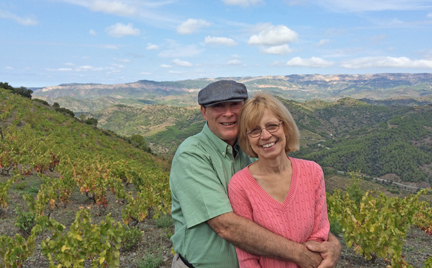
While not on the summit of the highest mountains in the world, we felt like we were on a pinnacle of vineyards in Priorat and Montsant. We were visiting Capafons Osso Cellars that has vineyards in both in Priorat and Montsant. They also have two wineries, one in each region. We were visiting the vineyards in Priorat on another fine sunny day in Catalonia.

Terry & Kathy near the summit of a vineyard in the Priorat. The  Montsant mountains are in the distance.

Terry & Kathy near the summit of a vineyard in the Priorat. The Montsant mountains are in the distance.

Francesc Xavier Capafons Osso took us on a tour of the vineyards. He talked about the difference in soils between the Priorat and Montsant. The very rocky sandstone and shale are great soils for planting a vineyard. Some roots can penetrate quite a distance. Francesc mentioned that the deepest roots that he was aware of was 20 meters (66 feet) deep. Organic principles are followed in the vineyards.  After the vineyard tour, we went to the winery located in the Montsant region.

Although we visited only six wineries in the two days that we were in Priorat and Montsant, we were able to experience the peacefulness and quiet of the area. It was so quiet that you can hear the wind.

Cheers,
Terry

A Qvevri or Something Else?

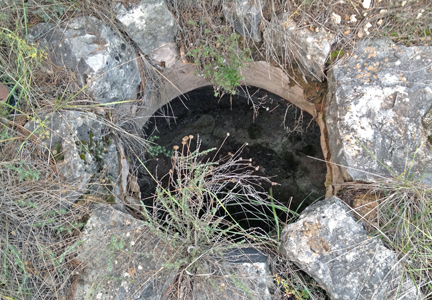
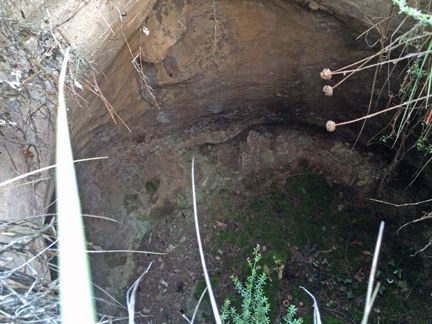
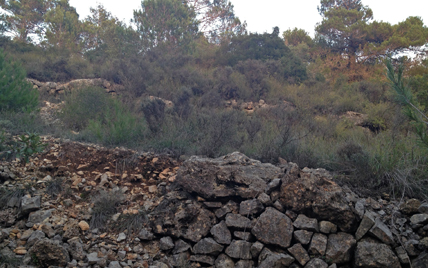
Buried at the edge of a wooded area in Spain, just meters from terraced land, is a recently discovered underground vessel. We surmised that at one time there were vineyards on the terraced land, perhaps up to the time phylloxera invaded and destroyed vineyards in the Penedes region of Catalonia. Now there is brush on the terraced land and a few wild grapevines.  The interior of the vessel was coated in mortar and the vessel has the shape of a qvevri. However the mortar did not look stained from red wine. One the other hand, this is a white wine region. With the vessel’s proximity to what could have been vineyards, we wondered if this was a qvevri.

Buried vessel, could it be a qvevri?

Buried vessel, could it be a qvevri?

Interior of the buried vessel

Interior of the buried vessel

Terraced landscape, perhaps had grapevines on it at one time.

Terraced landscape, perhaps had grapevines on it at one time.

We also wondered if the vessel was not used to make wine, what was its purpose. What do you think?

Cheers,
Terry

Priorat Rocks!

Yesterday, Saturday, October 4, we squeezed in visits to four wineries south of Barcelona in the Priorat region. It was a busy day but we had a great time and learned more about Catalonian wines. Many thanks to Anthony Swift of Wine Pleasures who planned our schedule and was also our driver.

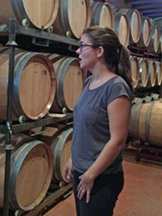
Maria at Sangenis I Vaqué talks about the barrel room.

Maria at Sangenis I Vaqué talks about the barrel room.

Our first stop was in a quaint village of Porrera where Sangenis I Vaqué, a family owned and operated winery, is located. We were early for our first winery visit so we stopped at a shop for tea not far from the winery. At the winery, we met Maria Sangenîs i Vaqué who led the tour. During the tour, grapes were undergoing de-stemming and fermentation in underground tanks. After the tour several chairs were set up around two barrels to taste the six wines the winery currently has available. Today the winery produces 25,000 bottles of wine.

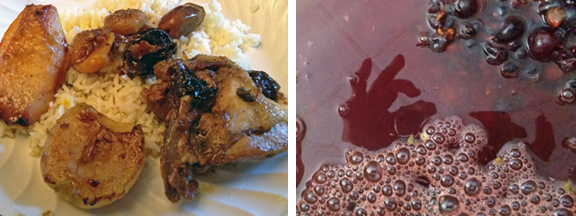
After the wine tastings we left immediately for our next appointment at Mas de l’Abundància in El Masroig in the Montsant DO. We met the owner, Jesus del Rio Mateu and Olga Penu Guiu who led us on a tour of the property, vineyards and bodega. Jesus is enthusiastic about the Catalonian history in this area. Our tour began with a visit to a very old church and a description of the history of the country. Built in pre-Christian times by the Romans, the church now has a statue of Mary. Viewing the countryside from this summit, you immediately recognize the peacefulness of the area. Jesus prepared a typical Catalonian lunch of chicken and fruits over rice. It was delicious.

Chicken, fruit and rice for lunch.  A reflection of a hand in fermenting juice

Chicken, fruit and rice for lunch.
A reflection of a hand in fermenting juice

Our third wine tasting took place at Clos Figueras in Gratallops. Christopher Cannan established the winery in the 1997. The winery has 18 hectares of grapes that include Grenache, Carignan, Cabernet Sauvignon, Merlot, Syrah, Viognier, Grenache Blanc, and Chenin Blanc. One of the unique notes on this winery is that the cellar is in an old cistern with old stone walls.

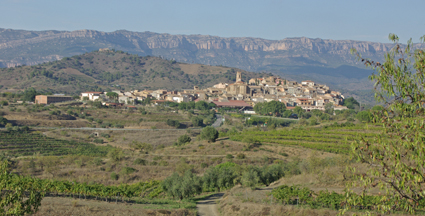
Our final winery also in Gratallops was Celler Devinssi. The Cellar Devinssi offers special wine tastings available outside of a small building in the vineyard. We traveled through the vineyards and stopped near the summer. Walking past of row of head pruned old vines, we enjoyed wonderful views of the countryside with the village Gratallops in the distance. Our wine tasting took place in the vineyards, a gentle reminder that wine has its birth in the vineyards. These special tastings should be arranged in advance.

Gratallops in the distance from vineyards

Gratallops in the distance from vineyards

We have had a remarkable tour today and will be posting articles with photos of the individual wineries/wines.

Today we are off to two more wineries.

Discovering a Local Bar in Barcelona

Cava and Sparkling Wine in Barcelona

Cava and Sparkling Wine in Barcelona

Years ago when I was growing up Mom took great enjoyment in sewing. She was a perfectionist and anything she sewed was well made. We had fun shopping for material and could spend hours trying to make the “right” decision as to which pattern and which fabric we should select.

A few years before I went off to college, my mom was told about an unusual fabric shop. Although I do not remember the name of the shop, we always called it “a hole in the wall.” It was located just off a main shopping area, where few people would be found walking by. However, it was unique in what it offered and it’s atmosphere. Piles of fabric were piled on top of each other.  I doubt today that the shop still exists but its enticement was the great prices it offered.

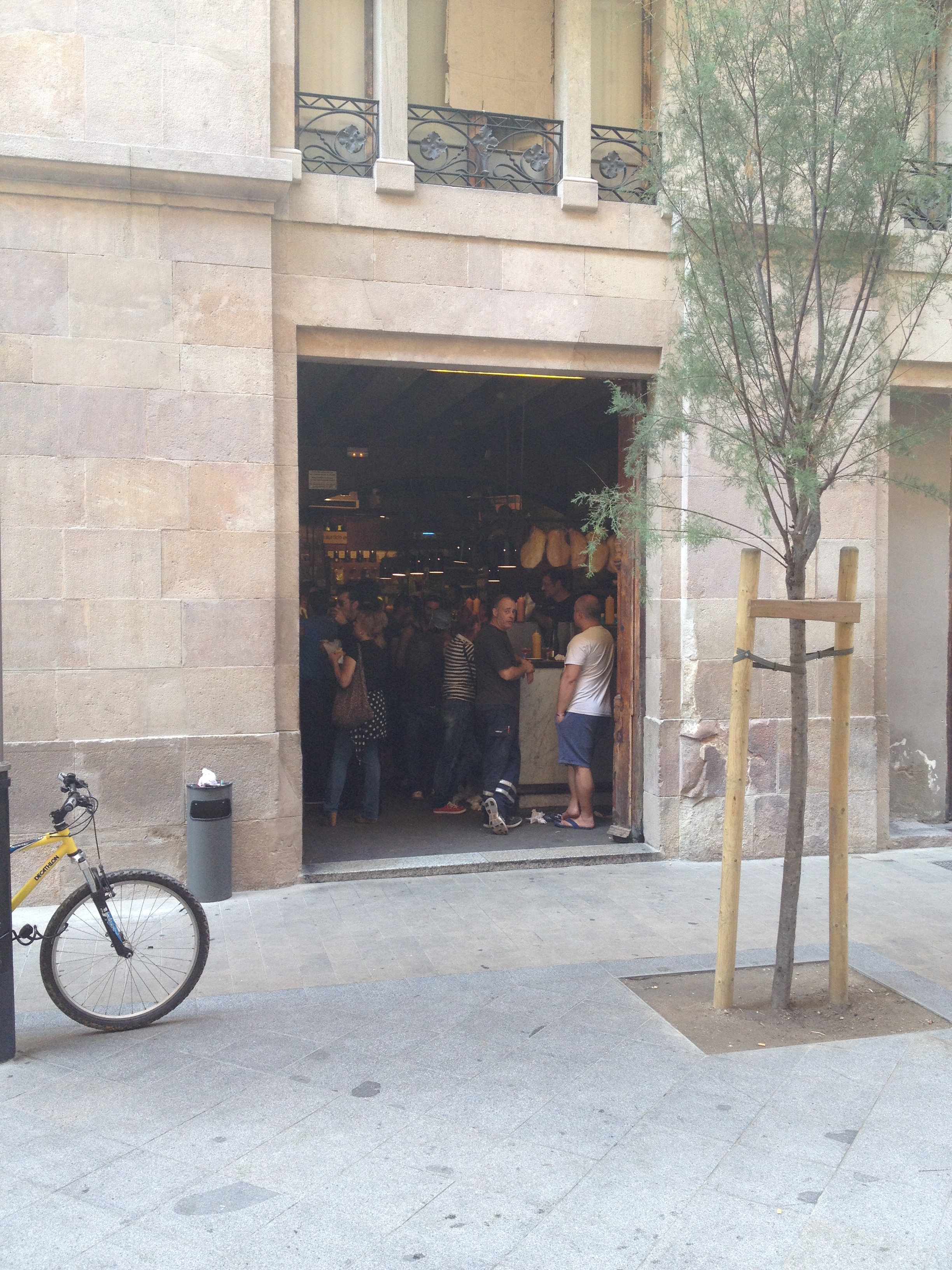
All of these memories were brought back today when we stopped at what we were told at our hotel is a “local” bar.”

A unique local bar in Barcelona

A unique local bar in Barcelona

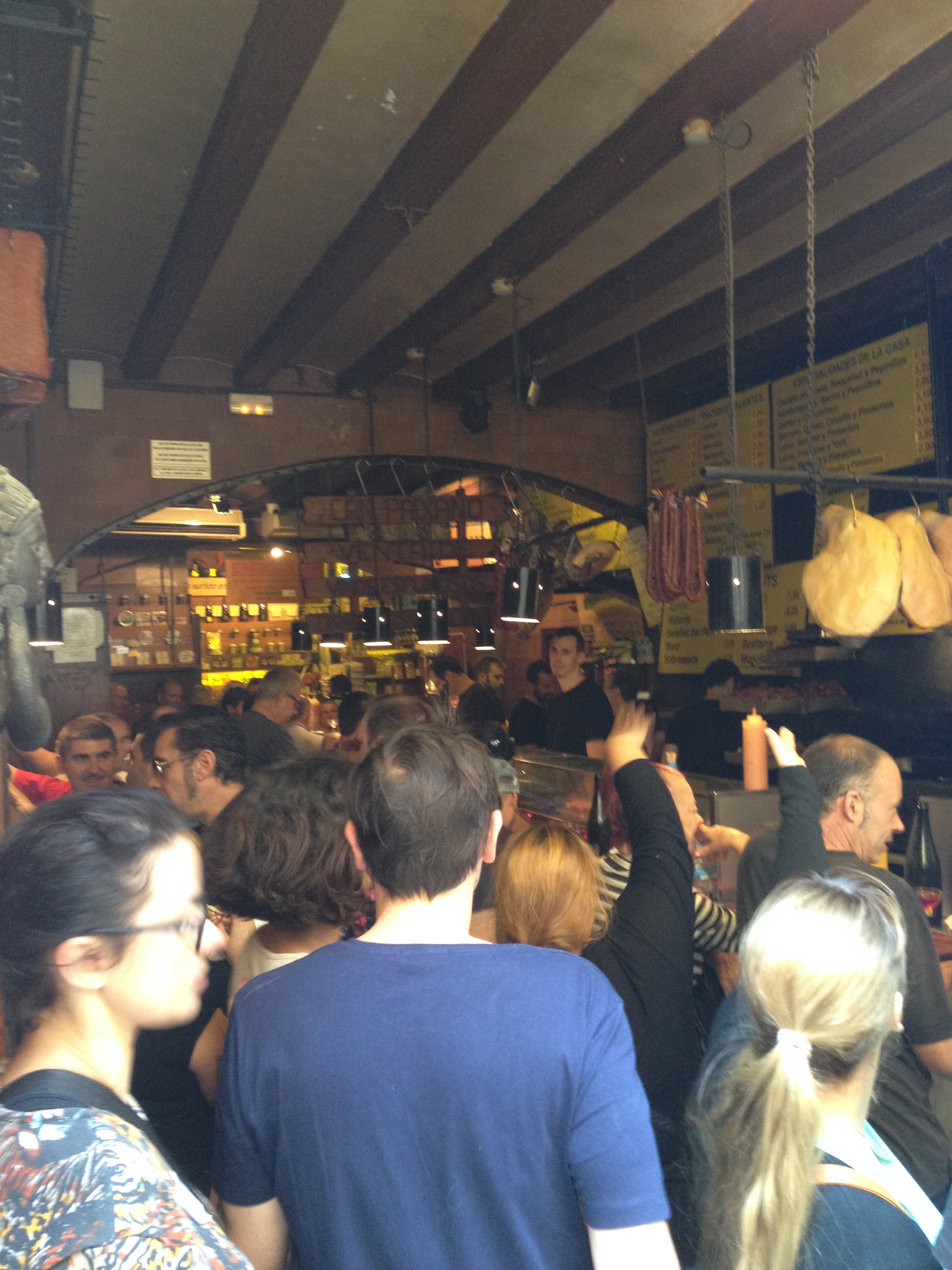
We discovered this tiny bar with sandwiches in “a hole in the wall” not far from major tourist sites in the older parts of Barcelona. Adding to its hole in the wall appearance was the fact that we did not see the name of the bar posted outside.  This tiny bar offers no seating. People stood around the bar, ordered sandwiches and drinks, and stayed and talked with each other as if they had all day. Large signs were posted about what they had to offer. Hams hung from the ceiling. Bicycle seats, too. In the very back of the bar a small counter was available where people could purchase an assortment of items including bottles of wine. Judging by the number of people stopping by the bar, this is truly enjoyed by the area residents.

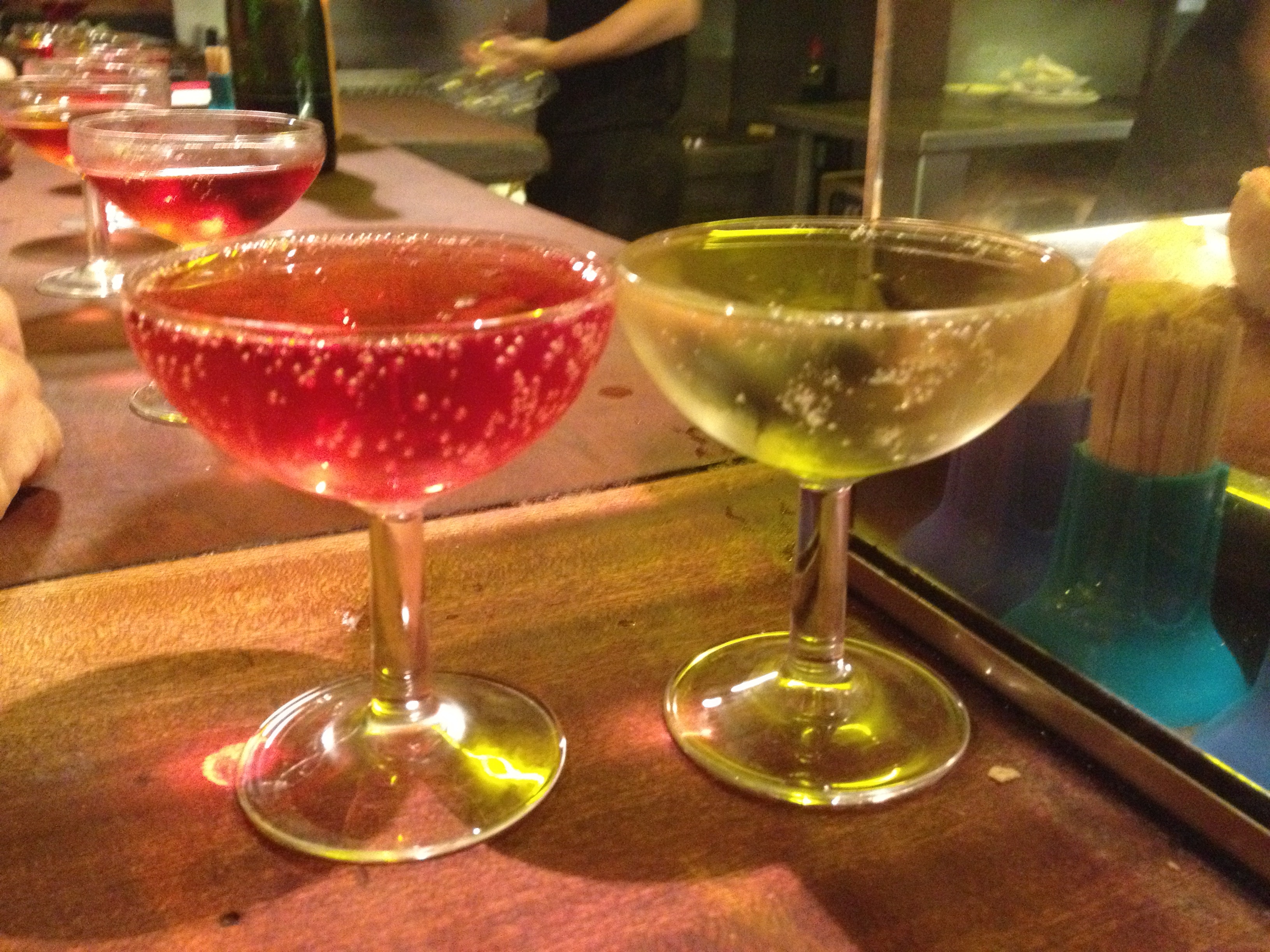
Can Paixano Rosat Semi-Sec is a sparkling wine produced with Tempranillo, Cariñena and Trepat grape varieties. It is a light, sweet cava with a refreshing crispness. The wine has 10% alcohol. The colorful light red color is delightful and the cava offers numerous long streams of tiny bubbles. At this particular bar, a full bottle costs. 3.5 Euros.

Can Brut Nature was a gold color with hints of peach. This cava was produced with Macabeo, Xarel.lo and Parellada. It seemed to be one-dimensional in comparison to another Cava we had later in the day.

Both wines the sparkling wine and the Cava were served in the traditional coupe stemware.

According to the Can Paixano winery’s website, “Cava is a quality sparkling wine. What makes it special is its second fermentation which takes place in the bottle, following the traditional method. The majority of the grapes come from vineyards in the DO (Designation of Origin) Penedes (Catalonia).”

The difference between sparkling wine and cava is that it does not go through a second fermentation; rather during production carbon dioxide is added.

Inside a tiny Barcelona bar.

Inside a tiny Barcelona bar.

We enjoyed the ambiance of the bar where people seemed to know each other, food and wines were available and everyone was friendly.

When traveling and touring add to your experiences by visiting restaurants that the local people enjoy.

Cheers! Kathy

Our Search for Cava Continues

On our second day in Barcelona we decided to take a taxi to the Mirador de Colom and then start walking on La Rambla. We walked for quite awhile amend the thousands of other people also walking. Soon we turned around and headed back along a different route. After walking for a few hours we were thirsty and headed for Can Paixano on Carrer de la Reina Cristina. No one was on this street, probably because they were all packed into Can Paixano a wine bar and eatery where you order and stand wherever you can find a spot.

As we pushed through the crowd to the back of the shop, we noticed many bottles of Cava opened. The one that most patrons were enjoying was a rose color. For 2.5 € we tasted two sparkling wines one of which was a Cava; both were served in coupes to nearly overflowing. Kathy had the Can Paixano Rosat Semi Sac, the rose colored Cava that many people in the wine shop were drinking. I went with the Berenguer Ramon I El Viejo Brut Nature. A brut nature is the driest of the Cavas. The semi sac is the second sweetest. Kathy liked the Cava and bought a bottle to have as dessert tonight.

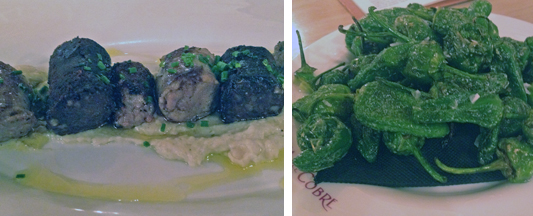
Our next trek was to find a restaurant that was opened after 13:00 that we could have lunch. We walked for a while, not following a map simply exploring. We stopped at the restaurant La Taberna Del Cobre and had lunch. I ordered the Catalonian sausage and a side of deep fried green peppers from Padron. Along with the food I ordered a Cava. Kathy was in a dessert mood. She ordered a lemon sorbet with Cava to drink and Crema Catalana.
100414a

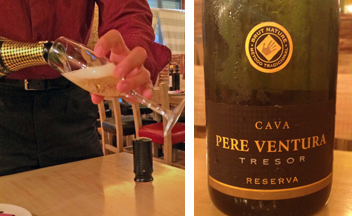
The Cava I had was also a brut nature. The Cava was a Pere Ventura Tresor Reserva. It was a blend of 40% Macabeo, 40% Xarel.lo and 20% Parellada. Of the Cavas tasted so far, this was the more complex. As I tasted the 11.5% alcohol wine, I noted minerality, white peach and a hint of freshly baked bread. It paired well with the sausage and deep fried peppers. As I taste different Cavas and pair with food, I am discovering that Cavas pair well with many foods. I have not seen it served with breakfast thus far.
100414b

Catalonian sausage and deep fried green peppers from Padron

Cavas are not the only wines tasted during our travels in Spain. At our hotel, Hilton Diagonal Mar, I tasted two still wines.The 2013 Pares Balta Blanc de Pacs Penedes DO was a blend of Parellada, Xarel.lo, Macabeo. The yellow color wine had 11.5% alcohol. The wine reminded me of mineral and apples with a touch of pear. The medium body wine paired well with appetizers. The 2013 Pares Balta Mas Petit Penedes DO was a blend of Cabernet Sauvignon and Garnatxa. The dark ruby color wine had 14% alcohol. The aroma offered dark fruits while I experienced blackberries, cassis, cherries and tannins. The full body wine was crisp with a fruity aftertaste and a hint of vanilla.

As our time in Barcelona draws to an end for awhile, we are excite to explore wineries in the Priorat and Penedès wine regions.

Cheers,
Terry

The Search for Cava Begins

We flew to Barcelona on a mission to learn about and taste many Cavas. The 2014 Media Tour of 50 Great Cavas is sponsored by Wine Pleasures. Kathy and I are part of a small group of writers on this five-day tour that begins next week. We decided to get an early start on discovering Cava.

On our first day in Barcelona we decided to start walking rather than sleep off the trans-atlantic flight that involved only cat naps. At the Diagonal Mar mall across from our hotel, we looked for a nano sim for Kathy’s iPhone. Orange and Vodafone were no help. Finally we stopped at a Movistar that set us up for a month of voice, text and data. Now that our phone worked we needed to sample a Cava.
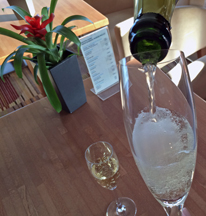
100314aOur hotel was serving a Cava on the executive floor. They had a Parés Baltà Brut Cava that was very refreshing on this warm October day. Parés Baltà is a family owned winery in the Penedès region. The surrounding vineyards as well as their vineyards in higher elevations are certified organic. The light yellow colored Cava was a blend of Parellada, Macabeo and Xarel.lo. The 11.5% alcohol wine had a persistent stream of bubbles and offered a fresh citrus aroma and taste with hints of apple and pear. The wine matched well with some appetizers we had while relaxing and taking in the views of the Mediterranean Sea.

For dinner we ate at the Indigo Restaurant and ordered Iberian ham croquettes and fish & seafood paella. Intrigued with the grape Xarel.lo, we ordered a Calcari also produced by Parés Baltà. The wine was made with 100% Xarel.lo grapes. In the subdued restaurant lighting, the wine appeared to have a light gold color. The juice spent a few hours on the skins and picked up some color pigments. The 12.5% alcohol wine reminded us of mineral, spice and young yellow stone fruit. In particular the spice reminded us of cloves. The wine paired well with an appetizer that had baby lettuce over tomato, fresh mozzarella cheese on a bed of basil pesto. The wine was also a perfect match for the ham croquettes. The wine also paired well with the seafood paella, however I would have preferred the Brut Cava instead.
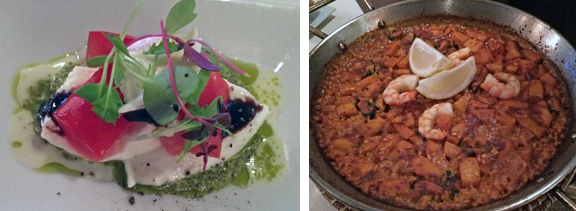
Tomato, mozzarella pesto appetizer and fish and seafood paella

Tomato, mozzarella pesto appetizer and fish and seafood paella

After dinner we headed back to the lounge to have another glass of the Parés Baltà Brut Cava. The overnight travel began to overtake us and brought a finish to our first day in Barcelona.

Cheers,
Terry

Cava: A Must Have?

Earlier this year, Kathy and I attended a tasting of wines from La Mancha. Prior to the tasting for the media and trade, we attended a seminar about these wines from Spain. We were hoping to travel to  Spain one day and experience the vineyards, wineries, food and wines. We were excited when we were selected to be a part of the media group covering the 50 Great Cavas Tour.

I decided to learn a bit about Cava before landing in Barcelona. Unfortunately, one family member did not look at the sparkling wine favorably. She had Cavas while in Barcelona over ten years ago and did not like them. Given that length of time, I would think that Cavas, just like all wines in the world, have improved in the last decade. I read something else that was also disheartening. Italian Prosecco was ranked high and similar to Champagne. Cavas were not. It seemed to me that Cavas were like the economy class of sparkling wines. I’m hoping to learn otherwise.

Our media group is going to taste many Cavas while on tour. It doesn’t bother me that they are made from grape varieties other than Chardonnay, Pinot Noir and Pinot Munier. Actually, I am looking forward to it. Some of the Cavas will be crafted with grape varieties such as Macabeo, Parellada amongst others including the traditional international varieties.

Cavas are made by the traditional method with a secondary fermentation in the bottle. We’ve been making wine for several years now, and never made a sparkling wine deliberately. I did forget to de-gas a wine before bottling it. When opened it had a nice touch of effervescence and was delicious.

Cavas have a range of dry to somewhat sweet. The driest are brut nature followed by extra brut and brut. Those are the ones I’m interested in trying. Kathy on the other hand likes some grams of sugar in her fizz. I will like the extra dry with between 12 and 20 grams of sugar per litre and the dry with between 17 and 35 grams. Kathy will like the semi-dry with between 30g and 50g and finally the sweet with over 50 grams of sugar per litre. Together we will be able to get a good understanding of Cavas.

Cavas should be served cold somewhere between 5ºC and 8ºC, around 45ºF. It will be interesting to see what type of glass Cava is served in. Flutes are coming under criticism. While at a Portland, Oregon restaurant I had a Cava that was served in a small O-type Riedel-like glass. That was a big mistake. There were no bubbles in the Cava at all; however, I did notice the effervescence in the mouth.

I did read with interest that Cavas are delicate and should be uncorked gently. I guess that takes out sabering the bottle. I always open sparkling wines of every type as gently as I can. I was challenged many years ago to open sparkling wines with as little or no sound as possible. “The more you hear when a bottle of sparkling wine is opened the more your sensations loose.” This advice was given at Schramsberg in Calistoga, California. I’ve have been able to open most sparkling wine bottles with just a little hiss sound.

Cheers,
Terry

50 Cava Media Tour Starts Next Week

This is the 4th year for the Cava Media Tour sponsored by Wine Pleasures. We were very fortunate to be chosen to participate in this year’s tour in Spain.

Next week we will meet others of the group at the Sant Sadurni D’Anoia train station. We will then travel to our first Spanish winery visit, Adernats, for tastings and dinner. We look forward to experiencing the cavas, wines and foods of Spain. We hope to learn more about the history of Spain and its relationship to the development of wine and cavas.

Wineries and special sites participating in this media tour include:

 Adernats
Mas Codina winery
Llopart Winery
Cuscó I Berga winery
VINSEUM, Museu de les Cultures del Vi de Catalunya
           Cava tasting in VINSEUM by Mascaró
Juve i Camps winery
Consejo Regulador del Cava
Museu del Ferrocarril de Catalunya
Bohigas winery
Vallformosa winery
Centro de Interpretación de Cava – La Fassina de Can Guineu
tasting of Celler Vell  cava at La Fassina
Canals i Munné winery            

It will be a busy five days for everyone participating in the Cava Media tour in Spain. We will write articles with plenty of photos, post tweets and blogs. We look forward to renewing acquaintances and meeting new wine friends.

Hope all wine lovers will follow our blog on the Wine Trail Traveler website, twitter account https://twitter.com/winetrailtravel  as well as the Wine Trail Traveler Facebook page, as we visit this beautiful country of Spain!

Cheers! Kathy


Steps of Preparing Our Qvevri for Winemaking

A small qvevri from the country of Georgia

A small qvevri from the country of Georgia

Despite our busy schedule in support of wineries and vineyards, we have continued working on the small qvevri we brought home from the country of Georgia after our spring visit to Tbilisi for the International Wine Tourism Conference.

We purchased a small qvevri in the hope that we would be able to bring it home safely on the long air flight.  We were fortunate as it did not crack even though it was placed in checked baggage.

Over the past few months we took several steps necessary to producing good wine and also preserve the qvevri.

Our first step was to heat the qvevri in our kitchen oven (which we had to adapt) for the qvevri to fit. At the same time we were warming bees wax in a saucepan. Eventually the bees wax became a translucent color. With a simple paintbrush, we painted the inside of the heated qvevri. The honey seals the pores of the clay walls and honey also has some anti-bacterial properties that help to preserve the wine.

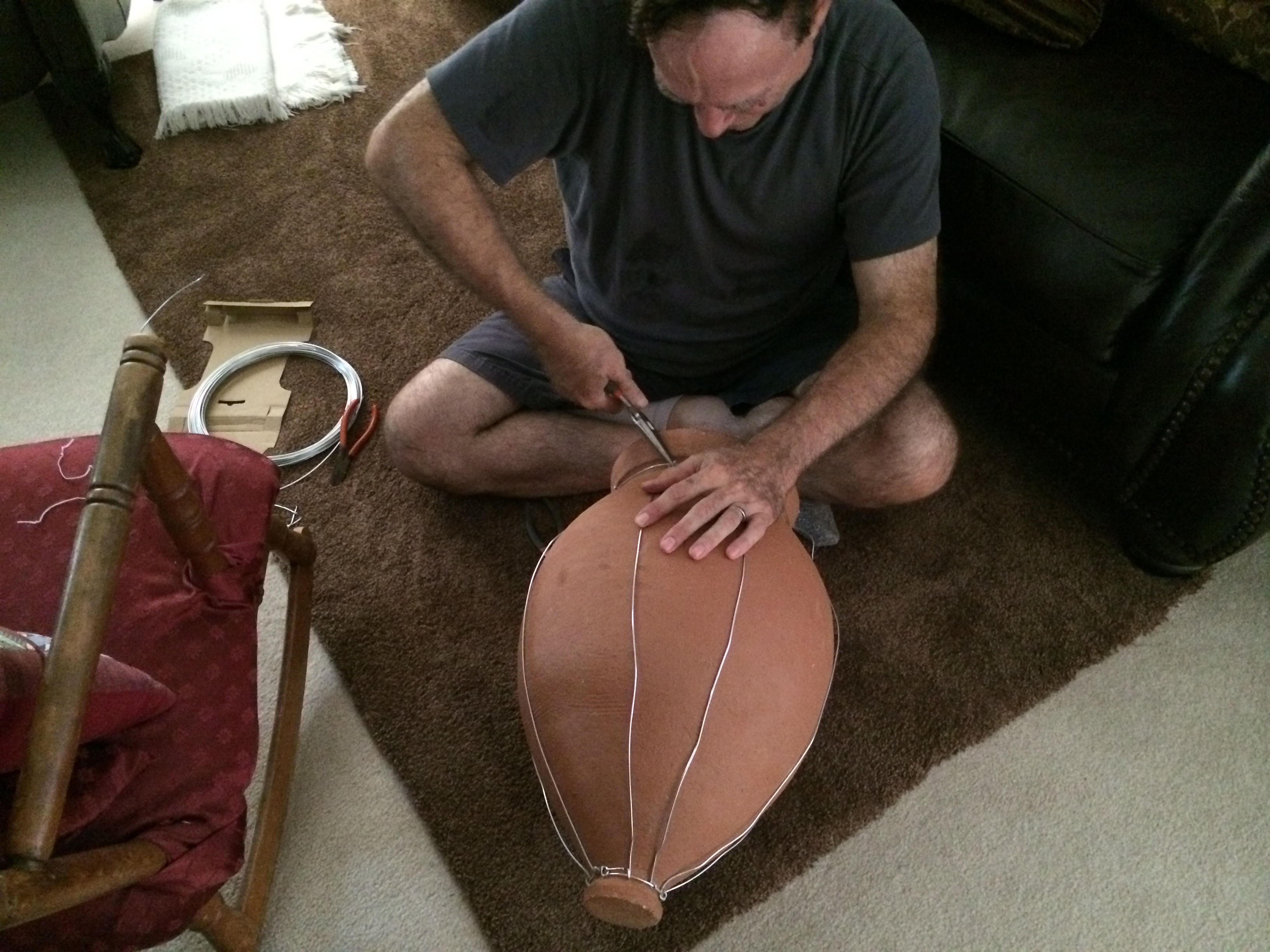
Wrapping wire around qvevri

Wrapping wire around qvevri

The next step was to wrap a thick but bendable wire around the qvevri to help protect it while it is in the ground.


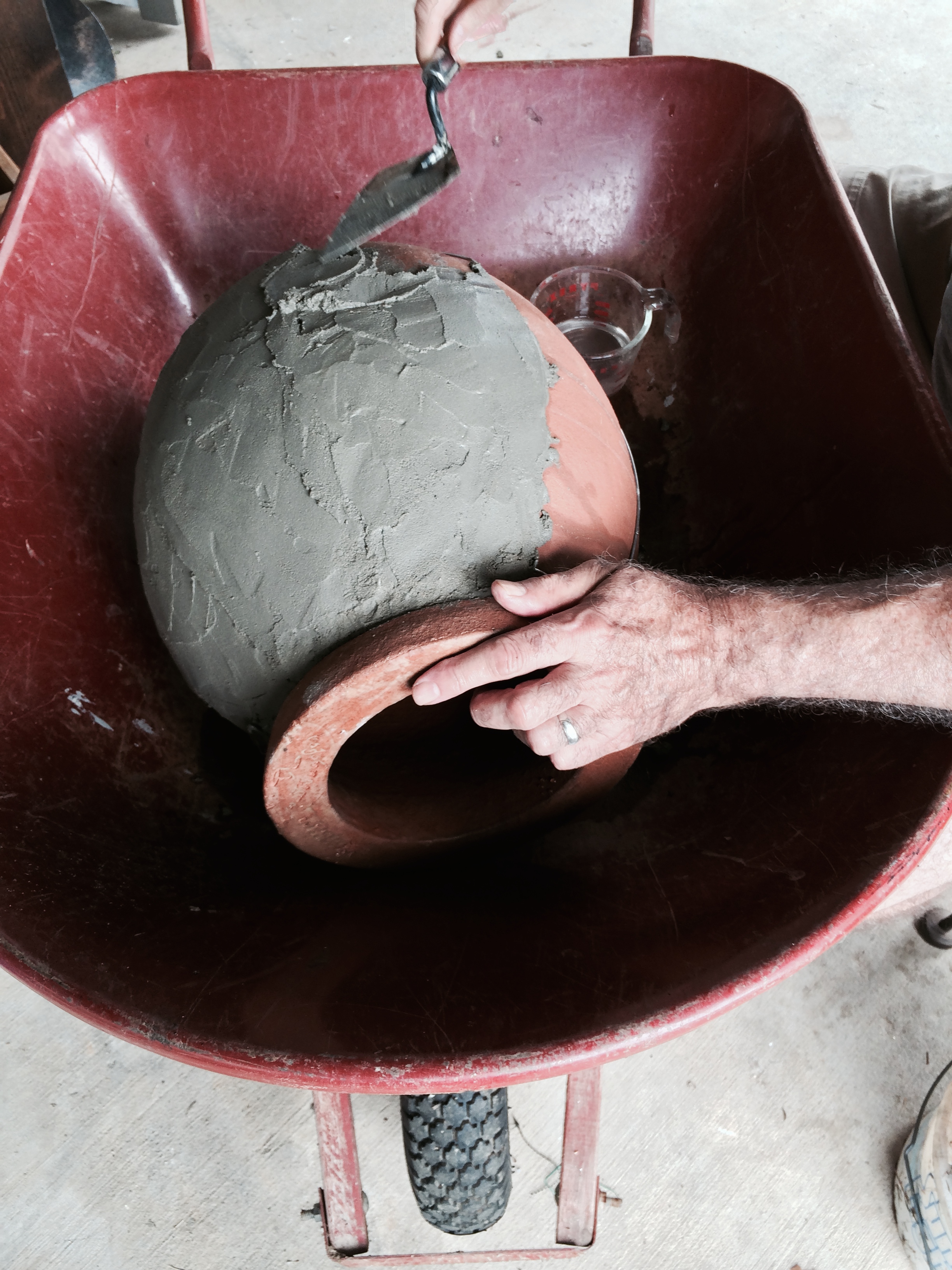
Applying a thin layer of mortar to the qvevri

Applying a thin layer of mortar to the qvevri

The same with the special mortar mix we used on the outside of the qvevri that will help prevent tree roots and other soil movements from cracking the qvevri. The wire grid made it possible to easily spread the mortar.


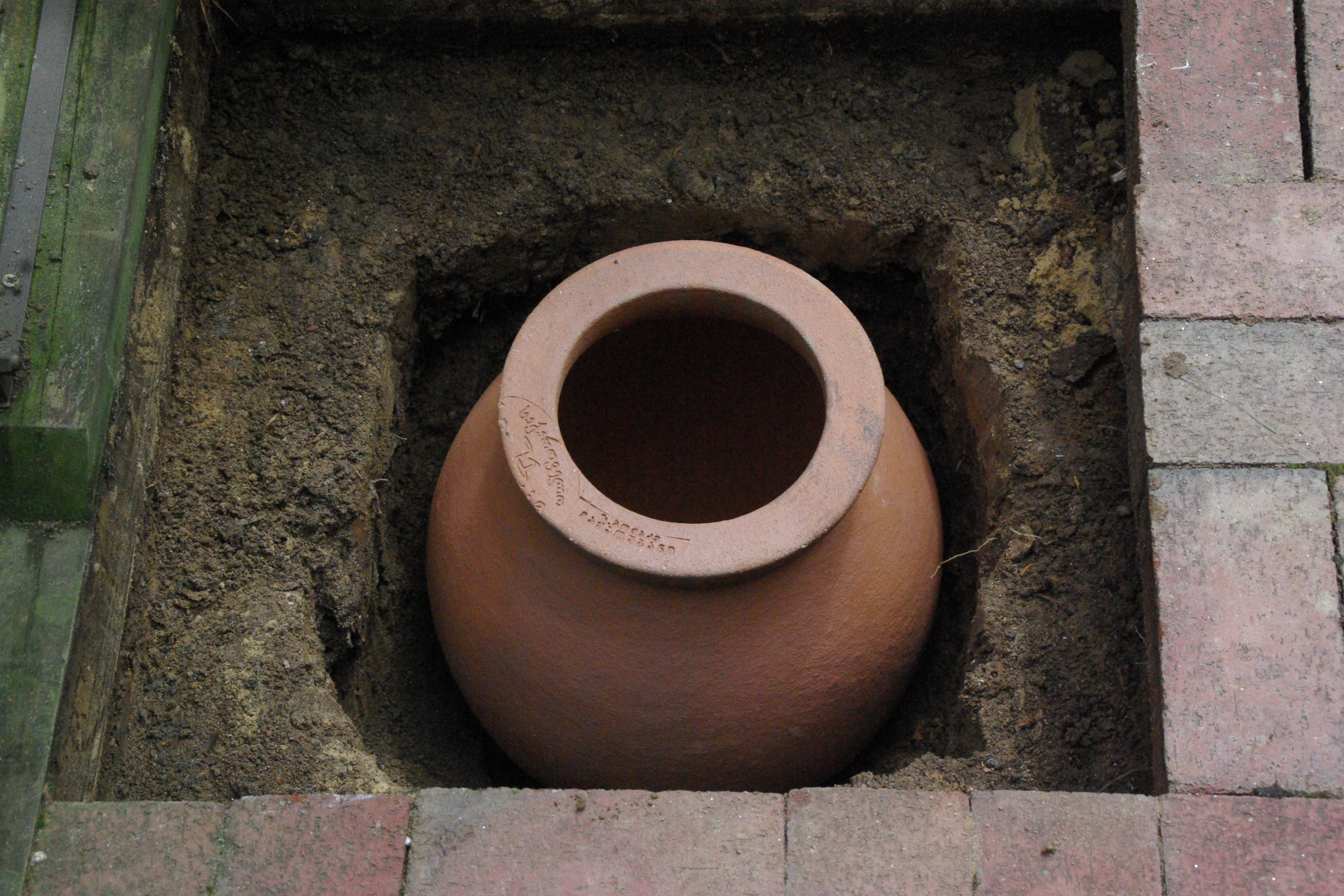
Qvevri is carefully placed in the ground

Qvevri is carefully placed in the ground

This past weekend we inserted the qvevri into the hole just below ground level and packed soil around it. Terry laid a circumference of bricks around the top layer that will eventually be cemented in place with more mortar mix.

Next step is locating a few gallons of wine grapes or juice with the skins.

Cheers!

Kathy


info@winetrailtraveler.com            Sitemap                      Privacy Policy

Copyright: Terry and Kathy Sullivan 2006-2013