Have you ever been offered a wine glass of red wine filled almost to the top? Isn’t it annoying as you spend more time concentrating on not spilling it than on the conversation? Needless to say wine glasses should not be filled to the top. So what’s right? Today the standard is to fill a glass with wine 1/3 to 1/2 full. Since white wine glasses tend to be smaller than red, this means that the glass will hold less white wine. By filling wine glasses only half full, it allows one to swirl the wine allowing molecules of aromas to enhance your taste of the wine. The nose can smell many more aromas than the mouth can taste. The nose and mouth work together in the tasting. There is one exception to the red and white guidelines, that is Champagne or sparkling wine. When using the flute stemware, pour the Champagne or sparkling wine to within 1/2 to 1 inch from the rim. Most of all, remember to sip your wine and enjoy the taste and the occasion.
I am a fan of restaurants serving local wine. At the same time, they should also have an assortment of other wines. For those who are visiting the area and want to taste wine from that terroir, the local wines provide a reason for stopping at that particular restaurant. For instance, if you are visiting Tuscany, do you want to be drinking French or Australian wine? How do you find restaurants that serve the local wine? The Maryland Association for Wineries is on the right start to help. Each month the website for Maryland wineries gives awards to two restaurants who provide local wines on their wine list and two retailers who carry local wines. Previous months winners stay on the website, making it easy to locate a selection of restaurants and retailers supporting Maryland wineries. To check this out go to http://www.marylandwine.com/mwa/retailer/pastpicks.shtml. Wouldn’t it be great if more restaurants and retailers supported their local wineries?
Don’t forget Mother’s Day is May 11th! You still have time to send a Mother’s Day card by snail mail or email. Better yet, if you will be seeing your mother why not take her a gift or cook dinner for her. Recipes with wine as an ingredient are available at http://winetrailtraveler.com. The Wine Trail Traveler Newsletter May issue offers other ideas for you to consider. Check it out at http://www.winetrailtraveler.com/newsletter/newsletter.html.
Unlike most agricultural products once established, vineyards can produce quality fruit for 80 to 100 years. Not surprisingly, the first few years are the most difficult for vineyards just starting out. Financial investment is considerable before the benefits begin to pay off. What happens when the climate begins to change after 15, 20 or 30 years and the quality of the grapes change – not for the better? Is it possible to continue creating good wine? Spain has noticed climate change resulting in vineyards moving north towards cooler areas. In Spain, the climate has changed enough to increase the sugar level in the grapes resulting in higher levels of alcohol. The Casa de la Ermita winery has attacked the problem with a creative solution. With viticulture and winemaking practices, according to their claims, Casa de la Ermita produces a wine that is flavorful but with only 6.5% alcohol. Altos de la Ermita was available in Spain as of April 1. This is a red wine blend of Monastrell, Tempranillo and Petit Verdot, aged in oak. According to the website, it “preserves all its characteristics and quality, together with approximately half the alcohol and half the calories.” I look forward to trying this wine when it becomes available in the US. Can it have all of the characteristics of a great wine with only half the alcohol and half the calories?
Shortly before dinner the other night, we decided to open a bottle of wine that we had purchased at a Virginia winery. Noticing a spot on one of the glasses, I washed one of the glasses and proceeded to pour the wine. Minutes later as I began to enjoy my wine and describe how good it was, my husband shook his head and said that something was wrong with it. It wasn’t good at all. Now the wine was somewhat sweet but I tasted it again and still thought it was delightful. Then I checked his glass of wine. The wine’s great aroma that my glass had wasn’t the same as his glass. The same bottle of wine, the same style of wineglass so what was different. We discovered that the recently washed wineglass still had a lingering of dish detergent. This in turn affected the aroma of wine and as aroma is tied into taste, the overall great taste of what was a wonderful wine was destroyed. Some experts suggest not using any detergent only hot (not too hot) water to wash the stemware. Others suggest using just a little detergent and rinsing with very warm water. Best of all check with the manufacturer.
Congratulations to Black Star Farms in Michigan who received a Psychologically Healthy Workplace Award this spring. Black Star Farms is a unique winery. It is an agricultural destination with much to offer visitors including a winery and tasting room, creamery, inn and stables. The award was based on evaluation of employee involvement, work and life balance, employee health, safety and recognition. Black Star Farms is one workplace that came out on top. This award granted to Black Star Farms does not surprise me in the least. All employees we met during our visit to the winery and stay at the Black Star Inn were friendly and more than willing to help us – even when our fireplace in our room needed assistance an employee came at 8:30 pm to take care of it. He was determined it would work and he spent half an hour lighting it for us. The breakfast at Black Star Farms Inn is a treat prepared by a gourmet chef. We met Donald Coe, partner and owner of Black Star Farms in January 2008. Donald has a passion for Black Star Farms as an agricultural destination and we discovered he has a warm, working relationship with his employees.
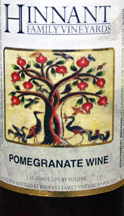 Just the other night, I enjoyed a pomegranate wine with dinner. This is a bottle of wine I bought in 2007 while visiting Hinnant Family Vineyards. This 100% pomegranate wine is bottled in a clear bottle with a lovely label accented with gold and an artistic view of a pomegranate tree. Rather than having a red wine with a simple beef stew, I decided to experiment. The pomegranate wine, with 12% alcohol, had a very fruity aroma and was sweet but crisp. The beef stew had chunks of soft butternut squash and the wine brought out the sweetness of the butternut squash. Pomegranate wine is not commonly available at many wineries, but when you have a chance to taste it, give it a try.
-1.5in.jpg)


Recycling Corks
What do you do with that cork after you open a bottle of wine? More likely than not you may just toss it into the trash. Stop! Cork is a unique nature made material. Portugal is well known for cork protection and it is in Portugal that cork trees are protected. The cork forests are host a wide variety of wildlife. A tree needs to be 25 years old before the cork can be cut from it and another nine years must pass before cork can be harvested again. Cork is a phenomenal material that can be used to make an assortment of items. Just a brief list begins with flooring, insulation, soundproofing, hockey balls, coasters, boat decking and so much more. Better yet wine bottle corks can be recycled into these products. Don’t throw out your corks, find a use for them. The reuse of corks is so important that ReCork America is beginning a recycling program in California.