About     FAQ     Contact      Advertise With Us      Press   

Champagne Legends and Myths

033115aIt seems today that people, including journalists, ignore the facts and make stuff up. If the fiction is mentioned enough times, it becomes true. This process can lead to legends, myths and marketing. The world of wine has its share of legends, myths and creative marketing that tends to stretch the truth. For example, there is a wine myth that white grapes make only white wines and red grapes make only red wines. This statement is so common that it is believed. Imagine a consumer’s shock when they are introduced to a white Pinot Noir, white Merlot or white Cabernet. Just as shocking was the puzzled tasting room staff at Black Prince Winery in Picton, Ontario when consumers asked for their red Chardonnay. A neighboring winery made a red Chardonnay and the consumers did not realize the blend or labeling laws. If you say something enough times, it becomes true.

What are some of the legends, myths and creative marketing used in the Champagne region? Perhaps one of the oldest myths centers around the coronation of French kings in Reims and saying they celebrated the coronation with champagne. The royal linkage in Reims is said to have started with the baptism of Clovis in Reims in 496. That is roughly 1,300 years before champagne evolved. During the centuries from 1223 until 1824, 27 French Kings were crowned in Reims. Most of those coronations may have had wines made in Champagne, some of which may have had a bit of effervescence, but they were still wines. Champagnes would only have been served during the last century or so of coronations. The wine industry marketed the concept of a “royal drink.” If you say something enough times, it becomes true.

How much truth there is in facts about events lends itself to forming legends. While in Toscana, I asked if there was any truth to the legend of the black rooster. Our guide, Catherine Leiner at Fèlsina simply stated, “Isn’t there some truth in every legend?” Champagne has the legend of Dom Pérignon, the blind monk at the Abbey of Hautvillers who invented champagne. The only truth in this legend is that there was a Dom Pérignon and he made wine. He probably wasn’t blind and he probably tried to stop effervescence in still wines not deliberately create it. Besides, the method of deliberately creating fizz with a secondary fermentation was already established prior to Dom Pérignon becoming the cellar master at the Abbey of Hautvillers. The first intentional crafted sparkling wines made in Champagne occurred about 15 years after Dom Pérignon’s death. But, if you say something enough times, it becomes true.

There may be more truth in the concept that champagne is a luxury beverage. One would have to scrutinize the definition of luxury and see how well champagne fits the definition. If one of the criteria is costs, it becomes difficult to classify champagne as a luxury drink in some areas. Much of the champagne sold in Champagne is sold by vignerons for around 12.50€ or about $13.50. The average price for champagne throughout the rest of France is 14.00€ or $15.00. If cost is the sole factor of luxury, champagne does not fit the category in France. Export it to the United States and the cost rockets. During my recent visit to a local wine shop, I observed prices of champagne in the $50.00 to $75.00 price range. At Total Wine a Veuve Cliquot Brut NV runs around $42.00 whereas a Napa Valley cabernet can cost over $100. For example a 2011 Caymus Cabernet Special Selection at $130.00. Of course there are less expensive and more expensive champagnes as well as Napa Valley Cabs. But the concept of luxury is suspect if the criteria of cost is taken into account. If you say that champagne is a luxury drink enough times, it becomes true.

Champagne marketing often uses words such as success, status and seduction. Champagne is a drink for all of those. If you want to feel good, drink champagne. If you win something, celebrate with champagne. Even if you lose, drown your sorrows with champagne. If you want to seduce someone, drink champagne. The winemaker at Barberani Winery in Umbria makes a sweet wine, Calcaia Orvieto Advanced Classic Sweet DOC “Noble Mildew.” Bernardo said, “This is a wine you can use to seduce women and girlfriends.” I asked his girlfriend if it worked, she said, “No.” How about champagne? Since fizz gets alcohol into the blood system more quickly than still wines, one can usually feel good sooner drinking a champagne than a still wine. There may be some truth to this concept.

The wine industry should seize the opportunity that myths, legends and marketing affords consumers. The wine industry can gently educate consumers. Wouldn’t it be great if a consumer asked what red wine was blended into Chardonnay to make the red Chardonnay?

Cheers,
Terry

Oysters on the Half Shell Recipe

In addition to its religious significance Easter is a wonderful combination of things that everyone can enjoy including springtime, bright sunshine, flowers in bloom, gatherings of good friends & family and food.

Below is a recipe for Oysters on the Half Shell made with J Vintage Brut and a Citrus Champagne vinegar. Check it out and decide if you’d like to create this recipe for your Easter celebration or anytime.

Cheers!
Kathy

Oysters on the Half Shell with J Mignonette

Ingredients: 

Oysters on the Half Shell with J Mignonette

¼ Cup J Vintage Brut, reduced to 2 Tbls
2 Tbls O Brand Citrus Champagne Vinegar
2 Tbls Shallots, finely minced
To Taste Fleur de Sel or Kosher Salt and White Pepper

Cocktail Sauce

¼ Cup Ketchup
¼ Cup Chili Sauce
1–2 Tbls Horseradish
To Taste Lime Juice and Tabasco
Optional ¼ cup Port Wine reduced to 1 Tbl

Method:

Oysters on the Half Shell with J Mignonette
Combine above ingredients and mix well.
Place a teaspoon in each oyster half.

Cocktail Sauce

Combine all ingredients and stir well.

Provided by J Vineyards & Winery Culinary Team
J Vineyards & Winery is located in Healdsburg, California.

Four Cocktail Recipes for Easter

Last month I posted several cocktail recipes using CÎROC spirits. Now just in time for Easter, Dianne  from EMCBOWERY, a  pr firm,  sent me four more cocktail recipes with photos to share with my readers. Enjoy these recipes during your Easter celebrations.

In addition to the recipes below, Dianne suggested Caffeinated Club. This is a club soda made with caffeine. Dianne wrote, “While entertaining your guests, Caffeinated Club can be enjoyed as either a stand-alone drink and also, the perfect ‘spritz’ mixer ingredient for mimosas, cocktails, spritzers and even ‘mock’- tails, mixed drinks without the alcohol. “

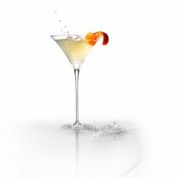
PINEAPPLE GINGER FRESCA 

Martini

Pineapple Ginger Fresca

1.5 oz CIROC Pineapple
.75 oz ginger liqueur
.75 oz lime juice
.75 oz pineapple juice

Shake.
Strain.

Garnish: Orange Peel
Glass: Martini

THE SPARKLING PEACH

rock glass

Sparkling Peach

1.5 oz CÎROC Peach
3 oz Club Soda
Squeeze of Lime

Garnish: Peach Sliver & Lime Wedge
Glass: Round Rocks Glass


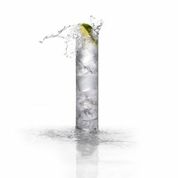
THE PERFECT SHOT

lime

The Perfect Peach

1.5 oz CÎROC Vodka
3 oz Club Soda

Garnish: Lime Wedge
Glass: Collins


CÎROC CHERRY BLOSSOM TINI

SSSSSSSSS

Cherry Blossom TIni

1.5 oz CÎROC Vodka
.5 oz Orange Liqueur
.5 oz Cranberry Juice
.25 oz Fresh Lime Juice
Dash of Bitters

Shake.
Strain.

Garnish: Lime Wedge
Glass: Martini

Cheers!
Kathy


A Look at Nebbiolo: What It Is and Where It Grows

The Nebbiolo grape variety is primarily found in the Piemonte region of northern Italy. This red grape variety is used in producing Italy’s Barolo DOCG and Barbaresco DOCG.

Recently Three Fox Vineyards in northern Virginia received a  gold medal at the 7th Annual Virginia Wine Lover Classic and a bronze medal in the 2015 Governor’s cup for its 2012 Piemontese Nebbiolo.

According to the Three Fox Vineyards’s website: “The princely grape of the Italian Piemonte, used for Barolo and Barbaresco, and estate grown at Three Fox Vineyards on the Virginia Piedmont. Elegant with great structure, black cherry, dark red fruit, and spice notes, good forward fruit and a symphony of flavors in the finish.“

About Nebbiolo

The Nebbiolo grape variety has been dated back to the 13th century. The grape variety was named for the fog that can cover the vineyards during the late fall harvests.  Nubbia is Italian for fog.

Nebbiolo needs a cool and long growing season. The grapes flower early and ripen late. Although Nebbiolo is said to be a difficult grape to grow, in addition to its home in northern Italy, Nebbiolo can also be found growing in Switzerland, Australia, Uruguay, Argentina and the US.

The UC Davis National Grape Registry offers a long list of  synonyms for Nebbiolo. While some of the synonyms incorporate the name Nebbiolo others are very different such as such as Martesana, Spanna, Pugnet, and Rosetta.

Two striking descriptions of wines produced with Nebbiolo grapes include roses and tar. Also look for fruit notes, bold tannins and acidity.

Nebbiolo Wine and Food Pairings

Nebbiolo is a wine that deserves to be enjoyed with good food. Consider pairing Nebbiolo wines with a wide variety of entrées including beef ribs, beef stews, and truffles.

When ever you travel try a wine made with Nebbiolo.

Cheers!
Kathy

2015 TEXSOM International Wine Awards

The 2015 TEXSOM International Wine Awards have been announced. According to a press release from BALZAC Communications, there were more than 3,600 entries. Of those entries 14% were awarded gold medals. Wines were from 21 countries and 15 US states. The gold medal winners were from a diverse number of regions around the world. In the US, the states winning gold medals included Texas, California, Oregon, Washington, MIssouri, Wisconsin and Hawaii. International countries winning gold included Argentina, Chile, France, New Zealand, Australia, Italy, South Africa, Portugal, Germany and Spain.

The wines are separated into separate categories including, sherry, sparkling, white wines, rosé & blush wines, red, dessert and fortified, sake, flavored and other. If you are interested in learning which wines were the winners of Gold, Bronze or Silver, visit the Texas Monthly website.

It took 28 sommeliers, 68 judges,  over 50 volunteers and a staff of eight to hold this event.

If you produce wine, consider participating in next year’s Texsom International Awards.

Cheers!
Kathy


Champagne Reveals a Cellar Master’s Creativity

032315aThere are 349 champagne houses in the Champagne region of France. With their portfolio of champagnes there are more than a thousand champagnes for consumers. Then there are many more champagnes crafted by growers who make their own champagnes, and co-operatives. With so many champagnes to choose from, one may think that many of them taste alike. Not so! I learned in the French Wine Society’s Champagne Master Level course that cellar masters have to be very creative.

Making wine now for eight years, I know that there are decisions to make that will make my wine different than another winemaker’s wine using the same grapes from the same vineyard plot. For example, if we use two different yeasts for fermentation, the wines will be different. Cellar masters in Champagne have even more variables to play with. With 349 champagne houses, the possibilities of making different champagnes seem endless.

The obvious difference is the terroir. Different areas in Champagne have vineyards that will show differences in the same grape varieties. When the grapes reach the winery and are pressed, the first fermentation is started. Most champagne winemakers use cultured yeasts and a few use natural yeasts. The type of yeast used can make a difference. There are hundreds of cultured yeasts available for making wine. There are also other winemaking variables. For example, are the still wines reductive, oxidative or somewhere in between? Some wines spend time in oak, others do not. If in oak, other variables enter the equation including the type of oak, the age of the barrel or cask, how long the wine ages in oak and the size of the barrel or cask.

032315bThen there is the blending of the grapes. Does a house make a single varietal champagne or blend the three most common champagne grapes Pinot Noir, Pinot Meunier and Chardonnay? Or does the cellar master make a combination of two varietal grapes? Some champagne houses source grapes from many vineyards and make still wines by variety and vineyard location. The cellar master at Louis Roederer has 450 wines to blend into the Brut Premier.

The majority of champagnes are non-vintage. The wine made in a particular year is blended with wines made from previous years. The age of the reserve wines that go into a non-vintage blend is also a factor. Moët & Chandon base wines are around one to two years old. Charles Heidsieck base wines used for blending non-vintage champagnes are five to twenty years old. Add another variable, how much reserve wine goes into the blend? Piper-Heidsleck may use 10 to 15 percent, while Bollinger may use 50 to 60 percent.

Once the wine is blended, there are additional variables that come into play during secondary fermentation. Once again yeast becomes a variable. How long the wine, that is now in bottles, remains on lees is another variable. G. H. Mumm has their Brut NV aging on the lees for about 24 months. Gosset is closer to 48 months. After disgorgement more variables come into play with the dosage. For their Brut NV champagne, Piper-Heidsieck adds a little over 10 grams/litre of sugar, whereas Jacquesson only adds a little over 2 grams/litre.

With so many variables to take into account, even with hundreds of winemakers and cellar masters, the champagnes are going to be different. Some people may group together similar styles of champagne from different houses. So if a consumer really likes one, chances are the consumer will also like others crafted in a similar style. But the two will probably be different. I have always thought that wine begins in the vineyard. The winemaker is an artist who creates a wine from the grapes. There are hundreds of decisions to make that will impact the final product. In Champagne, the winemaking team deals with many more variables than still winemakers. Their creativity is revealed when the enclosure is removed and this beautiful wine fills the glass.

I will have a chance to travel to Champagne next month for the International Wine Tourism Conference in Reims. Looking forward to to the grand tasting of 30 champagnes from ten producers.

Cheers,
Terry

2015 Spring Charity Wine Fest in Grand Rapids

Noto’s Old World Italian Dining is the location of the 2015 Spring Charity Wine Fest on April 17, 2015. The restaurant is located in Grand Rapids, Michigan.

Both general and VIP tickets are available. VIP participants may arrive at 6pm while others are asked to arrive at 7pm. Tickets are available online. Tickets Online tickets are $60 for general admission and $100 for VIP. Those waiting until they reach the restaurant will find tickets are $65 and $110.

Attendees will find that the charity event features more than 300 International wines, Italian cuisine, live entertainment and a wine/culinary auction.

The 2015 charity event will support local charities, Franciscan Life Process Center, American Culinary Federation, HELP Pregnancy Crisis Aid.

Address
Noto’s Old World Italian Dining
6600 28th Street
Grand Rapids, MI 49546

While I have never had the opportunity to visit Noto’s Old World Italian Dinning restaurant, after visiting their website, it appears to be a wonderful Italian restaurant. Check out their website for some great photos. Perhaps the restaurant would be perfect for wedding receptions, anniversaries or showers. If you are in the Grand Rapids area, this 2015 Wine Fest charity event offers a great time to check it out.

Cheers!
Kathy


Spiced Chocolate Cake with Macerated Berries Paired with Zinfandel

St. Francis Winery & Vineyards

St. Francis Winery & Vineyards

A visit to St. Francis Winery & Vineyards is delightful experience. As I noted in an article I wrote after experiencing their hospitality, “St. Francis creates the ideal environment for: wine, food and conversation.”

On your next visit to Sonoma County, make sure one of your stops includes a visit to St. Francis Winery.

Cheers!
Kathy

Spiced Chocolate Cake With Macerated Berries

 Pairs With: Zinfandel

St. Francis Winery tasting room in Santa Rosa

St. Francis Winery tasting room in Santa Rosa


Ingredients:

14 ounces bittersweet or semisweet
chocolate, chopped
1 ¼ cups unsalted butter
2 teaspoons ground cardamom
1 teaspoon ground cinnamon
½ teaspoon ground cloves
½ teaspoon ground white pepper
6 large eggs
6 large egg yolks
2 teaspoons vanilla extract
3 cups powdered sugar
1 cup all purpose flour
¼ cup granulated sugar
1 cup fresh blackberries
1 cup fresh raspberries
½ cup St. Francis Port
additional powdered sugar

Preparation:

  1. Place berries in a small bowl with granulated sugar and port. Gently toss all ingredients together, cover and store in refrigerator for at least one hour. The berries may be done up to four hours ahead of time.
  2. Generously butter eight ¾ cup soufflé dishes.
  3. Stir chocolate, butter, cardamom, cinnamon, cloves, and white pepper in a bowl, set over steaming water, until melted and smooth. Cool slightly.
  4. Whisk eggs, egg yolks, and vanilla in large bowl.
  5. Add in 3 cups powdered sugar, then chocolate mixture, then flour.
  6. Transfer batter to prepared dishes, filling to top and dividing equally. (Can be made 1 day ahead, cover and refrigerate.)
  7. Preheat oven to 425°F. Bake cakes until batter has risen above dish, top edges are dark brown, and centers are still soft and runny, about 15 minutes, or about 18 minutes for refrigerated batter. Run small knife around cakes to loosen. Allow cakes to rest in dishes 5 minutes.
  8. Using hot pad and holding dish very firmly, place plate gently atop 1 cake and invert onto plate. Repeat with remaining cakes. Dust with powdered sugar.
  9. Spoon the macerated berries onto each plate being sure to include some of the juices with each scoop of berries. Add your favorite vanilla ice cream for an even more decadent dessert.

Recipe provided by St. Francis Winery & Vineyards in Sonoma, California

Petit Manseng: What It Is and Where to Find It

New planting of Petit Manseng

New planting of Petit Manseng

Petit Manseng, an aromatic white grape, is found in limited areas of the US and France. The grape is indigenous to the southwest region of France. Petit Manseng does well in high humid regions with long growing seasons because of its characteristic loose bunches and the variety’s thick skin. Frequently Petit Manseng is harvested late, since the grapes stay at a high acidic level while the sugar level increases.

Wine notes: Look for notes of cinnamon, tropical fruits, citrus and peach.

East Coast Wineries Offering Petit Manseng

Chrysalis Vineyards in Middleburg, Virginia: According to the winery, they were the first in America to have a varietally labeled Petit Manseng. The description includes “aromas and flavors of flowers, honey, candied fruit and spice.” It is a dessert wine and suggested pairings include light or lightly flavored desserts and cheese platters.

Prince Michel Vineyard and Winery in Leon, Virginia: Mount Juliet 2008 Petit Manseng  is from the Mount Juliet vineyard along the slopes of the Blue Ridge mountains.

Pearmund Cellars in Broad Run, Virginia describes their 2013 Petit Manseng. “A refreshing and crisp, dry white with notes of grapefruit and lemon peel. Pearmund Cellars is the largest producer of this standout varietal in the Americas.”

Tarara Winery in Leesburg, Virginia: The 2010 Late Harvest Petit Manseng description mentions incredible intensity and notes of rose petal, pineapple, mango, caramel and cinnamon.

Veritas Vineyard & Winery in Afton, Virginia: In addition to a blend with Petit Manseng, Veritas also has a 2013 Petit Manseng. According to their description, “The tropical flavors are jumping out of the glass with pineapple, mango, and candied citrus fruits backed with subtle nuances of spice and white flowers.” The wine has 4% residual sugar.

Linden Vineyards in Linden, Virginia: 2009 Late Harvest Petit Manseng: The owner and winemaker is Jim Law. He describes the aromas of this wine as exotic dried tropical fruits and high notes of balsam and burnt sugar. Jim suggests pairing this late harvest wine with foie gras or fruit desserts – apricots, peaches, pears or dried fruits. The wine also does well with ripe triple cream cheeses and sheep cheeses from Virginia and the Pyrenees.

As you travel to wineries on the East Coast of the United States or in southern France, look for wines made with Petit Manseng.

If you are visiting Pearmund Cellars this weekend for their Barrel Tasting event be sure to stop by the tasting counter and ask to taste their Petit Manseng.

Cheers!
Kathy


CANCELED! Save the Date: April 10 and 11 for the Capture Artisan Wine Tour

Please note: The Capture Artisan Wine Tour event in Washington, DC has been postponed until 2016! According to Ring Communications, “After careful consideration, the team behind the Capture Wine Tour has decided to reschedule the first six tour stops (DC, New York City, Atlanta, Miami, Chicago and Boston) to Spring of 2016.”

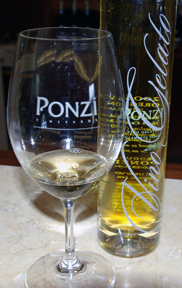
Ponzi Vineyards to participate in Capture Wine Tour

Ponzi Vineyards to participate in Capture Artisan Wine Tour

Capture Artisan Wine Tour is a special wine and culinary celebration that takes place in 12 cities across the country during 2015. The first of these events takes place in Washington, DC at Dock 5 of Union Market on April 10 and April 11.

Capture Artisan Wine Tour focuses on artisanal wineries and local cuisine. Types of foods to be enjoyed will include farm-to-table dishes, seasonal locavore specials, petit-bites, artisan cheeses and chocolates. Beverages will include champagnes, brandies and cocktails.

Artisanal wineries involved with Capture Artisan Wine Tour event include:

The eateries involved in the Washington, DC event include Bidwell, Cashion’s Eat Place and Whisked. Chef Matt Baker of City Perch and Chef Michael Herr will also be participating in the Washington Capture Wine Tour.

General and VIP tickets are available online for Friday and Saturday.

The address for Washington, DC Capture Wine Tour is Union Market, 1309 5th St NE, Washington, DC 20002.

During 2015 the Capture Artisan Wine Tour will also take place in New York, Atlanta, Miami, Chicago, Boston, San Francisco, Los Angeles, San Diego, Phoenix, Dallas and Houston. Check out the Capture Artisan Wine Tour website for the 2015 upcoming dates.

Cheers!
Kathy


info@winetrailtraveler.com            Sitemap                      Privacy Policy

Copyright: Terry and Kathy Sullivan 2006-2013