About     FAQ     Contact      Advertise With Us      Press   

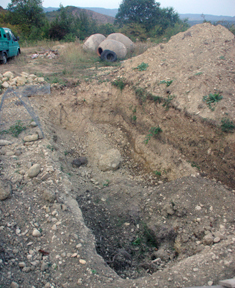
You Know You’re a Wine Geek When You Get Excited about a Hole in the Ground

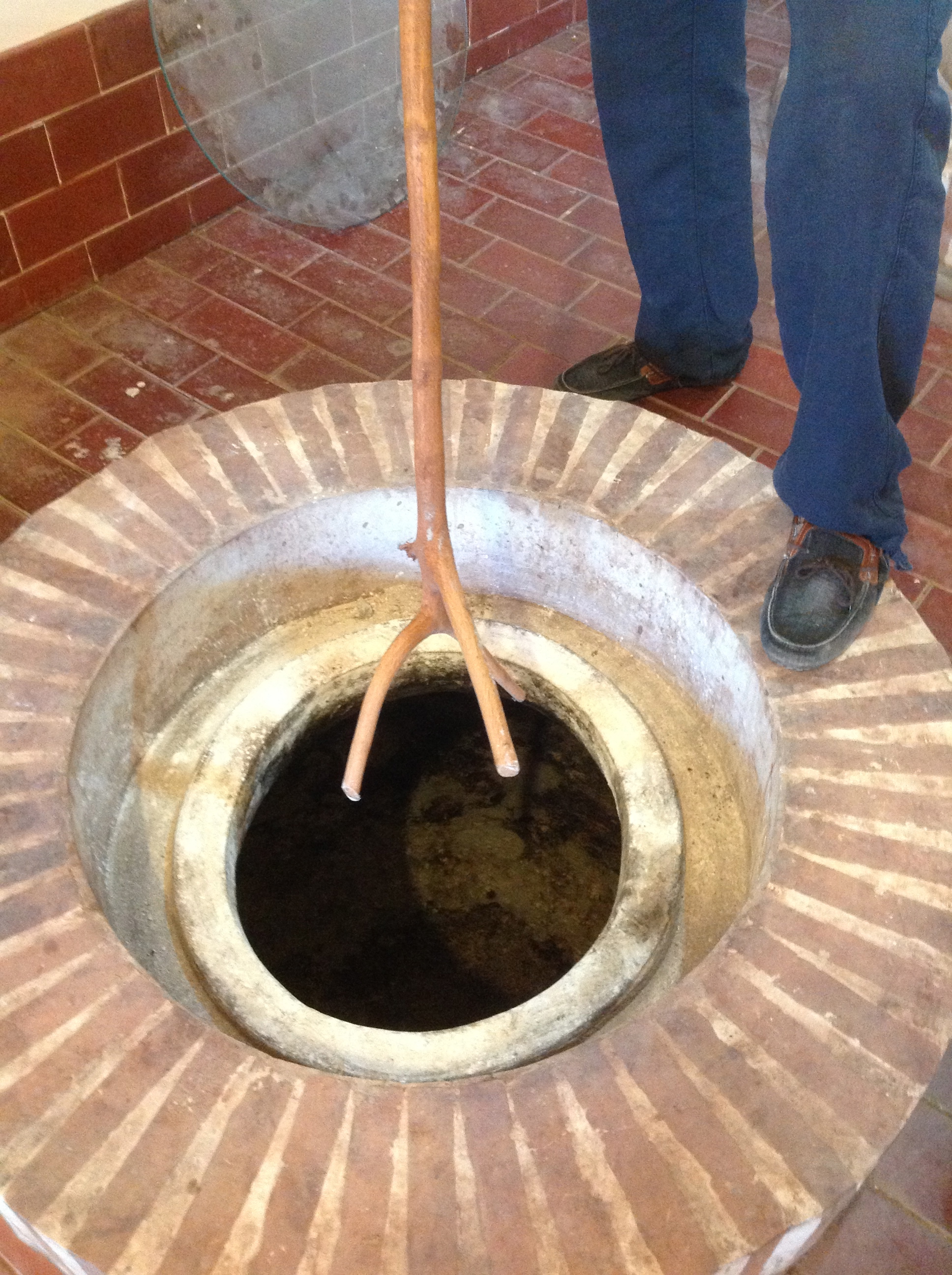
Our driver was laughing at us. How could we be excited about seeing a hole in the ground? We weren’t the only ones that wanted to see a hole the would soon hold several qvevri. There were two agriculture students, one from Austria and the other from Ukraine. They were interns at Our Wine and learning a lot about vineyards and winemaking.  They were as excited as we were. Others couldn’t believe that we were excited to see a hole dug out in the ground.

But that is not what we really saw. I didn’t see it for what it was. I saw it and dreamed of what it would become. I saw several qvevri, made from earth and buried in the earth. The qvevri held wine. Above the hole, I saw people from all over the world tasting wines with smiles on their faces. The qvevri made wine was discovered by wine travelers that just expanded their personal wine journey by multiples.

It’s not just a hole, it symbolizes a way of life that is 8,000 years old. Is is symbolic of a winemaking technique that is the most natural way of making wine on earth. It represents the only way a grape can truly express itself. And people are interested.

A hole in the ground is not just for wine geeks. Dare to learn about natural winemaking in qvevri. Visit Georgia, Sakartvelo.

Cheers,
Terry

8th Day in Georgia (Sakartvelo): Birthplace of Wine

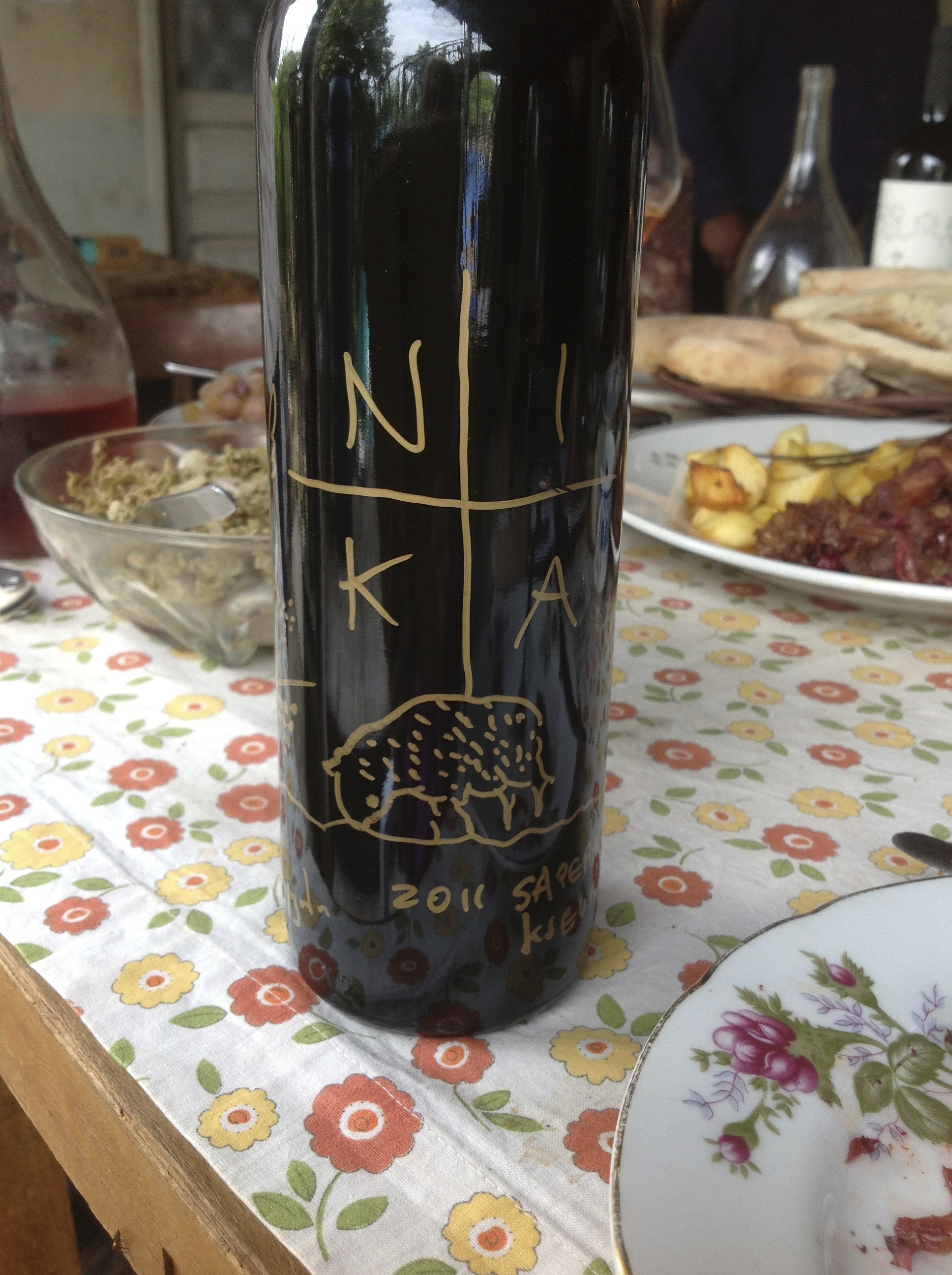
Nika Qvevri Wine

Tuesday was a very busy day with visits to three Georgian wineries. Two of the wineries are small production wineries that are producing wines using the Georgian traditional qvevri. The other winery produces large quantities of wine using stainless steel tanks and oak barrels. In 2011 they began producing qvevri wines.

Our first visit of the day was with Nika at his home winery. We discovered that Nika is an artist, sculptor and winemaker. He concentrates his winemaking skills on producing qvevri wines. Nika was born in Tbilisi and lived in Germany for several years. He returned to Georgia and now resides in a small village.

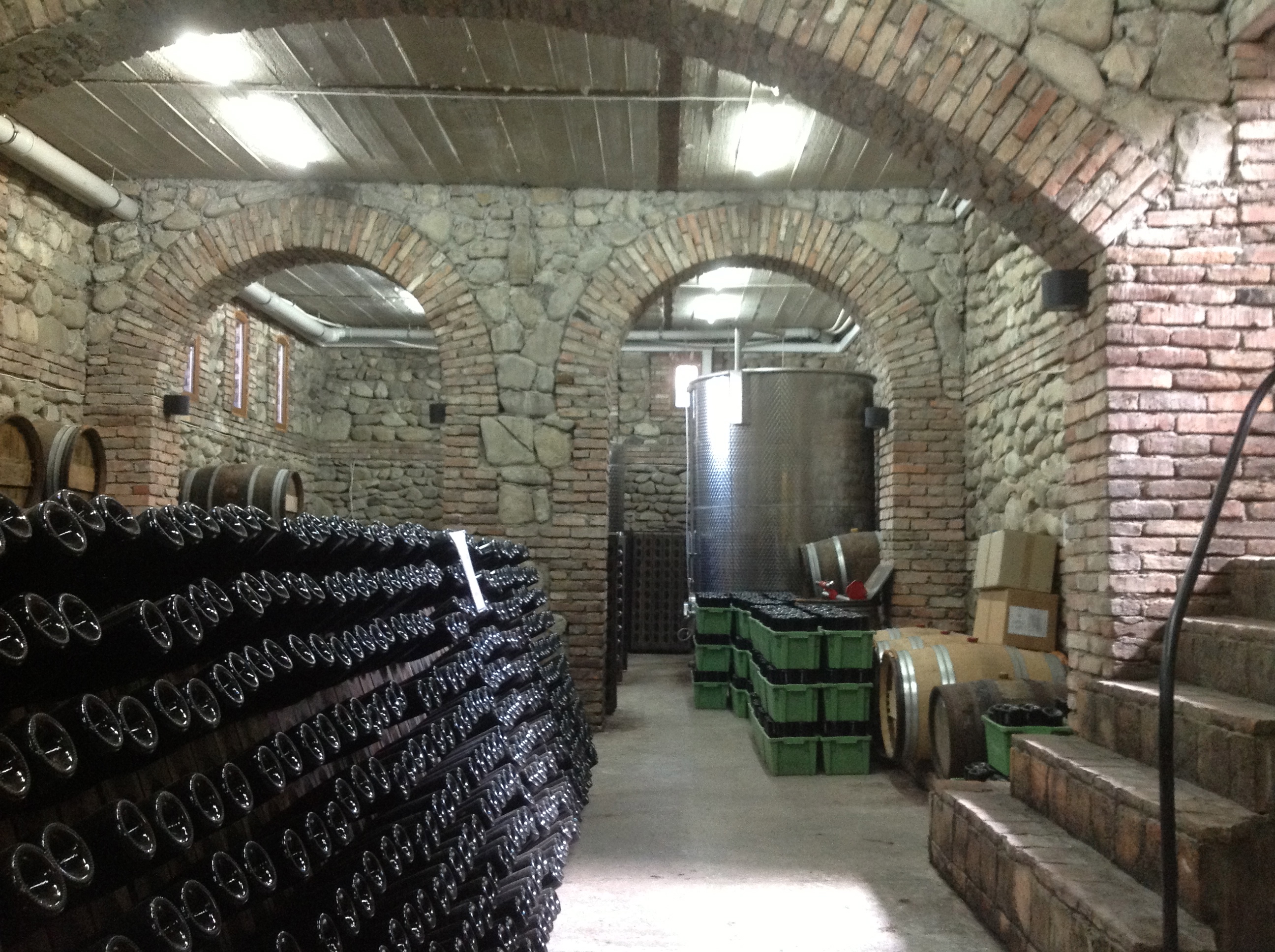
Our next visit was to Teliani Valley a large production winery. We began our visit at the press pad where grapes were dumped into the crusher. We also visited the winery with numerous large stainless steel tanks and oak barrels. Following this we went to another area where several qvevri have been buried. A short time later we were escorted into the large tasting room that had a delightful wine setting.

Our last winery for the day was Our Wine, a small producer of qvevri wines with his own vineyards. We sat at a picnic table in the shade of trees to talk about and taste wine.

We look forward to learning more about qvevri wines.

Cheers,
Kathy

7th Day in Georgia: Birthplace of Wine

Remi Kbilashvili, a qvevri maker

Our day began with a visit to the 6th century Ikalto Monastery that included an academy. It was also known for being a large winemaking enterprise with numerous qvevri discovered. Our visit included a description of how St. Nino brought Christianity to Georgia.

Soon we left the monastery for our first visit with Remi Kbilashvili a qvevri maker. He is a fourth generation qvevri maker and his son will continue the tradition. Currently he is working on eight large qvevris that was a special order. He noted that only three people are making qvevri in Georgia today.

Our next visit was at a small winery that produces 2,600 bottles of qvevri wine. Winemaker Kakha Berishvili is friendly and laidback. His winery is located close to the Didkhevi River. The vineyards are across the river about one kilometer away.

After lunch at Marleta Café, we visited Besini. This winery began as a plant nursery. They followed with a vineyard and then began producing wine. Currently they are producing 500,000 bottles and with the Russian embargo lifted, they will be producing 3 million bottles. While producing wine they are also completing the winery. Next they will be renovating old buildings to be used for a hotel and building a tasting room. Besini has a bright future ahead as an agritourism site.

Pheasant’s Tears is a winery with a restaurant in the renovated mountaintop town of Sighnaghi. The name Pheasant’s Tears comes from the local area where it has been said, “You can make wine so good you can make a pheasant cry.” Pheasant’s Tears owner is an American who discovered Georgian hospitality and decided to start a winery here. He has several vineyards, one of which is a vineyard library with 200 different grape varieties. His most unusual but very good wine has 80 different varieties in it.

What more delightful things does Georgia have in store for us?

Cheers! Kathy

Basignani Winery Special Offer

AAA in Baltimore is offering members a special deal for a wine and cheese tasting at a local winery. Basignani Winery located in Sparks, Maryland is offering a wine tasting of eight wines, a cheese platter and two souvenir wine glasses for $12. This is valued at $26. Tickets are only available for a few days and valid only on Friday, Saturday or Sunday. Several restrictions and limits apply. But it seems to be a good deal for wine enthusiasts and provides an incentive to visit.

Basignani Winery is one of the oldest wineries in Maryland having started 26 years ago. We visited Basignani a few years ago and then went to help with harvesting Marechel Foch grapes. Check out our online article.

Also, check out the Wine Trail Traveler calendar with numerous events occurring at wineries in the next few days.

Cheers! Kathy

6th Day in Georgia: Birthplace of Wine

Twins Wine Cellar in Napareuli

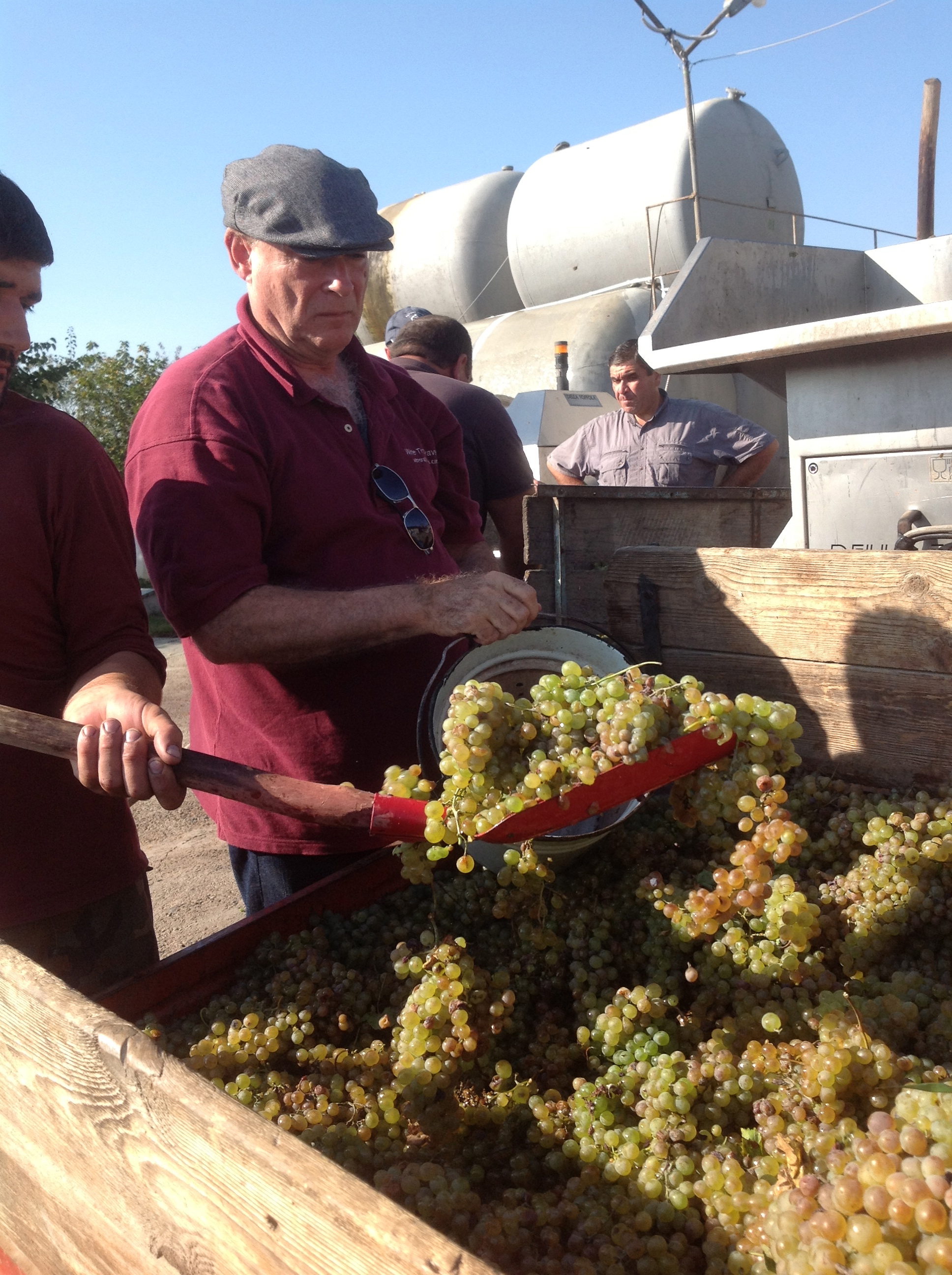
Our 6th day in Georgia, the cradle of wine, was amazing. The sun was warm and a slight breeze was delightful as we harvested two of Georgia’s indigenous grapes,the first was Rkatsiteli. As we harvested we sorted the grapes, leaving behind the few grapes that would not add to the flavor of the wines. We returned to Twins  Wine Cellar in Napareuli where a smaller vineyard with Saperavi was ready to be harvested and we spent a little time harvesting these grapes.

Twins Wine Cellar in Napareuli has 100 or so qvevris, handmade clay pots inserted in the ground where wines are fermented and aged. Special techniques are used when making these wines including cleaning with cherry bark and burning sulfur inside the qvevri. We helped to crush Rkatsiteli grapes and before long we added the crushed grapes to the 75-liter qvevri and covered the top.

It was a long day but very enjoyable. Twins Wine Cellar in Napareuli offers a terrific agritourism experience for visitors. In addition to the wine, Twins Wine Cellar offers experiences in the vineyard and winery during the year. Visitors can lodge at the winery hotel in Napareuli and enjoy a meal at the winery. Be sure to check out the winery website.

Before arriving back at Chateau Mere for the evening we stopped at Lopota Lake, a resort for a sumptuous dinner. Views of the manmade lake with the Caucasus Mountains in the background were eye-catching. Dinner included sausage wrapped in crepes, chicken, tomato salad, fresh baked bread and much more.

Looking forward to visiting more Georgian wineries this week.

Cheers!
Kathy

5th Day in Georgia (Sakartvelo): Birthplace of Wine

Vineyard Library at Kindzmaurauli Marani

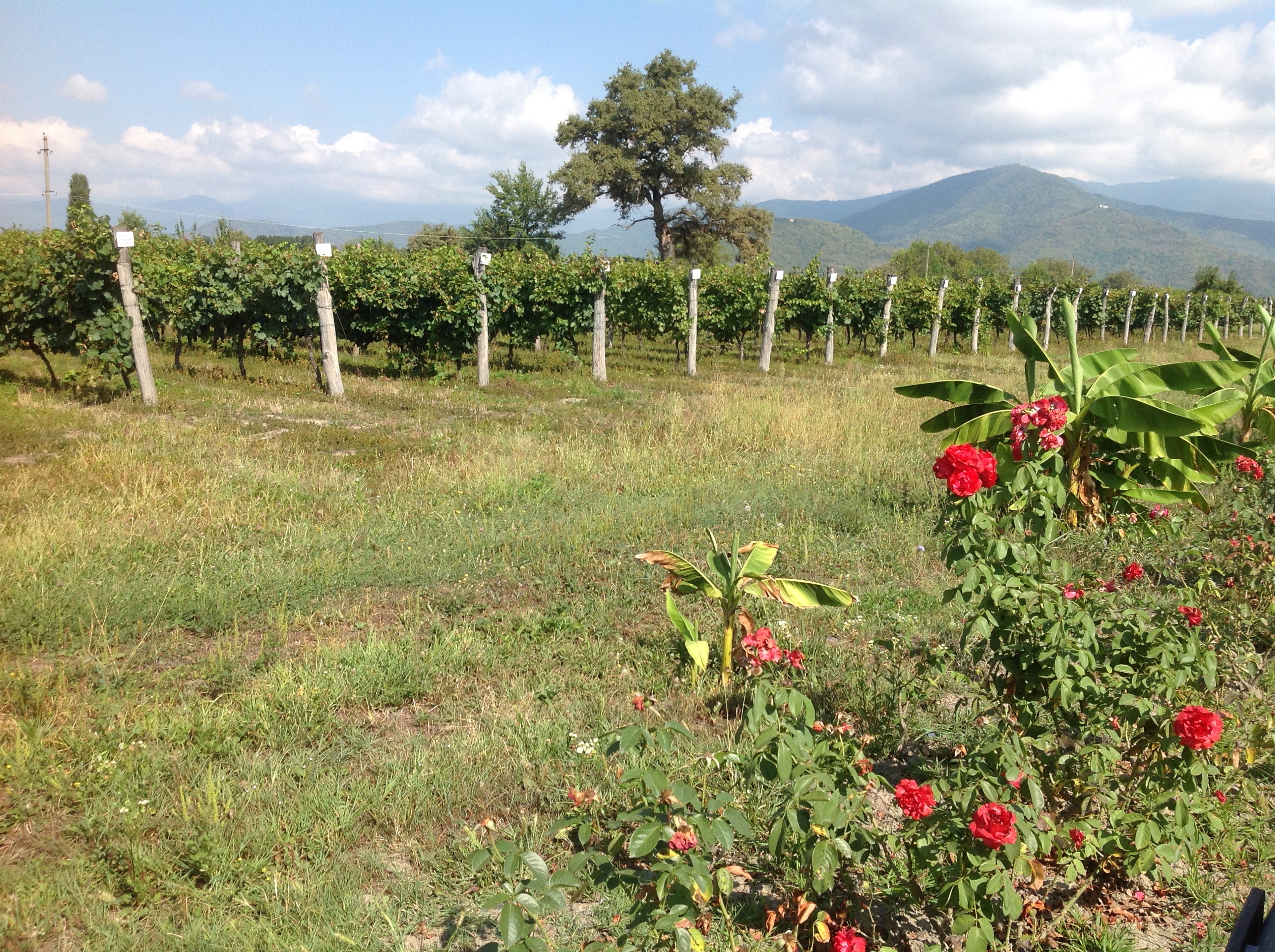
After a quick breakfast at Chateau Mere, we were on our way to the first of four Georgian wineries. Kindzmarauli Marani is a winery with a large vineyard “library” of well maintained grapevines. Currently the vineyard has 420 grape varieties that can be found in Georgia. In addition to producing wines, the winery also make chacha also known as grappa.

Khareba was our next stop.  This large winery is also an agritourism site. The winery is known for its long tunnels lined with aging wines as well as a restaurant. Visitors can visit the 5th floor that offers distant views of the vista.

After stopping at one of Ilia Lake’s newest hotels Royal Batoni for lunch on a deck overlooking Ilia Lake, we went on to our third winery of the day.

Badagoni winery produces 4,000,000 bottles of wine. In order to produce this they use their 400 hectares of vineyards and source grapes from other Georgian grape growers. The name Badagoni is for the ancient god of wine and winemaking in ancient Georgia.

Our last stop for the day was Georgian Wines & Spirits, GWS. The company started in 1993, however; the winery was built in 1974 for the Soviet Union. Today the quality of the wines has improved and wines are exported to several countries. A separate brick building is the location of numerous qvevris that are currently unused. Plans are being made to eventually begin using the qvevri again. The building also has several clay artifacts of which five are 2,000 years old.

Tomorrow morning we will be on our way to harvesting grapes at another Georgian winery.

Cheers! Kathy


4th Day in Georgia: Birthplace of Wine

Winery in Georgia

Leaving Chateau Mere about 10:30 am, it wasn’t long before we reached Teleda Winery. While this is a young winery, they are producing qvevri wines. The winemaker is considered a “rock star” because of his capabilities in producing wines. The highlight of our visit was to see workers carefully putting a pail with cardboard burning in it into a qvevri. The purpose of the fire was to burn off gas given off during the fermentation process. A worker then descended into the qvevri and began removing the pomace, called chacha in Georgia. After tasting the Teleda wines we drove to Schuchmann, one of the oldest wineries in the Kakhetian region of Georgia. Schuchmann includes a restaurant. After a delicious lunch and a wine tasting we went on to Tsinandali Museum.

The Tsinandali Museum was built in the 1800s. After the tour of the well-maintained historic house, we went to the mansion’s wine cellar where we tasted Kondol wines.
On the way to the wine cellar, we participated in a tradition. Donations are accepted through a small window that opens into a small room. A dish is placed towards the middle of the room. Coin donations are tossed through the small window. If the tossed coin lands into the dish one’s wish is granted.
Soon we were on our way to Shumi Winery. Shumi is a winery with a vineyard library that contains 300 grapevine varieties. Each variety is labeled. The winery also has a long room with a variety of antique clay wine jars etc. One of the oldest qvevris to be found has carefully been restored. The clay pottery dates back to the 4th century BC.

Chateau Mere

Returning to Chateau Mere for the evening we participated in baking bread in a large outdoor clay pot. After molding the bread we flattened the strips of bread against the inside wall of the hot clay oven. In a few minutes it was finished and ready to eat. According to one person this type of bread baking has been happening since the 1st century AD.

I wonder what we will discover next in this friendly country of Georgia.
Cheers,
Kathy

Traveling the Roads of Kakheti, Georgia (Sakartvelo)

We have been in Kakheti for a few days visiting wineries. For Americans, the scene is different than what you are use to. The first thing Kathy noticed was the lack of barns along the country landscape. Cattle, as well as other animals, range freely. There are few fences and we only saw one fence near a road we traveled. That poses a challenge for drivers. Fortunately we have a driver who is use to navigating along cattle that have ambled onto the road. Only once did he have to stop the car and use the horn to offer encouragement for a cow to move. We have seen many cows next to the road grazing. They are often prodded by a herder, but not always. The roads are also shared by donkeys, horses and chickens. Drivers must be ever vigilant. Another scene in Kakheti common in September is grapes transported to the wineries. Truckloads of Rkatsiteli and Saperavi are on the roads coming and going in both directions throughout the day. It reminds me of the trucks on the roads in Sonoma County during harvest. There are also tractors pulling carts overflowing with grapes. We also observed horse-drawn carts loaded with grapes. Last evening when we left Georgia Wines and Spirits, GWS, there were over 40 vehicles lined up for weighing and dumping their grapes into a hopper at the winery. The growers have a long wait even though winery staff are now working 24 hours a day. We observed the growers grouping together and walking to the different vehicles to taste the grapes. This is a great idea. A grower knows his grapes, it is also good to know other grower’s grapes. Ever present are views of the Caucasus Mountains. There has been a haze in the distance. We were told that August is a good time to view the mountains if you want a clear view. Even through a haze, one can observe the majesty of the range. For wine travelers, the Kakheti region of Georgia is a must see wine region. Get to know the wines and the 8,000 years of winemaking and grape growing that people have used.  You will also discover wine grape varieties that the rest of the world doesn’t grow.

Cheers,
Terry

In case you didn’t believe!

Day 3 in Georgia: Birthplace of Wine

Visiting Aliverdi Monastery to Discover Qvevri Wines

On Thursday, we traveled to the Kakheti region and visited two wineries. Later we traveled to Chateau Mere for dinner and lodging. This lodging site also produces traditional wines and qvevri wines.

The first winery, MARANI of TELAVI is large, producing about 3,500,000 bottles. They have two brands. They produce numerous styles of wine including qvevri wines. The winery was built in 1915 but much more recently has been purchased by two private individuals and upgraded. While we visited we noticed numerous new winemaking equipment amongst the older. The contrast was striking. The office areas and tasting room are located in a large modern style building. Tour groups are given tours and then a comprehensive wine tasting while seated at a table. Cheese bites and bread are also served.

Next we went to the Aliverdi Monastery where only qvevri wines are produced. They are popular enough that the wines are sold out to visitors who stop by the winery. Visitors to the winery can begin by visiting the church where frescos can be viewed. Beyond the church is a large area where qvevri have been buried for centuries, dating back to the 8th – 10th centuries.

At Chateau Mere we were asked to participate in making two traditional Georgian specialties. We tried our hand at making a dessert/candy, Churchkhela that uses grape juice boiled down to a very thick syrup and then used to cover a string of walnuts. Drying takes about four days and eventually the candied-like string is cut into thin slices. The second item we made was khinkali, a traditional filled pastry. The filling is frequently a meat-like pork.  A spoonful is placed on a round flat piece of pastry dough. Carefully but quickly the edges of the pastry are pleated together and the twisted at the top. These are placed in boiling water and will be cooked when they rise to the top of the water.

We are looking forward to learning more about Georgia.

Cheers!

Kathy

Our Second Day in Georgia, the Birthplace of Wine

Qvevri at Iago's

Qvevri at Iago's

Our second day in Georgia was as great as our first day. Our driver and our guide, Tamta, from the Georgia National Wine Agency took us to the outskirts of Tbilisi. Our first stop was in Mtskheta, at the Svetitskhoveli Cathedral, a cathedral originally built in the 4th century. Inside, the cathedral had numerous images of saints and religious symbols. For the faithful it offers a place to pray and verify our Christian faith. The first cathedral was built of wood and later replaced with stone. A special glass enclosed case has a relic of St. Andrew.

Before long we visited a boutique winery only a five-minute walk from the Cathedral. The winemaker George Barisashvili produces wine in qvevris. Currently as of this year he does not sell his wines, however; he is adding another qvevri and plans to begin selling wines. His tasting room is tiny and cozy. Chairs are three-legged stools. We enjoyed tasting the qvevri wine followed by a brandy that he produces only for his own use.

Our next stop was a very elegant restaurant, Mtskhetis Darbazi. Inside the tables are covered with white tablecloths and napkins are creatively followed into cones. For lunch we had some of the Georgian specialties including cheese, spinach, bread, red pepper with a nut filling and chicken.

Our next stop was Chateau Mukhrani that beginning in 2003 that is re-establishing the tradition of the land that was once a large vineyard estate in the 1800s of Prince Ivane Mukhranbatoni. The 100 acres of vineyards include international grapes and George’s indigenous grapes. The 19th century castle is being restored. Completion of the facility is expected in 2014. When finished the castle will feature lodging, restaurants and event rooms. It was interesting to see the lower floor where numerous qvevri are inserted in the ground. The winery consists of a large sloping grass-covered roof where events including concerts take place.

Our last stop for the day was at Iago’s where the winemaker produces only qvevri wines. Currently he produces 2,500 bottles. Some of his qvevri are 300 years old. Iago follows in the tradition of a long generation of family winemakers.

We are discovering a real liking for the qvevri wines being made in the age old traditional Georgian way. We are looking forward to visiting and learning more about the Georgia wine industry.


info@winetrailtraveler.com            Sitemap                      Privacy Policy

Copyright: Terry and Kathy Sullivan 2006-2013