About     FAQ     Contact      Advertise With Us      Press   

Cortijo Los Aguilares Wines Stand Out at the Grandes Pagos de España Tasting

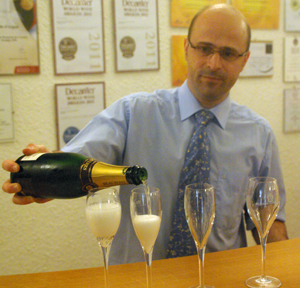
Bibi Garcia, winemaker at Cortijo Los Aguilares

Bibi Garcia, winemaker at Cortijo Los Aguilares

Yesterday, on a frigid, sub-freezing February day in Washington DC, we had the wonderful opportunity to taste wines from many of the members of Grandes Pagos de España. The wineries that belong to this group are from different wine regions of Spain. Their wines are made with grapes from single vineyards. To become members of Grandes Pagos de España the single vineyard wines must achieve critical acclaim for five years. In the 15 years of the organization, 30 wineries have become members.

We attended a seminar and then a walk-around tasting. Our seminar featured eight wines. One of the reds that made an impression was a Pinot Noir from Cortijo Los Aguilares. The winemaker, Bibi Garcia spoke about the wine. One of her first comments was that she inherited the Pinot Noir vineyard, she would not have planted this varietal grape, but since it was there, Bibi decided to make the best Pinot Noir possible. Fermentation takes place using natural yeasts in both stainless steel tanks and cement egg-shaped tanks. The wine was aged in two year old French oak barrels for eight months. The 2012 Pinot Noir had a translucent ruby color and offered floral and berry fruit aromas. I noticed red and black raspberries on the taste with a touch of minerality. The wine had noticeable tannins and was crisp. The wine keeps winning gold medals and therefore will continue to be crafted.

Petit Verdot from Cortijo Los Aguilares

Petit Verdot from Cortijo Los Aguilares

During the walk-around tasting we visited the Cortijo Los Aguilares table and spoke with Bibi. Since her childhood, Bibi was interested in chemistry. Now she can apply the science in the lab in the winery as well as the vineyard. Her passion has shifted a bit and now she is very involved in the vineyard. The vineyard consists of 18 hectares (44 acres) of grapes planted at an elevation of over 900 meters (2953 feet) above sea level. The vineyard benefits from weather influences from both the Atlantic Ocean and the Mediterranean Sea most notably the large diurnal temperature swings from day and nighttime temperatures. These temperatures help the grapes to mature slowly and retain their acidity. The soil is a combination of clay and limestone. Grapes are hand harvested and placed in small containers then taken to the winery.

We tasted another wine made by Bibi. The 2012 Tadeo was produced with 100% Petit Verdot and aged for 16 months in French oak. The very dark ruby wine offered black fruit and spice notes. There were bold tannins and a long aftertaste. The wine was delicious. It has won various medals and considered by some to be the best Petit Verdot in Spain. The Petit Verdot grapes were harvested by hand and were the last of the red grapes harvested; there is no rush to harvest before the grapes are ready. In the winery gravity flow is used at all production stages to minimize the pumping of grapes. This gentle treatment of the grapes ensures quality.

Cortijo Los Aguilares is located near Ronda in the Andalucia region of Spain. Wine tourists can visit the winery by making an appointment.

Cheers
Terry


What You Need to Know About the International Wine Tourism Conference 2015

The International Wine Tourism Conference (IWINETC) is scheduled for April 8 and 9. The Conference will in held in the city of Reims known for champagne and historic sites. Only 46 tickets are left for the two-day conference in Reims, France. Register online soon.

Are you wondering what IWINETC is all about? On April 8 and 9, presentations will be presented by speakers from all over the world. The topics selected will be of great interest to tour providers, wineries and wine regions. Ticket holders can choose which topics they are interested in attending.

Some of the currently scheduled sessions include:

  • Sustainable Wine Tourism
  • Supporting & Promoting Wine Country Tourism in Ontario Canada
  • Wine & Food Travel is Most in Demand
  • Potential for Wine Tourism in India
  • Reims Economic & Tourist Capital of The Champagne
  • The Country Diversity-Hungary
  • Promoting Your Wine Tourism Business….
  • Integrated Interpretive Planning A Winner for South Australian Wine Tourism

Visit the IWINETC website to discover more sessions for 2015.

Potential for Exhibiters

Exhibitors are still being accepted until February 27. If you have a business related to some aspect of the culinary, wine and cultural tourism, then consider exhibiting at the IWINETC 2015. The exhibitor registration form is online.

When making your plans to attend IWINETC 2015 be sure to include several extra days to explore the Champagne region.

Cheers!
Kathy

Do You Know About Jam Jar Wines?

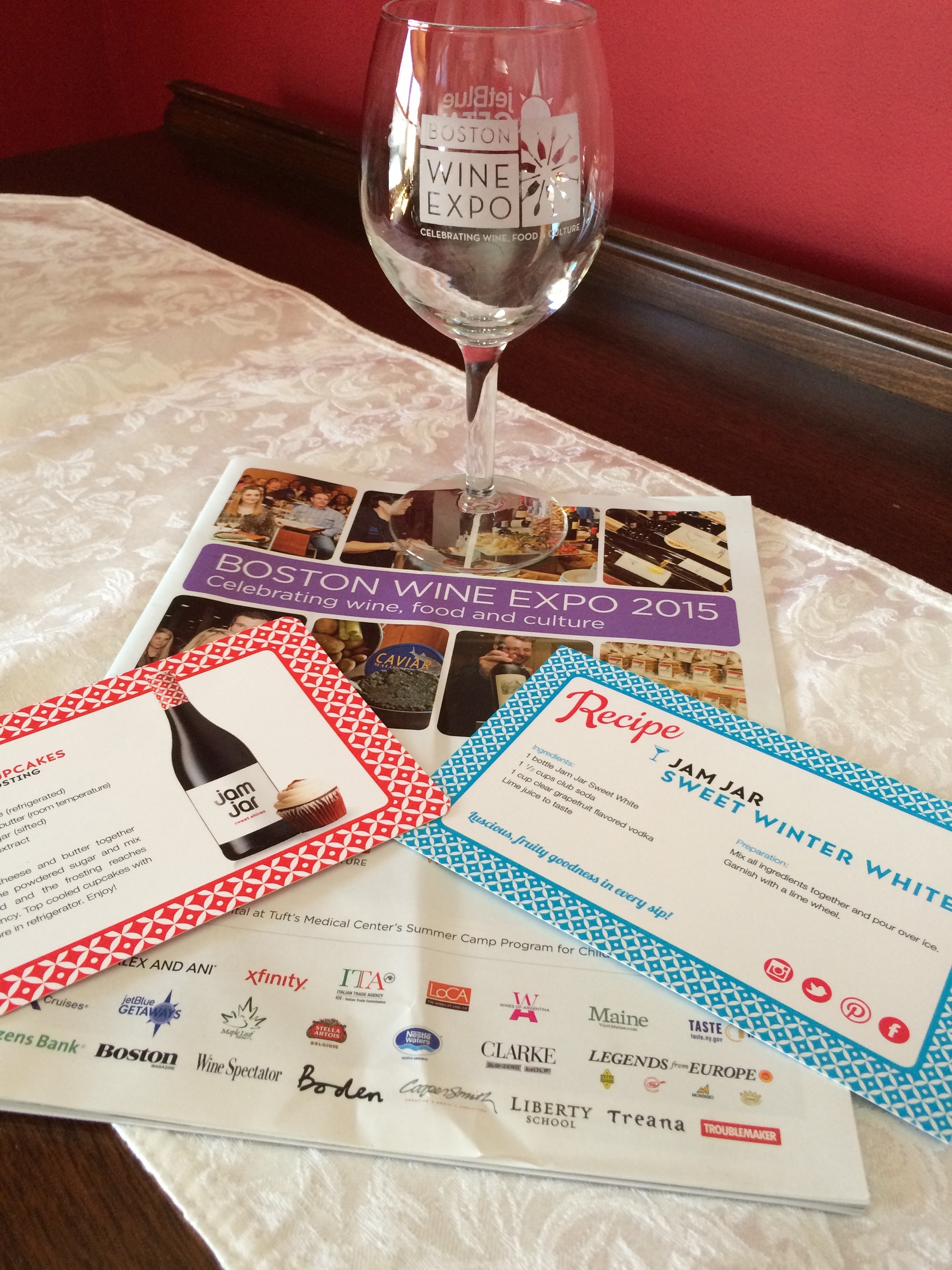
Jam Jar wines was an exhibitor at the Boston Wine Expo

Jam Jar wines was an exhibitor at the Boston Wine Expo

Have you heard of Jam Jar Wines? At the Boston Wine Expo I came across an exhibitor with Jam Jar  wines last weekend. I picked up recipes from the exhibitor who said I could share them on our Wine Trail Traveler website. It was still morning and with so many wines to choose from, I wasn’t ready to start tasting wine. Unfortunately I did not make it back to the Jam Jar’s table Saturday afternoon and unfortunately the event was canceled on Sunday.

Luckily some of the wine shops in our region have Jam Jar wines available. So one of these days I will give Jam Jar wine a try. Jam Jar Wines only produces two wines: a red and a white.

Below are the recipes using Jam Jar wines.

Cheers!
Kathy

Red Velvet Cupcakes

Ingredients

1 1/2 c sugar
1 1/4 c flour
3/4 c Jam Jar Sweet Shiraz
1/2 c unsweetened cocoa powder
1/2 c boiling water
5 ounces chocolate chips
2 sticks butter (room temperature)
4 large eggs
1 1/2 teaspoons baking powder
1 teaspoon salt

Directions

  1. Preheat the oven to 350 degrees.
  2. Combine the cocoa powder and chocolate chips in a bowl and then add the boiling water, whisk until melted.
  3. In a separate bowl cream the butter and sugar together, and then beat in one egg at a time.
  4. Slowly mix in flour, baking powder and salt.
  5. Add the melted chocolate and pour in Jam Jar Sweet Shiraz.
  6. Mix to ensure batter is fully combined and pour it into muffin tins.
  7. Bake for 20 minutes.
  8. Let the cupcakes cool before frosting.

Red Velvet Cupcakes Cream Cheese Frosting

Ingredients

8 ounces cream cheese (refrigerated)
5 tablespoons unsalted butter (room temperature)
3 cups powdered sugar (sifted)
2 teaspoons vanilla extract

Directions

  1. Beat the cream cheese and butter together until fluffy.
  2. Add the powdered sugar and mix until incorporated and the frosting reaches desired consistency.
  3. Top cooled cupcakes with frosting and store in refrigerator.

Sweet Winter White

Ingredients

1 bottle Jam Jar Sweet White
1 1/2 c club soda
1 cup clear grapefruit flavored vodka
Lime juice to taste

Directions

Mix all ingredients together and pour over ice.
Garnish with a lime wheel.


Wine Tasting of South Africa Wines

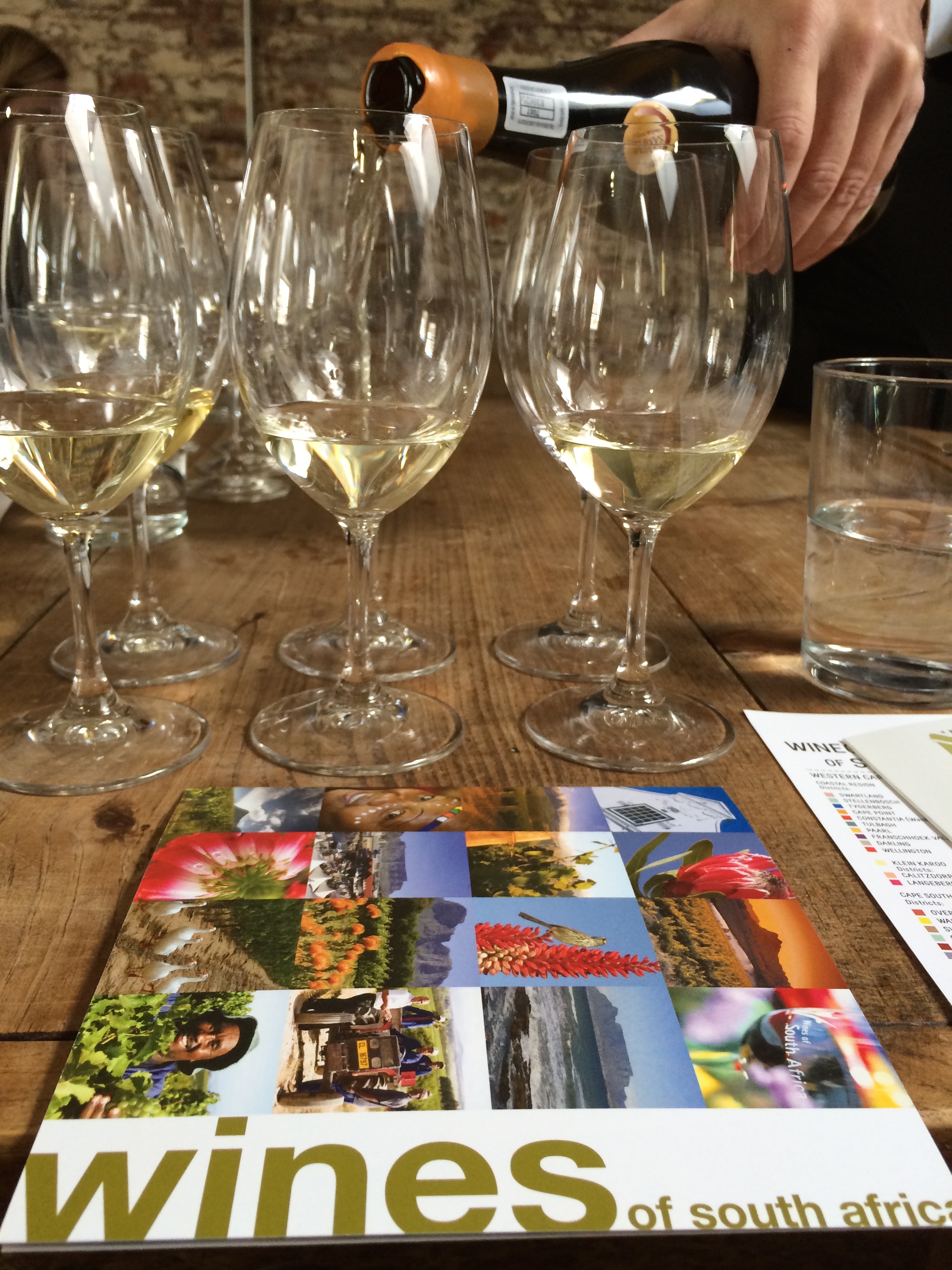
South Africa Wine Tasting

South Africa Wine Tasting

This week we took a trip into the District of Columbia for a tasting of wines from South Africa. Like most of the East Coast we were bundled up in heavy coats, scarves and gloves. Surprisingly the sun was shining but the wind was cold. The location of the wine tasting was at the CORK Market and Tasting Room. On the first floor the shop sells wines from several countries. In addition, they have numerous varieties of cheese, sandwich fillings and chocolate. Everything is very nicely displayed. The  exposed old brick walls provide a good ambiance.We reached the event tasting area by stepping outside and entering the next door and following the steps up that led to a second floor room over the Cork Market shop.

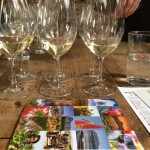
The tables for the wine tasting were setup in a U-shape and each place setting had six glasses with printed materials about the South Africa wine industry. The materials included a colorful and detailed map of South Africa. The white wines were poured as we walked in.

Jim Clarke introduced himself. Jim is a sommelier and the sole US marketing person for South Africa wines. With a degree in classical music, Jim went to New York where he worked in a restaurant that had a wine program. A friend and sommelier talked to Jim about South Africa wines. Eventually Jim toured South Africa.

Jim began the presentation with a description of South Africa’s wine regions. The classic regions of South Africa have been producing wines for 350 years. Some vineyards were abandoned. These areas have been rediscovered and reestablished creating another region. South Africa also has new wine regions many of which were planted after 1992. A fourth region of South Africa is where bulk wines are produced.

As in other countries, South Africa has wine labeling requirements. Wines  designated as an appellation must contain 85% of the grape from that region. For the wines to be considered regional, 100% of the grapes must be from that region.

The first wine was made in South Africa in 1659. The Dutch thought wine would be good for their sailors as they believed it stopped scurvy. In the early 2000s  there was a resurgence of wine quality and wine marketing.

South Africa Wine Facts

  • The Elgin region is a new region that has a cool climate and is located near the ocean.
  • Sauvignon Blanc is the most popular white wine in South Africa.
  • Chenin Blanc plantings are 18-19% of the total vineyards.
  • 1959 was the first commercial Pinotage. Today Pinotage is the 4th most planted red grape at 6.9%.
  • Cabernet Sauvignon is the most widely planted red grape.

 South Africa White Wines

Spioenkop Riesling Elgin 2013
Spioenkop is the winery name and Elgin is the region. The wine was a light yellow and offered notes of minerallity with a hint of petrol and some citrus notes. The crisp wine had 12% alcohol. The retail price is $20 plus.

Iona Sauvignon Blanc Elgin 2014
This wine was a light yellow. It offered lemon grass, mineral, lemon and grapefruit notes. The wine has 13% alcohol and sells for $16.

DeWetshof ‘Con Vallon’ Chardonnay Robertson  2014
This chardonnay was a light yellow with notes of minerals, apple and some citrus. The wine has 13.5% alcohol.  The wine retails in the mid $20’s.

Bellingham Chenin Blanc Coastal Region 2013
The Chenin Blanc with 14% alcohol was yellow with a medium body.  The wine offered notes of oak, vanilla and some tropical fruits. The wine sells for the mid $20 range.

Alheit Cartology Western Cape 2013
Cartology was a blend of 80% Chenin Blanc and 20% Semillon. The wine was 14% alcohol. This yellow wine offered mineral, apple and vanilla notes. The retail price is $40.

Seven Sisters ‘Odelia’ Bukettraube Western Cape
‘Odelia’ had 11.5% alcohol. The wine was yellow with mineral and floral notes. It was slightly sweet.

South Africa Red Wines

Simonsig Pinotage Stellenbosch
This  Pinotage was a dark ruby color. The wine offered notes of dark fruits and bacon with bold tannins.

Cederberg Cabernet Sauvignon Cederberg 2011
This Cabernet Sauvignon was 14% alcohol. The dark ruby wine offered notes of dark fruit including blackberries, cassis, a hint of leather, a hint of herbaceousness and tannins.

Ridgeback Journey Paarl 2012
This wine with 14% alcohol was a blend of Cabernet Franc, Merlot, Cabernet Sauvignon and Petit Verdot. The ruby color wine had notes of black fruits including blackberries and cassis. The wine had bold tannins. The retail price is $15.

Ken Forrester ‘Renegade’ Stellenbosch 2011
Renegade was a blend of Syrah, Grenache and Mourvedre. The wine was a ruby color with a Sienna hue. This wine offered flora and black fruit notes including blackberries, plums, and black cherries. The wine had bold tannins. This wine sells for $35 to $40.

Sadie Family ‘Columella’ Swartland 2011
Columella had 14% alcohol. The dark ruby wine had dark fruit notes of black plums and black berries. The wine offered bold tannins. The retail price is $60 to $75.

If you haven’t tried South Africa wines yet, give them a try. Keep a sharp eye on the future of South African wines.

Cheers!
Kathy


A Second Look- Beyond Bubbles: The Essence of Champagne


tattinger3Whether in a champagne flute, a coupe, a tulip or white wine stemware, that delightful effervescent champagne offers much more than continuous strands of bubbles rising to the top and tickling your nose.

Champagne is so much more than a drink. As one looks into that effervescent glass of gold, one sees the history of France, the limestone caves, viticulture and winemaking. This delightfully, fizzy drink is also a very social drink. What is it that makes champagne so unique?

Champagne as a Placelighthouse1

The home of champagne is the Champagne region of France. While some wine drinkers refer to any sparkling wine as a champagne, only wines produced in the Champagne region and made with the grapes from the region are allowed to be labeled as champagne.

Champagne as History

Champagne is history in a glass. Where can one travel and enjoy an extended history while imbibing in a glass of bubbles? Champagne-Ardenne is a unique region of France with miles of subterranean, limestone caves. Visitors to some of the champagne houses have the opportunity to taste wine in those age-old caves. Do the aged caves provide an adequate spot for tasting wine? Some people may question whether champagne tastings should take place in caves so old that the accumulated smells of the caves interfere with the aroma and taste of the champagnes. Other visitors will take great delight with the “sense of place” while tasting champagnes in caves.

020615aChampagne as a Social Drink

While Champagne is often enjoyed at wedding receptions as a celebratory drink, it is also a wonderful way to celebrate the New Year with others. Champagne is a drink to be shared with others at celebrations or a quiet dinner with friends and family.

Champagne with Food

Champagne has the potential of being palate cleansing. However, it is much more than that. Champagne pairs well with many foods. It is appropriate for any meal.

Bubbles

Bubbles are a sign of happiness, frivolity, leisure and fun. Is it any wonder that bubbles are used in celebrating a bride and groom as they leave their wedding ceremony? What frequently follows is a toasting with champagne. A number of years ago, while at a restaurant in Detroit, a small group came in celebrating a wedding. Everyone stopped for a moment to applaud as the bride, all dressed in white, walked into the crowded room. Within minutes a member of our table asked the restaurant sommelier to send a bottle of champagne to the bridal table. It was a moment I will always remember. The bride and groom were stunned but obviously very pleased with the unexpected gift of champagne from a stranger. Our table benefited from someone giving a gift and it was obvious the bride and groom were happy.

Serving Champagne

Recently a debate has taken place about champagne stemware.  The oldest style but still available is a coupe. This glass is basically flat with a dip in it. Have you had champagne in a coupe? While in Barcelona, I went to a small food and wine bar that served a cava in a coupe. The glass was filled to the rim, making it difficult to drink without spilling. The coupe also makes it more difficult to see the fascinating bubbles.

The flute stemware is tall and thin offering an elegant style. The glass allows the user the opportunity to enjoy watching the numerous bubbles rise to the top. Some say that there is a noticeable difference between the aromas from the coupe and the flute. The tulip shed bowl is becoming more popular today as well as a white wine glass. Both allow for the streams of bubbles and help enhance the aromas.

Champagne is magical and should be enjoyed with friends and food anytime. Give me a well-made champagne anytime and I will enjoy it with friends and food.

Cheers!
Kathy


Beyond Bubbles: The Essence of Champagne

Champagne tasting at the cooperative Beaumont des Crayerers in Maroueil

Champagne tasting at the cooperative Beaumont des Crayerers in Maroueil

Steady columns of minuscule bubbles rise to the surface forming the mousse. All senses including observation are heightened. The bubbles foreshadow what is to come: an explosion of effervescence in the mouth, aromas and tastes that bring smiles to faces, sensual sensations that extend beyond self to the immediate surroundings and a cleansed palate that savors the arrival of food. This is champagne.

Personified, the glass of champagne softly pleads, “Take note of me. I am more than aromas, tastes and sensations. I am history, earth, sun, rain, wind, men, women, struggles, war and peace. I have a story to tell.” That story indeed is filled with all that makes us human. Continuing, “My lineage is questionable; however, it was in Champagne that people really took notice. I was the preferred drink of the aristocracy and much admired at royal court.” Leading into the twentieth century the sparkling beverage was also thought highly of by the masses.

Some producers began to market their champagne in creative ways. The first commercial for the bubbly was filmed by the first filmmakers Auguste Marie Louis Nicolas Lumière and Louis Jean Lumière in the late nineteenth century. Champagne was brought to the ordinary people at world fairs. Some lucky drinkers had the opportunity to taste champagne in a floating bar, in a basket attacked to a tethered hot air balloon. As they ascended 300 meters (984 feet) above the Expo, they were rewarded with spectacular views of Paris. That was until a wind broke the tether and whisked one group off to the Champagne area and on to Belgium. They did have champagne in the hot air balloon’s basket though. Champagne now is a wine that is adventurous.

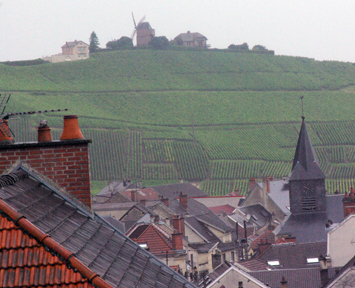
The town of Verzenay photo taken from the lighthouse at the Phare de Verzenay.

The town of Verzenay photo taken from the lighthouse at the Phare de Verzenay.

Higher acids of grapes in the vineyard translates into lower sugars. In the winery lower sugar translates into lower alcohol. For some wine enthusiasts this is the perfect formula for wine. Lower alcohol means lower calories and thus a reason to consume more champagne. At present, sparkling wines are made world-wide. The Champagne region of France is the preeminent location for the best that Chardonnay, Pinot Meunier and Pinot Noir can offer for this style of wine. The chalky soils, climate, wind, sunshine and water are ideally suited for sparkling wines that have multiple layers of aromas and flavors.

Wine lovers become entranced by the steady release of bubbles. It is difficult to ignore action taking place in your glass. That action continues in the mouth and perhaps more than any other wine style, it reaches the soul.

Champagne does have challenges today. In some parts of the world including the United States, champagne is considered by most as a celebratory beverage. Although there may be no other type of alcoholic beverage that is more appropriate for celebration than champagne, the sparkling wine from the Champagne region of France is equally adept as an everyday wine. Often a champagne is served as an aperitif. Again champagne is one of the best choices for a before a meal drink and it will help stimulate the appetite. Champagne is more though. It is one of the best wines for pairing with food. It matches well with many different foods. The marriage of champagne and food attest to its endurance as an everyday wine.

The essence of champagne is far more than what is observed through sight, smell and taste. It defines culture, history, and weather. Perhaps the fundamental quality of champagne is simple to have fun.

Cheers,
Terry

“I Didn’t Know Maryland Had Wineries”

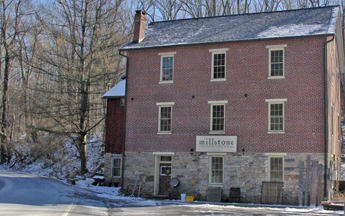
Millstone a cidery on the Piedmont Wine Trail will participate in the Maryland Wine Passport Experience

Millstone a cidery on the Piedmont Wine Trail will participate in the Maryland Wine Passport Experience

“I didn’t know Maryland had any wineries,” exclaimed the person standing next to me. I hear this a lot. Some people are unaware that there are wineries in their own back yard. The Maryland Winery Association would like to change that perception. For the last two weekends this February, 35 of the more than 50 Maryland wineries will participate in the Maryland Wine Passport Experience on February 21st and 22nd and also on February 28th and March 1st.

Tickets are on sale for $25 per person and include exclusive access to the participating wineries in the state. Ticket holders can enjoy free wine tastings, behind the scene experiences, a commemorative wine glass and 10% discount on wine purchased. The tickets are valid for both weekends. You can select a different wine trail to visit each weekend day and tour the state over the four days.

Maryland has six wine trails within the state. The easiest way to participate is to head to one of the wineries along one of the wine trails. The Maryland Wine Trails and the number of wineries on that trail participating in the event include:

Antietam Highlands Wine Trail      five wineries
Carroll Wine Trail           two wineries
Chesapeake Wine Trail   eight wineries
Frederick Wine Trail      five wineries
Patuxent Wine Trail       eight wineries
Piedmont Wine Trail      seven wineries

You can view the complete list of participating wineries and and the special experiences that are offering on the Maryland Wine event page. The Maryland Wine Passport Experience is a great way to shake off the winter doldrums and experience the state, its wineries and their wines.

Cheers,
Terry

Author Talk at Harvest Ridge Winery

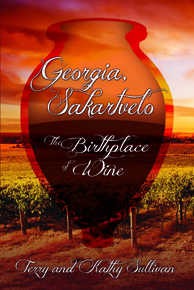
Georgia, Sakartvelo: the Birthplace of Wine

Georgia, Sakartvelo: the Birthplace of Wine

Kathy and I will give an author talk about our third book, Georgia, Sakartvelo: The Birthplace of Wine on Saturday, February 28th from 2:00 pm – 3:00 pm at Harvest Ridge Winery in Marydel, Delaware. At the recent Boston Wine Expo, people were surprised to learn where grapes were first cultivated and wine was first made. But perhaps even harder to get a handle on is time. Grapes have been cultivated and wines made south of the Caucasus Mountains for 8,000 years. That is a staggering number of centuries. Thousands of years before Greece, Italy, Spain, France and other areas in Europe and Africa, wine was made south of the mountain range separating Russia from Georgia. To add some perspective, the first of the seven wonders of the ancient world, The Great Pyramid of Giza was constructed between 2584 and 2561 BCE. That is 4,500 years ago. Grape cultivation and wine production pre-dates that wonder by 3,500 years.

Today, Georgian wines are showing up in wine shops and chains such as Total Wine and Whole Foods. When in Oregon visiting family, I can walk into local grocery stores and purchase a couple wines from the country Georgia. Usually on hand there is a white wine made with Rkatsiteli grapes and a red wine crafted with Saperavi grapes. Some wine shops have a much larger selection. The Wine Gallery in Brookline, Massachusetts had a large assortment of Georgian wines, at least for a wine shop in the United States.

There are other surprises in store for wine enthusiasts during our author talk. Throughout the world, there are many different winemaking techniques. Only one process of winemaking is on the UNESCO list of Intangible Cultural Heritage. Hint, it is not wines made in stainless steel tanks or oak barrels. You will discover the very ancient art of making vessels to ferment and age wines. This winemaking method is making a resurgence in the world today including in the United States.

We will also discuss joining the Wine Century Club. This free club gives you the opportunity to record the different varietal wine grapes that you have tasted. You become members of the club once you reach 100 different varieties of grapes made into wine. You can count each grape in a blend. This can be a fun activity for you to get involved in.

Kathy and I are looking forward to introducing you to the area where grapes for wine were first cultivated and wines were first made. We hope to see you at Harvest Ridge Winery on February 28th at 2:00 pm. We will have books for sale and will happily inscribe the books for you.

Cheers,
Terry

Boston Wine Expo: Reaction to Qvevri Wine

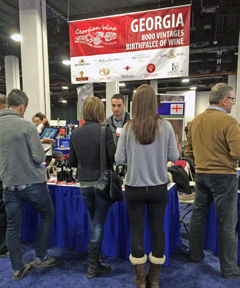
021515aThe 2015 Boston Wine Expo was cut short due to yet another blizzard to plague Boston. On Saturday, I spent most of my time pouring wines and gently educating wine enthusiasts for Badagoni Winery in the country Georgia. I enjoyed working the inside of the table. Unfortunately, I never had the time to visit many of the other tables at the expo that I was planning to visit. I was just having too much fun.

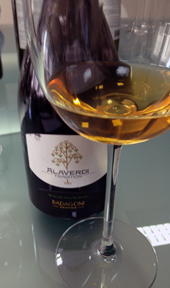
Most of the expo attendees that stopped at the Badagoni table have not had wines from the country Georgia. I used my ipad to show the location of Georgia and photos of the grapes in the wines they were tasting. One of the wines was a qvevri wine. I used photos to explain what qvevris were and how they were made. I also talked about the Alaverdi Monastery qvevri Rkatsiteli the qvevri wine we were serving at our table. Reaction to the question, “Are American wine enthusiasts ready for Georgian white qvevri wines,” was mixed. A little over half of those I asked said yes, others did not think so. Of those saying yes, some were red wine drinkers. I suggested they try a white wine and poured the qvevri white wine. It was well received. Another discovery was the need to provide education about the qvevri wines prior to tasting them.

Some of the take-aways from the expo were people didn’t realize that Georgia is the birthplace of wine, people were not aware of qvevri wines or that qvevri winemaking is on the UNESCO list of Intangible Culture Heritage and that the country Georgia is not the state Georgia.

There were only a few people at the end of the expo that admitted that they were reluctant to approach the Georgia wine tables because they thought that the wines were from the state of Georgia. At the trade tasting and the beginning of the public tasting this was not received at our table.

Consistently throughout the tasting both, for the trade and public, there was amazement that Georgia is the birthplace of wine. It seemed to me that they were more amazed that grapes were cultivated and wines made for 8,000 years. Eight thousand is a hard number to think about when you are referring to years. When it comes to wine, generally the population considers the ancient Romans and Greeks as old. It is a bit difficult to think of wine growing and wine making that predates the ancients by several thousand years.

Qvevri wines were unexpected. Several of those who tasted the Alaverdi Monastery qvevri Rkatsiteli stated that it was the most unique wine at the expo. Several people left to return awhile later with friends. They wanted their friends to taste a qvevri wine.

For those that visited the Georgian wine tables, they are aware of the country, its wines and its 8,000 year wine growing and winemaking tradition.

Cheers,
Terry


Are American Wine Enthusiasts Ready for Georgian Qvevri White Wines?

Qvevri white wine from the country Georgia

Qvevri white wine from the country Georgia

Are American wine enthusiasts ready for qvevri made wines from the country Georgia? Perhaps on Valentine Day they may embrace the qvevri white wines. Qvevri winemaking is an ancient winemaking process where grapes are fermented and aged in earthen vessels called qvevris. These qvevris are buried underground and can last for centuries if taken care of. Most qvevri made wines are a true expression of the grape, without the influence of wood and many of the modern winemaking supplies that winemakers add to their wines. Many qvevri wines are made with natural yeasts.

It should be pointed out that even the uses of qvevris in winemaking is very regional in Georgia. For example in Eastern Georgia some winemakers will ferment a white wine on the skins and then continue to age the wine on the skins for several months. Some winemakers will also add stems to the qvevri. Across Georgia this white wine protocol varies. In Western Georgia there may be little or no skins added to the grapes during fermentation and aging. For those winemakers that do use skins, white wines can be a shock your senses. This is not necessarily a bad thing, just a unique wine experience.

Imagine a white wine that is an amber color. It is simply beautiful to look at. Imagine it has a floral and fruit aroma and various dried fruits and flowers on the taste. Then come the tannins. Some qvevri-made white wines can have very bold tannins. So bold that I refer to them as kissing tannins. They pucker your lips as though you are ready to kiss someone. Perhaps qvevri white wines are a perfect pairing at the Boston Wine Expo that takes place on Valentine’s Day. The Georgian tables should be a destination for couples this weekend. What can you pair with a qvevri white wine with kissing tannins, the person you love. Winemaker Father Gerasim of Alveradi Monastery in Eastern Georgia noted, “Qvevri wines open your heart.” The Valentine’s Day weekend is a perfect opportunity for wine enthusiasts to taste qvevri wines.

Marani wines from the country Georgia will have a tasting from 5:00 pm – 7:00 pm at  the Wine Gallery in Brookline on February 13th. Marani and other Georgian producers will have ten tables at the Boston Wine Expo on February 14th and 15th. Wine enthusiasts will have opportunities to taste qvevri wines at both locations. Consumers may taste wines at the Boston Wine Expo between 1:00 pm and 5:00 pm both days.

Cheers,
Terry


info@winetrailtraveler.com            Sitemap                      Privacy Policy

Copyright: Terry and Kathy Sullivan 2006-2013