About     FAQ     Contact      Advertise With Us      Press   

Save Your Wine with the Savino Connoisseur Wine Saving Carafe

SavinoEnthusiast
Savino Enthusiast

Sometimes wine drinkers experience a partially filled bottle of wine after opening it. On occasions we have had an opened bottle of wine sitting on our kitchen counter for over a week. More often white than red, since many of the unused red wines end up in our wine vinegar crock. Although this is unusual, it does happen. What if we could pour the unused wine into a container and have it last for a week?

We received a Savino Enthusiast wine carafe from Savino to try (retail $29.95). We generally drink more red wine than white wine; I decided to try a white wine to see what the wine would be like over a week. The week extended an extra day so our results are for eight days. The Savino website suggests that a wine will stay fresh for up to a week. We pushed that timeframe a bit. 
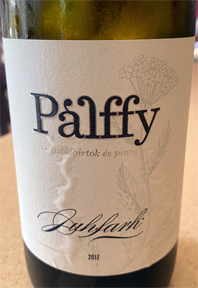
2017 Palffy Jhufark
2017 Palffy Jhufark

For a white wine we chose a 2017 Palffy Juhfark that we brought back from a trip to Hungary. This white grape is indigenous to Hungary and is a Vitis vinifera grape. On the first day of tasting the wine, we noted that it had a light yellow color with a straw hue. This color did not change over the eight days the wine was in the Savino. The aroma on the first day was floral and fruity. The taste was reminiscent of daisies, citrus, yellow stone fruit and a hint of pear. The mouthfeel was silky and the wine had a medium body. The finish was crisp. The wine had a long aftertaste.
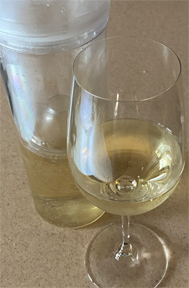
2017 Palffy Jhufark
2017 Palffy Jhufark three days later

Three days later, we tasted the wine again with most of the same results. The color and aroma were the same as the first day and we felt the taste was very fresh with daisies, citrus, yellow stone fruit and a hint of pear. In addition to the crisp finish, we noticed a bit of mineral on the finish. The wine had an extremely long aftertaste.

Eight days later we finished the wine. There were more changes in the wine by the eighth day, but the wine was still enjoyable. The color was the same as it was on the first day. We did notice a slight lessening of the aroma. On the taste, pear was more dominant and the citrus and yellow stone fruit were in the background. The taste was still smooth and the wine still retained its medium body. The fruit forward finish was a little diminished but still there. The wine continued to have a long aftertaste.
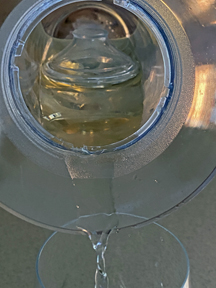
Savino Enthusiast
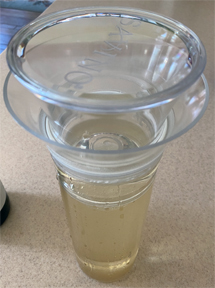
Eight days later pouring from the Savino Enthusiast

Savino Enthusiast wine carafe lived up to our expectations. If you are looking for an unusual gift, perhaps for Mother’s Day, consider a Savino carafe. The company has two carafes. The Savino Enthusiast is made of plastic while the Savino Connoisseur is made of glass and retails for $49.95. How does this carafe work?

There are three parts to the carafe. The body holds a 750 ml bottle of wine. Over the wine you place a float. Since the float literally floats on the wine’s surface, as the volume of the wine in the carafe lessens, the float goes down. There is also a lid to the carafe that you insert and slightly turn. The system helps keep oxygen away from the wine’s surface. Although the carafe and parts are dishwasher safe, it was easy to clean by hand. To serve the wine, remove the lid and just pour the wine. The float does not impede the wine below it as it turns direction to allow the wine to flow. 

This is a nice carafe to keep on the counter or in the refrigerator. It works well in keeping a white wine fresh. We will have to try a rosé and a red wine.

Cheers,
Terry
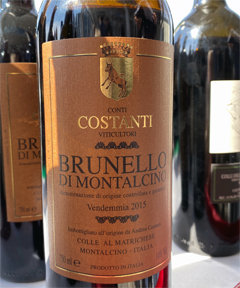
Constanti, a Winery in Tuscany

The Constanti winery family dates, their family in Siena region, back to the 1500s. As political struggles ended, the family became involved in agriculture culminating in grape growing and wine production. The Constanti winery’s history notes that in the late 1700s, while preparing an area for a vineyard, Crescenzio Costanti discovered evidence of Etruscan remains.

Brunello Di Montalcino DOCG 2015

Today the Constanti winery has 25 hectares (62 acres) of property. The vineyards cover 12 hectares (30 acres) of vineyards and olive groves cover 4 hectares (10 acres.) The majority the vineyard grape varieties are Sangivoese (known locally as Brunello). Other grape varieties in the vineyard include Merlot and Cabernet Sauvignon.

Wine production in the winery includes fermenting the grapes on skins for 14 to 21 days.  The Brunello is aged in Slavonian oak casks and barriques. Aging takes place for three to 15 years. Some Allier oak is also used for some of the wines.

Products produced  by Constanti include: Brunello Di Montalcino DOCG, Brunello Di Montalcino Riserva, Rosso Di Montalcino DOC, Vermiglio DOC, and grappas.

Visitors to Constanti can choose to book tours online. Three types of tours are available.

  • Classic Tasting (includes a tour of the vineyards and ageing cellar)
  • Premium (includes a tour of the vineyards and ageing cellar)
  • Excellent Sangiovese (includes a private tour of the vineyards and the ageing cellar and a private wine tasting)

Wines are also available for sale at the winery.

At the Barolo Brunello Barbaresco 2020 wine tasting in Washington D.C. hosted by Empson USA, I tasted the Brunello Di Montalcino DOCG 2015. This wine was produced with 100% Sangiovese grapes.  The  grapes were harvested from vines identified as six to 28-years-old. The grapes were fermented in stainless steel for 14 to 21 days. The protocol for aging the wines included 12 months in Allier oak  followed by 24 months of aging in Slovenian oak barrels and finally a minimum of 12 months in the bottle.  This translucent red color wine was aromatic of red fruit. The mouthfeel was smooth and was full-bodied.  The wine offered smooth tannins. The long finish was accompanied by notes of red and black raspberries. Consider pairing this wine with beef dishes.

Cheers!
Kathy

Magic in a Bottle Book Review

In 2019 Clifford Annis, Jr. published the book Magic in a Bottle: The Untold Story of Arnie Esterer and Markko Vineyard. 

“Magic in a Bottle” by Clifford G. Annis, Jr.

This non-fiction book is written in a conversational style that makes it a friendly, easy-to-read book. Magic in a Bottle centers around Arnie Esterer the renowned winemaker and vineyard owner of Markko Vineyard. The winery is located in northeast Ohio near Lake Erie. Esterer was one of the first successful wine growers to produce quality vinifera wines with his own vineyard grapes. 

Through a series of interviews with Esterer, the author was able to write about Esterer’s early childhood and his intense interest in growing vinifera grapes in Ohio. Esterer is concerned with producing quality vinifera wines in Ohio. 

While Magic in a Bottle covers a wide range of winery and vineyard topics seen through the eyes of Esterer, what I find interesting was the number of very knowledgeable people that Esterer met during his wine journey. A few were notables like Dr. Konstantin Frank but many of these fellow wine enthusiasts are not well known to the general public. These “unknown” people, not in the limelight, are people who have played an important part in the success of Esterer at Markko Vineyard and they rightfully deserve recognition in Magic in the Bottle.

If you have any interest in Ohio and enjoy wine, this is a must read book. On the other hand, if you live in an area that does not have a large vineyard areas, and want to start your own vineyard and winery, you might want to heed some of the advice that you will come across in Magic in the Bottle.

For a more detailed review, visit the Wine Trail Traveler book review section.

Magic in a Bottle: The Untold Story of Arnie Esterer and Markko Vineyard is available online.

Cheers,

Kathy

Boscarelli, a Winery in Tuscany

Boscarelli, a winery located in Montepulciano in Tuscany, was started in 1962 by Egidio Corradi when he purchased two partially abandoned farms. Today the winery continues under his daughter Paola De Ferrari Corradi and grandsons Luca and Nicolò. It was Luca and Nicolò who replanted the vineyards during the 1980s.

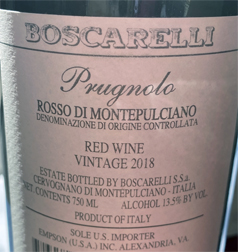
Boscarelli’s Prugnolo Red Wine

While attending the Barolo Brunello Barbaresco 2020, presented by Empson USA in Washington DC, I tasted two red wines from Boscarelli winery.

The  35 acres of vineyards have a high concentration of Sangiovese but also has indigenous grape varieties including Colorino, Canaiolo and Mammolo. Small plantings of Cabernet and Merlot are also in the vineyards. Boscarelli winery produces 100,000 bottles.

Visitors to Boscarelli should book a visit ahead of arriving at the winery. Bookings are available online. Visitors have the opportunity to choose from several types of tours including:

  • A Wine Tasting of four wines
  • The Visit that includes visiting the vineyard and cellar and a wine tasting
  • The Comparative Tour with a walk in the vineyard, a visit to the cellar and a wine tasting of six wines that includes an opportunity to compare the wines.
  • Traditional Wines of Montepulciano: a visit to the vineyard with a look at techniques and purity styles and soil; an explanation of native varieties, a visit to the cellar with information about winemaking techniques, with five wines to taste.
  • Education Tour: Complex, extended tour that also includes an extra virgin olive oil tasting with bruschetta bread.

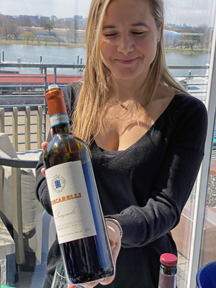
Tara Empson from Empson USA showcased the Boscarelli wines at the Barolo Brunello Barbaresco wine tasting.

Boscarelli wine

Wines

Rosso Di Montepulciano “Prugnolo” DOC 2018 was a blend of 90% Sangiovese with Mammolo. The wine was a translucent light red color. This dry wine had a light aroma with notes of earthiness. The wine offered bold tannins and the tannins tended to coat the tongue. 

Vino Nobile Di Montepulciano DOCG 2017  was a blend of Sangiovese and the three indigenous grapes of Canaiolo, Mammolo and Colorino. The winemaking protocol included fermentation for one week and then maceration for several days.  The wine was in Allier and Slavonian oak barrels for 18-24 months of aging. The result was a wine with a translucent red color (darker than the “Prugnolo” wine). The aroma reminded me of summer time red berries. The taste included smooth and chewy tannins. Fruit and tannins were observed on the finish.

When you have the opportunity consider trying the wines from Boscarelli.

Cheers!
Kathy

Poderi Luigi Einaudi Washington DC Tasting

Four generations of the Einaudi family have crafted wines. I had an opportunity to taste three Barolos from their portfolio at the Barolo, Brunello, Barbaresco tasting in Washington DC last month. The tasting was organized by Empson USA. Poderi Luigi Einaudi was established by Luigi Einaudi in 1897 in the Dogliani in the province of Cuneo. Luigi originally sold the grapes until 1915 when he had the cellars built and began to make and sell wine. Luigi Einaudi served as President of the Italian Republic from 1948 – 1955.

Today the estate is under direction of Luigi’s great grandson Matteo Sardagna Einaudi. The winery has 63 hectares (156 acres) of grapevines planted that totals 358 acres in several areas. 

Wines

The 2016 Barolo “Cannubi” DOCG was made with Nebbiolo grapes from the Cannubi Cru. The vineyard soil is composed of gray white marne of Sant’Agata which consists of 55% clay, 30% sand and 15% limestone. The fermentation and maceration time took a bit over three weeks. The wine was then racked to large barrels where it aged for thirty months. Afterwards the wine continued to age in bottles. This Barolo had a translucent garnet color. Cherries and flowers were noted on the aroma. The taste offered cherries, violets and some baking spices. The wine had a silky mouthfeel and was full bodied with bold tannins. Fruit and spices were on the finish.

The 2016 Barolo “Ludo” DOCG was a blend of Nebbiolo from three crus: Cannubi, Terlo and Bussia. Fermentation and maceration lasted for 16 days. Half of the wine aged in large oak barrels for 30 months, while the other half aged in barriques for 18 months then racked to large barrels for an additional year. After bottling, the wine aged for 8-9 months before being released. The wine had a translucent garnet color with a perfume and cherry aroma. The taste included violets and cherries along with tobacco and baking spices. The velvety wine was medium/full bodied and had bold tannins. The finish was fruity and spicy.

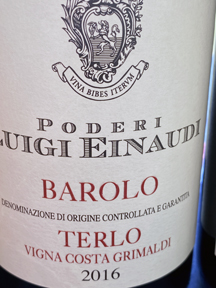
The 2016 Barolo Terlo “Vigna Costa Grimaldi” DOCG was crafted with Nebbiolo grapes from the Costa Grimaldi vineyard in the Terlo cru. The vineyard was composed of a marly- calcareous soil. The fermentation/maceration lasted for 24 days. Thirty months of aging took place in large oak barrels followed by 8-9 months in bottles. The wine had a translucent garnet color with a sienna hue. Perfume and red berries were on the aroma. The taste included cherries, red raspberries and licorice. The velvety mouthfeel was accompanied by bold tannins on the full bodied wine. The finish had fruit and spice notes.

Poderi Luigi Einaudi offers three different winery tour experiences ranging in times from 90 minutes to 150 minutes. If you enjoy Barolos try one from Poderi Luigi Einaudi.

Cheers,
Terry

Marcarini Winery

At the 2020 Barolo Brunello Barbaresco wine tasting hosted by Empson USA in Washington D.C., wines from the Marcarini winery were presented. The winery is located in La Morra in the Cuneo province of Italy. The winery has a long history and dates back to the 1850s. Marcarini winery was one of Italy’s first wineries to label wines as single vineyard designate.

In 2020, the winery is owned by Manuel Marchetti and his family. Manuel’s daughter, Elisa, is the winemaker and Andrea, a son, oversees the estate winery and vineyards. Marcarini has 20 hectares (49 acres) of vineyards. Grape varieties growing in the estate vineyards include: 

Marcarini Barolo

Nebbiolo, Dolcetto, Barbera, Arneis and Moscato Bianco. The wines produced by Marcarini are estate grown and bottled. 

Marcarini encourages agritourism by offering an onsite farmhouse available for booking. While we have not visited Marcarini, the farmhouse online images provide a glimpse of what guests can expect to enjoy.

I tasted three wines from Marcarini. The Barolo “La Serra” DOCG 2016 was produced with 100% Nebbiolo. The wine was made with the use of stainless steel and concrete tanks. It was macerated on the skins for three to four weeks. Slavonian oak ages the wine for 24 months, followed by aging in the bottle for six months. This wine is very “approachable.” The color was a rusty red and the aroma was light. This dry wine offered smooth tannins with floral notes, cherry/plum and spice.

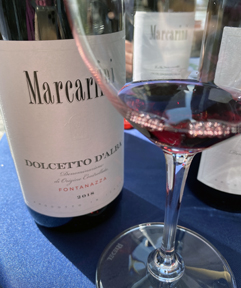
Marcarini Dolcetto D’Alba “Fontanazza”

The Dolcetto D’Alba “Fontanazza” DOC 2018 was produced with 100% Dolcetto. The single vineyard wine was from grapes from 17 to 36-year-old grapevines. This Dolcetto wine was produced in stainless steel and concrete tanks.  The wine was aged in stainless steel. The wine offered  mild tannins and notes of black fruit and earthiness.

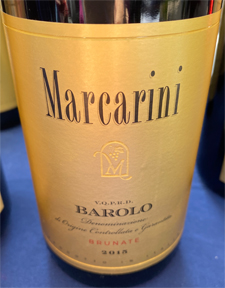
Barolo “Brunate” DOCG 2015 was produced with 100% Nebbiolo grapes from a single vineyard. The grapevines range in age from 32 to 41-years-old. Winemaking protocol includes the use of stainless steel and concrete tanks. The  14% alcohol wine was aged in oak casks for two years. The result was a wine that had a burnt orange color. The mouthfeel was velvety smooth. The taste included notes of spice, earthiness and black cherry.

The Nebbiolo Delle Langhe “Lasarin” DOC 2018, a 100% Nebbiolo wine, was from two Marcarini vineyards. The grapevines are 19-years-old. This wine was also produced with stainless steel and concrete tanks. This wine had more of a fresh fruit taste with medium tannins.

Marcarini wines are exported to several regions of the world including: Hong Kong, Japan, UK, Canada, USA, and China.

Cheers!
Kathy

Azienda Agricola Conterno Fantino Is My Best in Show at Washington DC Tasting

In early March Kathy and I attended a tasting in Washington DC by Empson USA. Empson USA is a distributor for their portfolio of Italian wine in the United States. I tasted several Borolos from several producers. My favorite producer was Azienda Agricola Conterno Fantino. This winery was founded in 1982 by Claudio Conterno and Guido Fantino. The two friends are interested in conserving energy at the winery and in creating environmental sustainability. The property has 26 hectares (64 acres) under vine. The winery is located in the Monforte d’Alba area of the province of Cuneo.

Wines

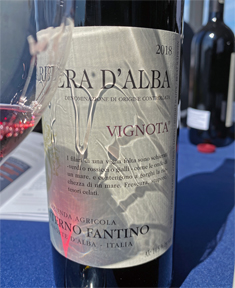
The first wine tasted was the Barbera D’Alba Vignota DOC 2017/2018. The wine was made with 100% Barbera from a limestone and marl vineyard in the village of Monforte d’Alba. The organically grown grapes were hand harvested in early autumn. Fermentation and maceration took place in stainless steel tanks. The wine was aged in French oak barrels. The wine had a translucent dark ruby color with a red hue. Red fruits were on the aroma and the taste included cherries, black raspberries and leather. The wine was medium bodied and had medium/bold tannins. The finish included fruit and leather.

The next three wines were all examples of Barolos. All were made from 100% Nebbiolo grapes. The 2016 Barolo Castelletto “Vigna Pressenda” DOCG was made with grapes growing in a sandy, silty and clay vineyard from the Castelletto Cru in Monforte d’Alba. The grapes were hand harvested in mid-October after careful selection while on the vine. Fermentation and maceration took place in stainless steel, the wine was aged in French oak. The wine was made from organically grown grapes. The wine had a translucent garnet color with a red hue. Perfume and cherries were noted on the aroma as well as the taste. The wine was full bodied with bold tannins. Fruit and leather notes were on the finish.

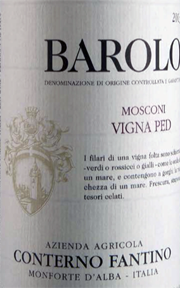
My “best in show” wine was the 2016 Barolo Mosconi “Vigna Ped” DOCG. The Nebbiolo grapes were hand harvested from the Mosconi Cru in the village Monforte d’Alba. The organically grown grapes were fermented and macerated in stainless steel tanks and then aged in French oak. The wine had a translucent garnet color. Perfume and cherries were on the aroma and taste. The wine was full bodied with kissing tannins ( tannins that cause the mouth to pucker as if you were going to give someone a kiss). The finish was fruity with a delicate oak influence. I enjoy tannins in a wine and for me, the more tannic the better.

The 2016 Barolo Ginestra “Vigna del Gris” DOCG was made with grapes from the del Gris vineyard in the Ginestra Cru of the village Monforte d’Alba. As with the other Borolos tasted, the organically grown grapes were hand harvested and fermented and macerated in stainless steel. The wine was then aged in French oak. The wine had a translucent garnet color. Perfume and cherries were noted on the aroma. Cherries and leather were on the taste. The wine was full bodied and had bold tannins. The finish was fruity with an oak influence.

I was happy to have an introduction to the wines from Azienda Agricola Conterno Fantino and look forward to their availability in Maryland.

Cheers,
Terry

Cascina Bongiovanni Brings a Barolo and a Dolcetto to Washington DC Tasting

Empson USA brought wines from several Italian wine regions to Washington DC for a tasting during early March. The event was titled Barolo, Brunello and Barbaresco 2020. Empson USA distributes wines from wineries in Italy to the United States.

One of the producers present offered three wines for tasting including two Barolos and a Dolcetto. Cascina Bongiovanni dates back to 1950 when Giovanni Bongiovanni purchased land and planted a Nebbiolo vineyard.  Today the vineyard includes 7 hectares (17.3 acres) of grapes. The current owner and winemaker is Davide Mozzone, a grand nephew of Giovanni Bongiovanni. The winery is located in Castiglione Falletto.

Wines

The 2016 Barolo DOCG was crafted with 100% Nebbiolo grapes from 30-year old vines. The grapes were harvested in mid-October and fermented in stainless steel. The wine spent 24 months in French oak barrels and then additional time in bottles prior to its release. The Borolo had a translucent garnet color with floral notes and red berry fruits on the aroma. The taste was reminiscent of violets, roses, cherries and baking spices. The wine had a silky mouthfeel, and was full bodied with bold tannins. There was a nice blend of fruit, flowers and spices on the finish.

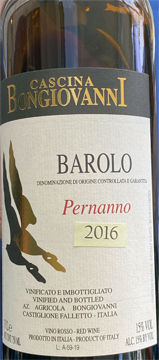
The 2016 Borolo Pernanno DOCG was made with Nebbiolo grapes from the estate’s finest vineyard in Castiglione Falletto. The grapes were harvested later than neighboring Nebbiolo grapes. After fermentation the wine aged in French oak barrels for 24 months with additional aging in bottles. The wine had a translucent dark garnet color. The aroma was floral, fruity and spicy. The taste included roses, cherries, raspberries and baking spices. The wine had a velvety mouthfeel, and was full bodied with bold tannins. The finish was fruity, floral and spicy.

The 2018 Dolcetto D’Alba DOC offered a break from all the Borolo wines at the tasting. The wine was made with 100% Dolcetto grapes from vineyards in Roddino and Castiglione Falletto. The wine was fermented and aged in stainless steel. It had a translucent red color with a dark pink hue. Black berry fruits were on the aroma. The taste reminded me of blackberries, violets and some baking spices. The wine was full bodied with bold tannins. The finish was fruity and spicy.

The Dolcetto is an anytime wine that would pair well with most meats and seafood. The Borolos were bold red wines and would pair well with beef cuts.

Cheers,
Terry

More Wines from Italy’s Piedmont Region

We tasted some wines from Italy at a wine tasting earlier this year in Washington, DC. The  Barolo Brunello Barbaresco 2020 Italian wine tasting was presented by Empson (U.S.A.), Inc.

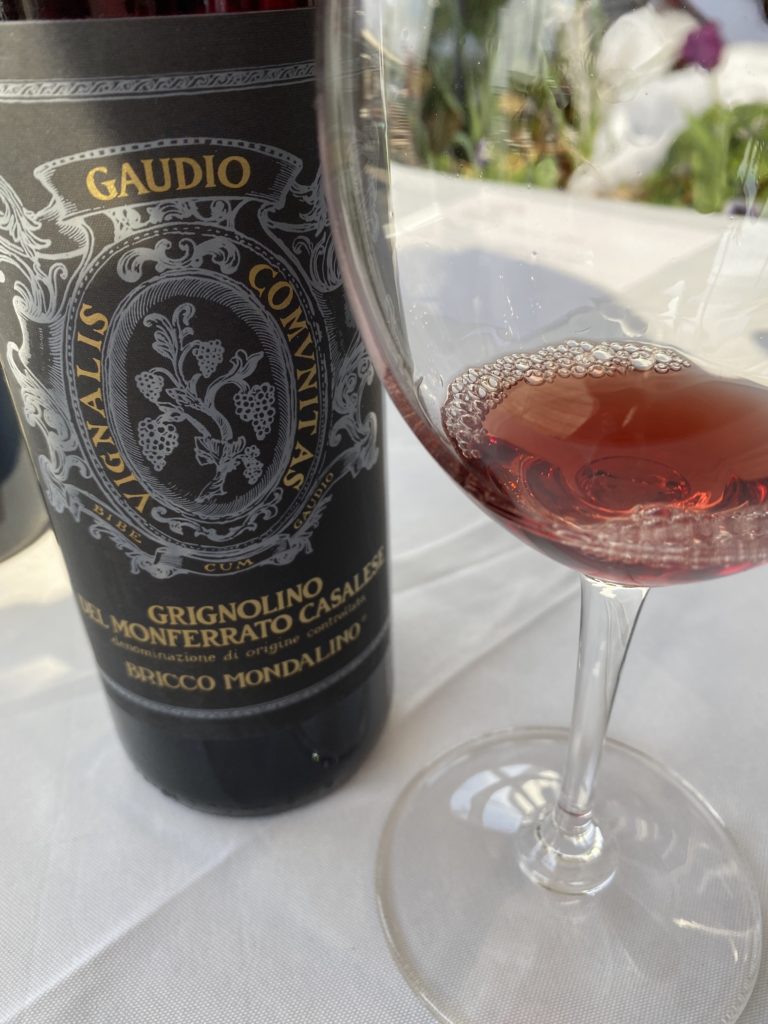
Grignolino Del Monferrato “Bricco Mondalino” DOC 2018

Gaudio Bricco Mondalino, a Piedmont Winery

In the early 1970s, Amilcare Gaudio, an oenologist, knew he wanted to start his own winery. In 1973 Amilcare started Gaudio Bricco Mondalino. The winery is located in the Vignale Monferrato municipality which is in the province of Alessandria.

The Gaudio family was already experienced in winemaking, as the family had been involved in winemaking for three centuries. The family had begun winemaking in the late 1700s. The winery was named for the highest point in Mondalino hill. Today the winery continues to be family owned and operated. Mauro, Amilcare’s son, operates the winery and is the winemaker. The winery currently produces 100,000 bottles.

Gaudio Bricco Mondalino has 44.5 acres of vineyards located on white calcareous soil.  The focus of the winery is on native varieties. The seas must once have covered the area as the soil is filled with marine deposits and fossilized seashells.

I tasted  two wines produced by Gaudio Bricco Mondalino. The Grignolino Del Monferrato “Bricco Mondalino” DOC 2018. This wine was produced with 100% Grignolino, a native grape variety.  The wine was produced in stainless steel and macerated for two weeks. The wine was aged in stainless steel for eight months. The wine with 13.5% alcohol was a translucent orange red color. The aroma included notes of earthiness. The mouthfeel was velvety smooth. The wine offered notes of cherries and raspberries. The back label noted that this wine is “ideal with a wide range of good from antipasti to second courses, even fish.” 

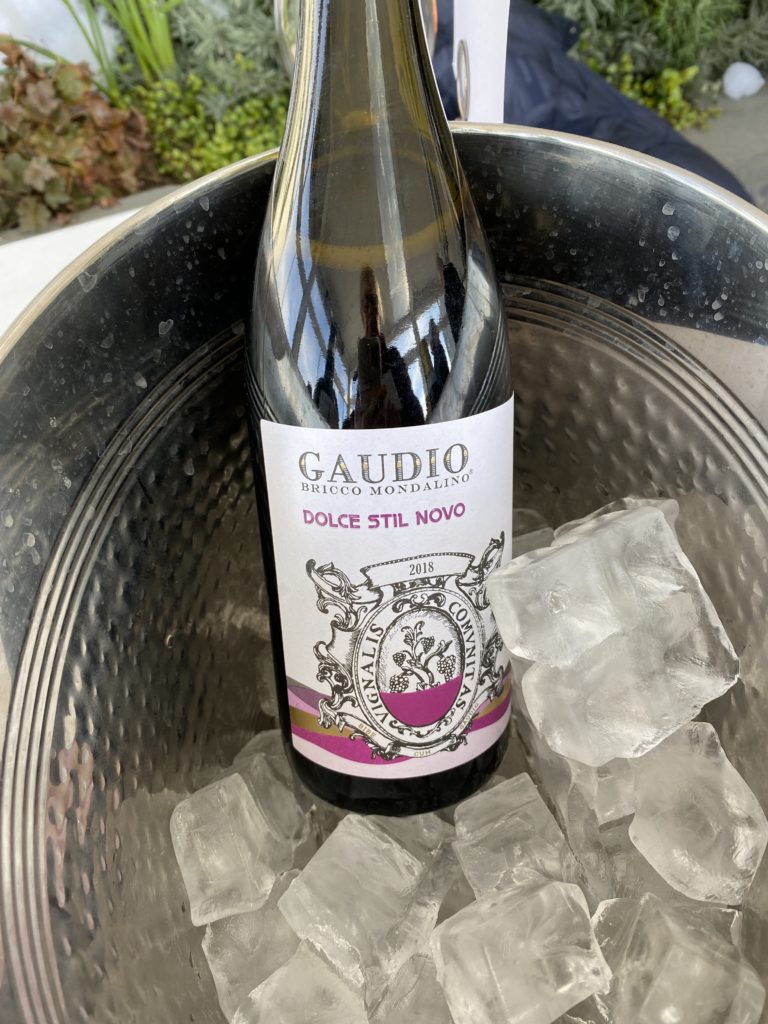
A “yummy’ refreshing effervescent wine from Gaudio Bricco Mondalino

The Malvasia di Casorzo “Dolce Stil Novo” DOC 2018 was in one word, “yummy.” This refreshing wine was produced with 100% Malvasia Rossa. This 7% alcohol wine was aromatic with fruit and very effervescent. The taste was fruity and included notes of red berry fruits and cherries. I would suggest this wine as a delightfully relaxing wine to be enjoyed as a 4P wine – perfect for the patio, porch, pool or picnic.

Wine tastings at the Gaudio Bricco Mondalino are available daily. Do check ahead before arriving at the winery.

Cheers!
Kathy

Ca’ Rome’ Wine Tasting Included Barbaresco and Barolo Side-by-side

Barbaresco and Barolo are two wines from the Piedmont region of Northern Italy. Both wines are crafted with Nebbiolo grapes. Barbaresco wines are crafted with Nebbiolo grapes from the towns of Barbaresco, Treiso, and Neive.  Barbaresco must age for 24 months with 12 months in oak. Barbaresco Reserva has four years of aging. The minimum alcohol for a Barbaresco is 12.0%. All Barolo wines must be crafted with 100% Nebbiolo grapes from one of the eleven areas that may produce a wine labeled as Barolo. The vineyards used to produce these Nebbiolo grapes can not exceed 3,300 vines per acre. Wines have requirements for aging. For Borolo, the wines must age at least 36 months including 18 months in wood. Barolo Riserva must age for 60 months with 18 months in wood. The minimum alcohol for a Barolo wine is 12.5%.

Ca’ Rome’ was founded in 1980 by Romano Marengo. Today the winery has 6.9 hectares (17 acres) of vineyards; three vineyards are located in Barbaresco while three vineyards are located in Barolo. The winery is located in the Barbaresco area. 

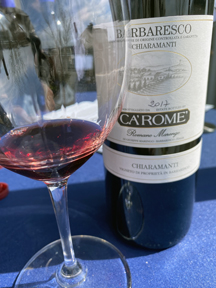
During the Washington DC tasting, I sampled two Barbarescos and two Barolos. The 2017 Barbaresco Chiaramanti DOCG was made with Nebbiolo grapes from a single vineyard planted in 1978. The soil in the vineyard is calcareous clay. The wine was temperature controlled fermented for 21 days. The wine spent 12 to 15 months in French oak barrels followed by 25 hl oak barrels for a total aging time of 24 months. It was then racked to a stainless steel tank for three months and spent an additional 10 months in bottle. The wine had a translucent red color with a dark pink hue. The aroma offered perfume notes with red berry fruits. The taste was reminiscent of red raspberries and baking spices. The wine had a silky mouthfeel, medium to full body and bold tannins. It had a fruity and spicy finish.

The 2017 Barbaresco Söri Rio Sordo DOCG was made from a single vineyard in Barbaresco. The vineyard’s soil is composed of clay, silt and sand. The wine fermentation lasted for three weeks, then it was aged in wood for 24 months. The wine had a translucent red color with a dark pink hue. The aroma was floral with red berry fruits. The taste was reminiscent of violets, roses, red raspberries and baking spices. The wine had a velvety mouthfeel with medium/full body and medium/bold tannins. The finish was fruity and spicy.

The 2016 Borolo Rapet Gold Label DOCG was crafted with Nebbiolo grapes from the Serralunga cru vineyard planted in 1972. The fermentation lasted three weeks. The wine was aged for 12 months in barriques followed by 12 months in Slavonian oak. Finally the wine spent 12 months in bottle. The wine had a translucent garnet color. Flowers and fruit were noted on the aroma. Violets, cherries and baking spices were noted on the taste. The wine had a velvety mouthfeel. It was full bodied with bold tannins. The finish was fruity and spicy.

The 2016 Barolo Cerretta DOCG was crafted with grapes from a single vineyard in the Serralunga cru. Like the other wines, the fermentation lasted for three weeks. This wine then spent twelve months in barriques followed by another twelve months in Slavonian oak. It then spent time in bottles. The wine had a translucent garnet color with flowers, red fruits and spices on the aroma. The taste included baking spices and red cherries. The wine had a velvety mouthfeel and was full bodied and had bold tannins. The finish was fruity and spicy.

The Ca’ Rome’ tasting offered a compare and contrast of the Barbaresco and Barolo from the same producer. I would pair the Barbaresco with a light lunch, while the Barolo would be excellent with a dinner.

Cheers,
Terry


info@winetrailtraveler.com            Sitemap                      Privacy Policy

Copyright: Terry and Kathy Sullivan 2006-2013