About     FAQ     Contact      Advertise With Us      Press   

Wines of Uruguay and Bodegas Carrau

Wines of Uruguay

Wines of Uruguay

I mentioned in an earlier blog about the Wines of Uruguay tasting in Washington, DC in May. The Uruguay wineries who are members of the Wines of Uruguay are looking forward to getting more of their wines exported to other countries including the United States.

Below are a few more facts about Uruguay’s wine industry:

  • Uruguay’s history of wine growing began  when the Spanish brought grapevines to the area in the 1700s.
  • Uruguay lays claim to being the world’s largest producer of Tannat
  • The Tannat variety does exceptionally well in the climate and soil
  • 220 days of sunny weather provides a long time period for the grapes to ripen.

According to a brochure from the tasting event, the top three countries Uruguay exports to include Brazil, United States and Canada. However exports are only at 5%.

“According to Yale and Columbia Universities’ 2005 Environmental Sustainability Index, only Finland and Norway rang higher than Uruguay for the purest vineyard environment in the world.”

Isn’t it time you started asking for a wine from Uruguay?

62215Bodegas CarrauBodegas Carrau

The family of Bodegas Carrau began making wine in 1752 in Catalonia, Spain. A document signed by a Notary Republic dates the ownership of the first family vineyard to April 2, 1752. In 1888 the winery in Catalonia received its first gold medal in an international exhibition in Barcelona.

The family established the vineyards in Uruguay in 1930. The winery continues to be a family winery owned by five brothers.

At the Uruguay wine tasting we tasted the Sauvignon Blanc sur lees 2013. The yellow color wine offered lemon grass. citrus and mineral notes. The taste was crisp with a medium-full body. Tannat 2007 was a dark ruby color. The wine had licorice, dark fruit notes and bold tannins. The aftertaste was creamy and fruity.

Wine Tourism at Bodegas Carrau

The winery offers three different types of visits for tourists. People  need reservations but can choose between: Visit with Tasting, Great Tasting Booking and Bodega Cerro Chapeu-Rivera. The first two options are available Monday thru Friday. The Bodega Cerro Chapeu-Rivera is available Friday, Saturday and Sunday.

To learn more about Bodegas Carrau  check out their comprehensive website.

Cheers!
Kathy

Fresh Fruit Salsa for Grilled Meats

This recipe is from the BC Winegrowers Association. If you are planning to grill for Father’s Day tomorrow, you can make it extra special by making this salsa below. You most likely will need to substitute table grapes from your local store for the Okanagan coronation grapes which should be available later in the summer.

According to the BC Winegrowers website, the Coronation grape is now a major table grape variety. It was developed by crossing Himrod and Patricia varieties both of which are native North American varieties.

Try this delicious salsa with grilled chicken, meat or fish. If you cut the fruit into 1/2 inch (1 cm) cubes, this salsa makes a tasty dessert.

Fresh Fruit Salsa

Ingredients

1 cup (250mL) Okanagan Coronation grapes, halved
1/2 cup (125 mL) chopped honeydew melon
1/2 cup (125 mL) chopped fresh pineapple
1/2 cup (125 mL) chopped Granny Smith apples
1/4 cup (50 mL) peach nectar
1 tbsp chopped mint
mint leaves for garnish

Directions

  1. In a bowl, mix all ingredients except mint leaves.
  2. Marinate for 1 hour.
  3. Serve over grilled chicken, meat or fish and garnish with mint leaves.

Makes 2 1/2 cups (625 mL)

Recipe provided by BC Winegrowers Association

Have you decided what wine to serve for Father’s Day?

Cheers!
Kathy

Father’s Day Ideas for 2015!

Celebrate Father's Day at Pearmund Cellars Winemaker's Dinner

Celebrate Father’s Day at Pearmund Cellars Winemaker’s Dinner

With Father’s Day almost here, have you decided what to do for your father this year? With no scientific data behind this but from opinions I’ve heard, please don’t plan on giving your dad a traditional tie.

I know for a fact that the last thing Terry would want would be a tie. Sure he wears a tie for necessary occasions i.e. weddings,  etc. But after spending his elementary through high school years wearing a dress shirt and tie – the last thing he would like is a tie. Of course all of this doesn’t mean he wouldn’t appreciate a phone call from each of his children on Father’s Day or anytime throughout the year. It’s nice to be remembered!


So if you are not going to get your father the dreaded tie, below are a few ideas to consider.

  • Time: If you have time this weekend and live near your dad, why not plan a dinner or lunch in his honor. If he enjoys a glass of wine, add a glass of wine to the meal.
  • Perhaps bake a cake for Dad. Check out some of the cake recipes on the Wine Trail Traveler recipe site that use fruit wines as an ingredient. They are super easy – using a box cake.
  • Visit a winery. Some wineries feature special events/dinners for Father’s Day. Check out the Father’s Day Winemaker’s Dinner at Pearmund Cellars in northern Virginia this weekend.
  • For Dads who like to cook, check out AprésVin a boutique company that produces varietal grape seed oils.
  • A quality, not necessarily expensive red or white wine
  • If he enjoys sparkling wines, consider a cava from Spain.
  • Stemware (look for inexpensive stemware that has a thin lip (rim)
  • A wine book
  • A travel book about visiting wineries.

Hope you and your father have a wonderful weekend this Father’s Day!

Cheers!

Kathy

Blind Wine Judging: Work not Pleasure

061515aThis past year, Kathy and I have had an opportunity to judge wines in blind tastings. Last July we judged over 40 wines from Santa Barbara County in California. Then in January of this year we judged ten Virginia sparkling wines. The largest judgement came this past week. We were judging close to 150 cavas for 50 Great Cavas. What these blind analyses taught me is that judging wines, cavas and sparkling wines is work. It is one thing to concentrate on the wine and try to give a fair score. There is quite another to taste a wine at a winery and write and enjoy it in the ambiance of the environment. One is pleasurable, the other is work.

When judging wine, one uses quantifiable data, usually numbers, rather than verbiage to describe what is in the glass. If the aroma is lacking, a low score is awarded for that criteria as opposed to an expatiation that may not read all that severe. The level of concentration is different when judging as opposed to tasting. When judging, I tried to be fair to the producer, not knowing who that producer was. However I had to judge the wine for what it was, not what I wanted it to be. In contrast, when writing about a wine, I have the freedom to describe the wine in words that fit. If a wine is faulted, I usually do not write about it. You do not have that freedom when judging. A faulted wine deserves a lower score.

Because of the intense concentration, after a judging sessions you are usually worn out. You need to rest and that often involves drinking some of the wines and not thinking about them. We did that with the cavas. It was so relaxing to just pour a glass and enjoy the sparkling wine rather than having to think about it. Would I ever judge again? Certainly, even though it is work, I enjoy doing the work. How did I compare to the other judges? Well there were times that my scores differed from the others. Most often, though, my scores were within one of the final score. I think that is rather outstanding. That median was constant for all three judgements.

Cheers,
Terry

A Visit to Requena to Taste Cava

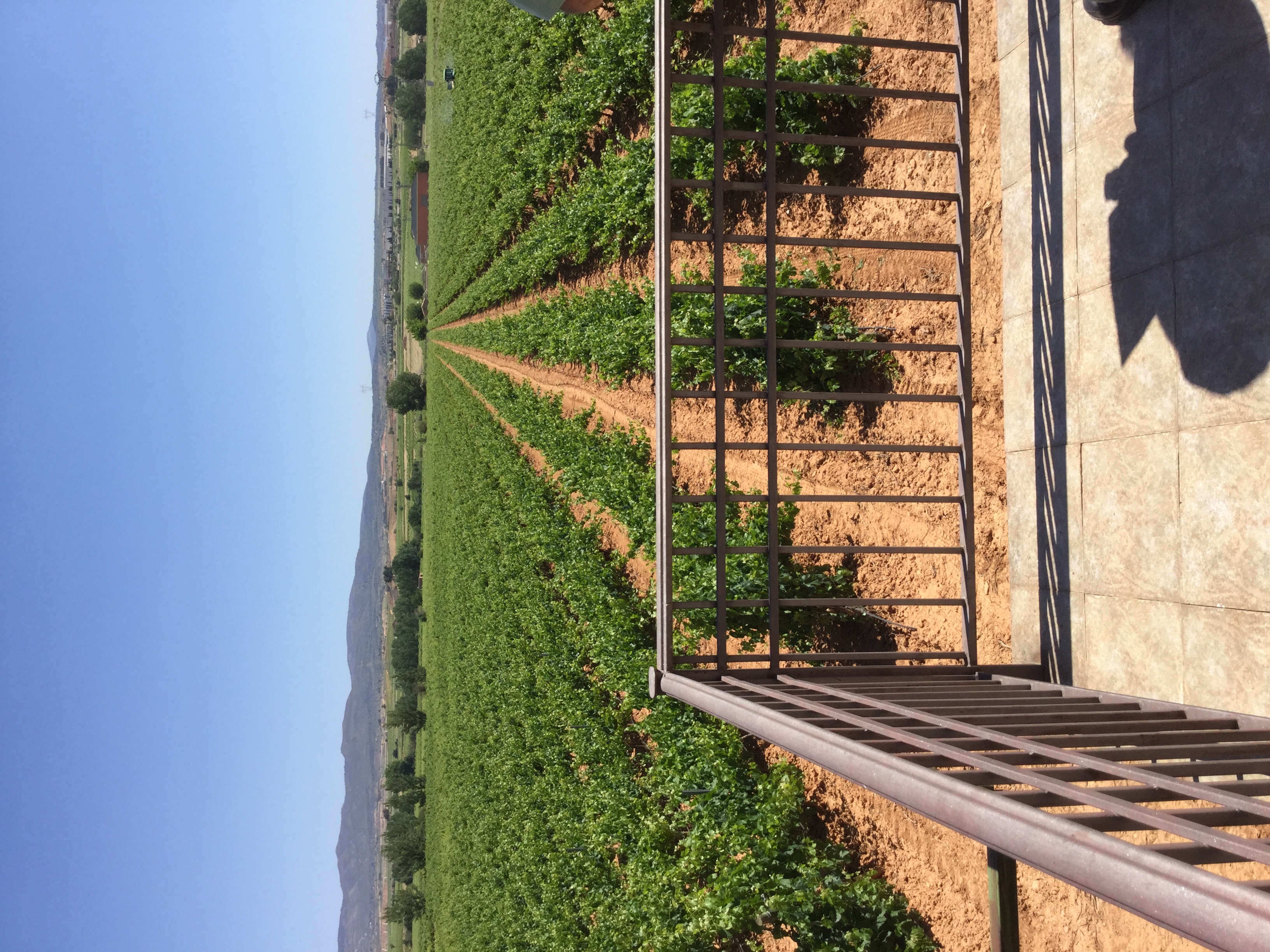
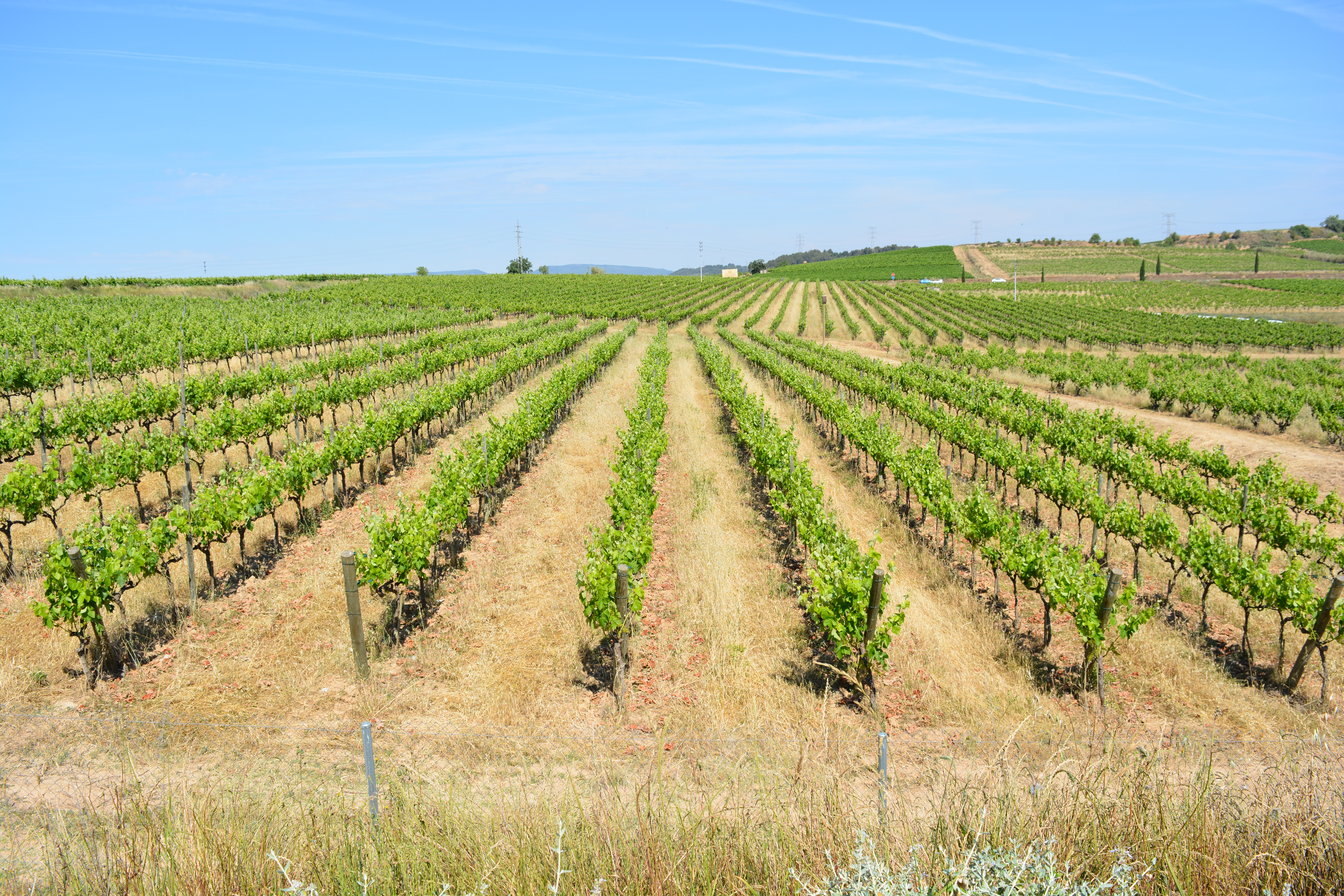
Vineyards at Vegalfaro in Requena

Vineyards at Vegalfaro in Requena

A quick trip to historic Requena which is located in the province of Valencia, Spain happened last weekend. We had the opportunity to visit three wineries in the area that produce cava. One of the wineries, Pago Tharsys, is an agritourism site including lodging. We spent two nights in the bucolic area. This week we continued visiting wineries in Catalonia and writing for the book 50 Great Cavas 2016.

Early last Saturday morning after a light breakfast breakfast at Pago Tharsys, we were

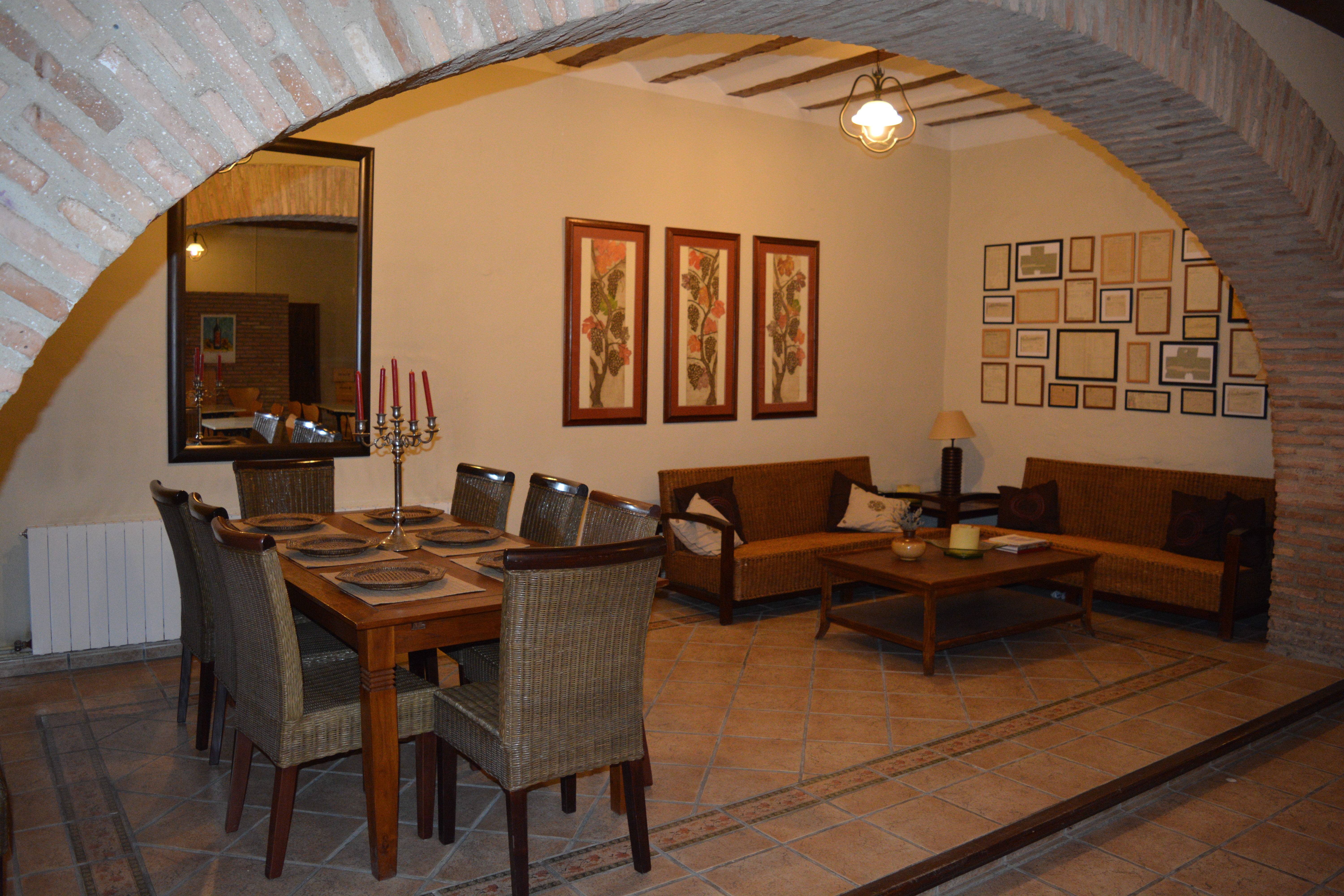
One of the tasting areas at

One of the tasting areas at Dominio de la Vega

whisked away to Dominio de la Vega. The winery has three vineyards with Macabeo, Chardonnay, Pinot Noir and Xerol.lo. The areas are located in the Mediterranean climate area although they are about 70 kilometers from the Mediterranean. The winery also has a museum with numerous artifacts including a board used for making flour from harvested wheat. The tasting room is ideal with sitting areas. The winery also has a small shop available.

Not too far away is Vegalfaro with 35 hectares with Merlot, Bobal, Cabernet Sauvignon, Chardonnay, and Macabeo. The winemaker is also experimenting with using amphorae for fermenting Bobal. Cavas are disgorged and capped by hand.

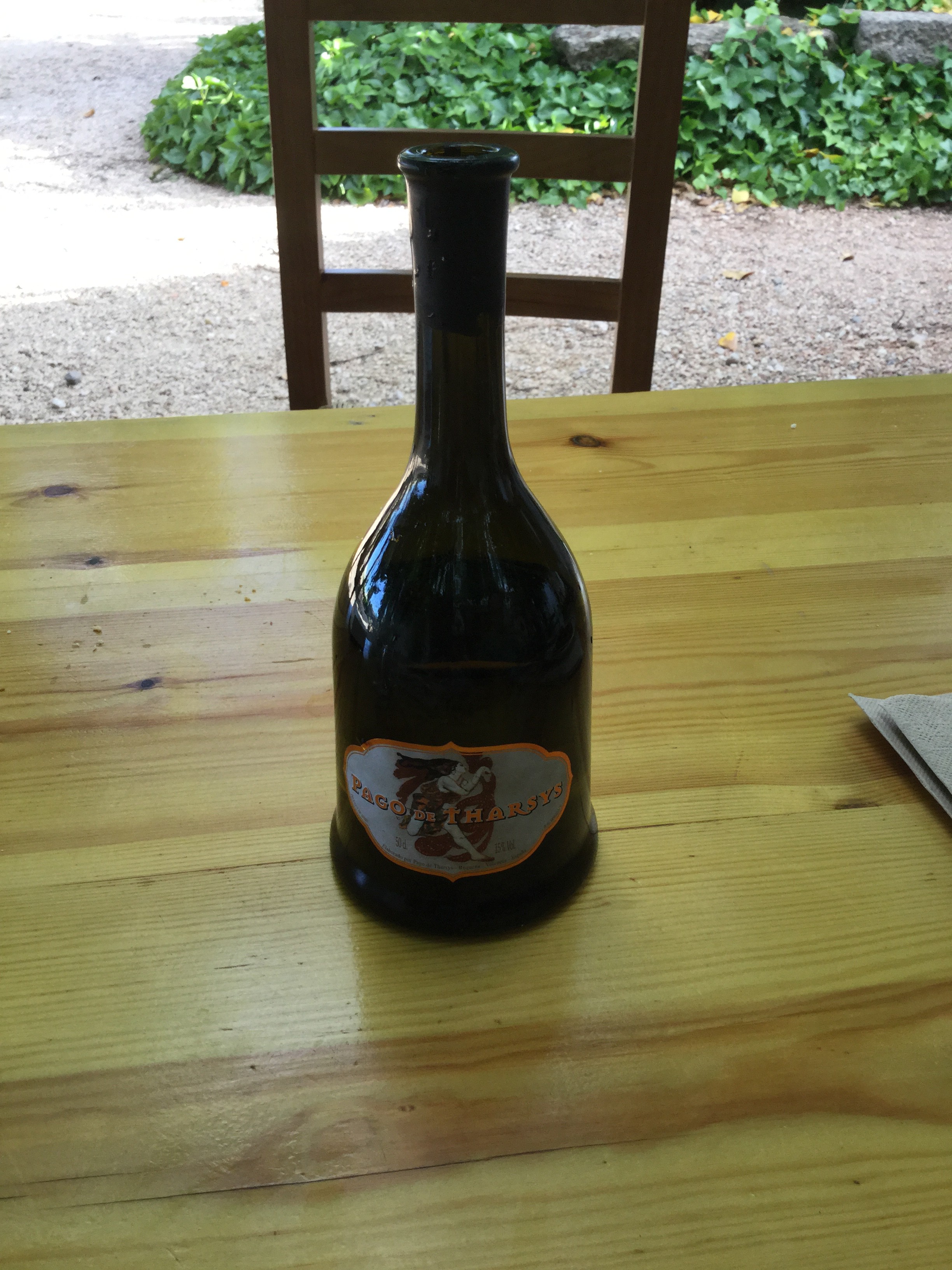
Pago

Pago Tharsys at Requena

Upon our return to our lodging site, we visited Pago Tharsys, tasted wines and met the owner and winemaker Vicente Garcia, who is congenial and enthusiastic.

All three of these wineries are outside of Catalonia but also create DO Cavas.

The 50 Great Cavas 2016 will be available this fall.

Although we are sad to be leaving Catalonia today, we will have many fond memories of these wonderful but busy three weeks.

Cheers!
Kathy

A Second Week in Penedès Region Tasting Cavas

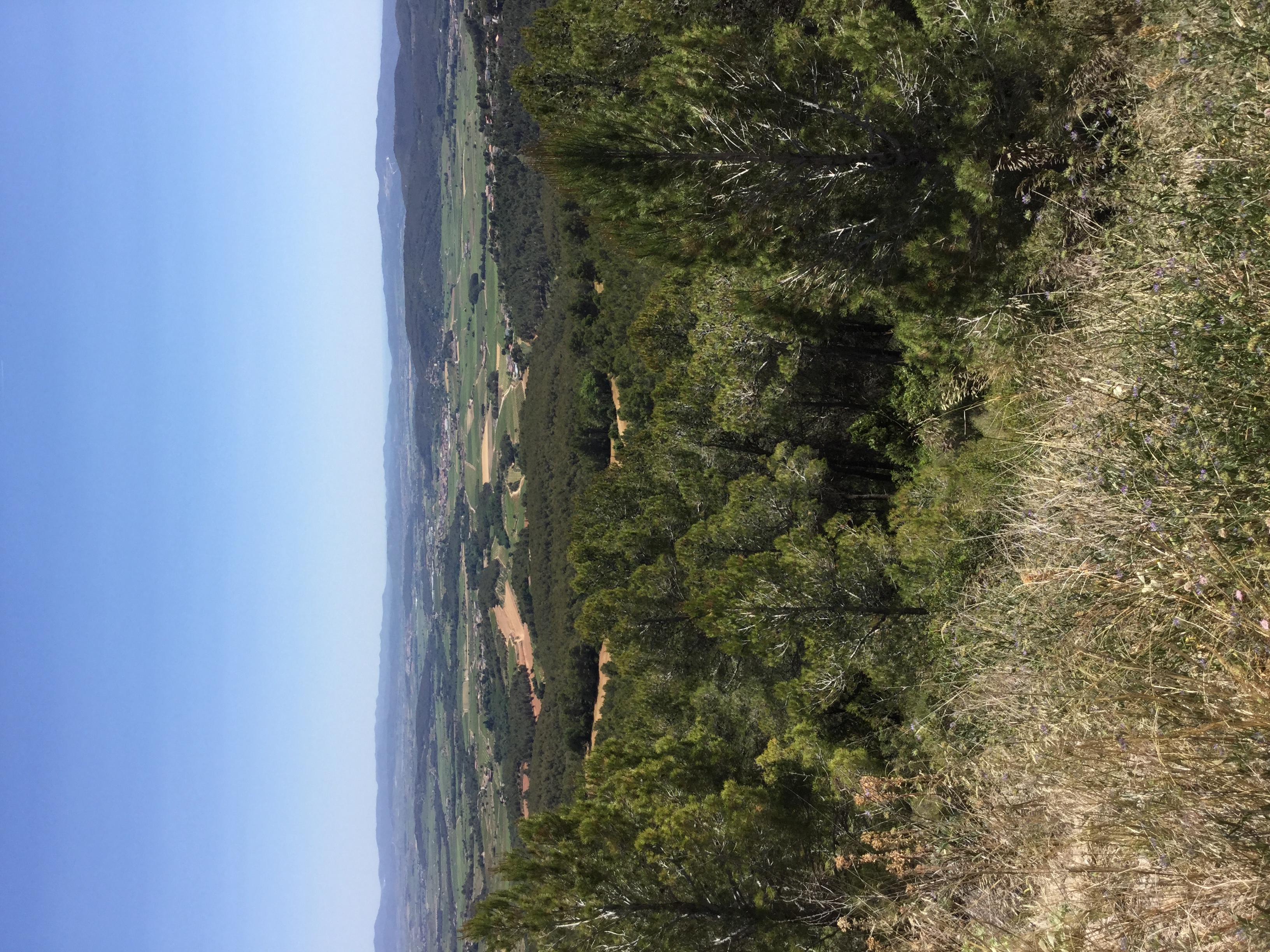
Views of Penedes region

Views of Penedes region

We spent a Second Week in Penedès region of Catalonia visiting cava producers, tasting cavas for the 50 Great Cavas book, and of course writing. The weather continues to be beautiful.

We continue tasting cavas that we find are terrific sparkling wines. Most of these are made with the indigenous grapes Macabeo, Parellada and Xerl.lo.

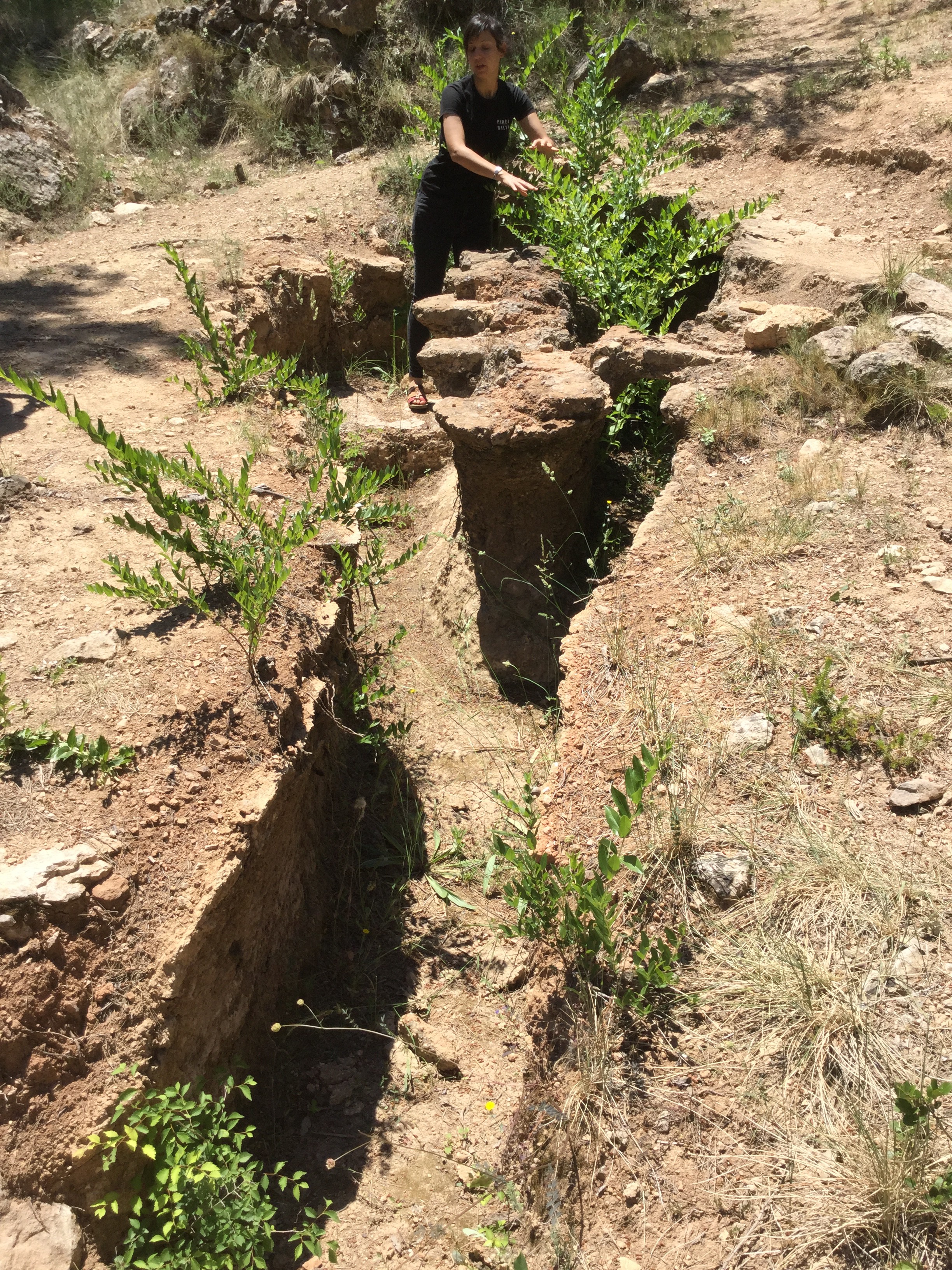
One of the most remarkable sites we saw this week was yesterday on a tour of the vineyards of Parés Baltà . Their vineyards of 170 hectares are scattered both low and with some in the highest areas of the region. All of the vineyards are organic/biodynamic. As we neared the top of the area the four wheel drive stopped and we hopped out to walk a few feet to what appeared to be a manmade hole in the ground. According to our enthusiastic guides

Iberian kiln

Iberian kiln

this hole was constructed during the Iberian age and was used as a kiln. The red clay soil in the area was ideal for creating clay objects.

After stopping to see the kiln our last stop was at an overlook of the valley. It looks like a bucolic setting – almost picture perfect!

If you have the opportunity be sure to visit the Catalonia region.

Watch for the book, 50 Great Cavas available Fall 2015!

Cheers!
Kathy

A Week in the Penedès Tasting Cavas!

Penedes region of Catalonia

Penedes region of Catalonia

60115IMG_0945We’ve been in Catalonia for a week now. Everyday has been a fine, sunny day (#fsd). As we co-author a book on the 50 Great Cavas, we are continuing to visit cava producers in the Penedès region.

The cava producers of Penedès are a passionate group of cava and wine makers seeking to produce the best quality of cavas as possible. Some only use the indigenous grapes of the region including Xarel.lo, Macabeo and Parellada. Some of the cava makers are producing hundreds of thousands of bottles of cava while others are small boutique bodegas. Last week we visited seven wineries (bodegas) and today we returned from visiting two more.

We will write up articles about each winery and separate articles will appear in the 50 Great Cavas book for 2015 and 2016. Additional articles with cava tasting notes will be added to the Wine Trail Traveler website.

I am continuing to be fascinated with the artwork we have seen at various wineries and plan to write more about the different pieces of art we have observed. Our latest example of artwork was at the last winery we visited today, Cava Bertha. At Cava Bertha paintings by the owner’s mother decorate walls of the tasting room. Copies are also available for purchase. The winery’s logo of a golden grape trunk was created by the same artist.

Cheers!
Kathy

Quote from a Winery

One of the best quotes I have heard recently was  “We are not certified organic because we don’t think we should have to pay to be good.”

Of course, this was in regard to a question to a winemaker about whether they were certified organic. Should a winery need to pay someone to be certified organic? There are two sides to this issue.

Many years ago, Terry and I  were brought up to work hard and to do the best you can do. Most work doesn’t pay a higher salary because you work hard – at least I haven’t come across many occupations. However, for me it is the satisfaction that comes with a job well done.

Winemakers who create wonderful wines work hard and I’m sure there is a wonderful, probably gleeful attitude, when wines receive praise.

So back to why be certified organic if you are already good? Should a winery be more trusted because they are certified organic or certified Biodynamic? Not necessarily. Is it just a marketing ploy?  I’m quite sure the people involved in certifying wineries take their work seriously.

However, there is a price to pay for a winery to be certified organic or Biodynamic. Visits must be made to each winery and records perused to determine what sprays are being used to control fungus and insects. These inspections cost in travel and time. Are they worth it? I don’t really know. Do you?

Perhaps I’m a bit naive on this point but I’d rather trust people until they perhaps prove themselves wrong. So as I continue to visit wineries, I will look for the good aspects of each winery.

Cheers!
Kathy

Disgorging by Hand Without Freezing the Plug

A few years ago Kathy and I were visiting wineries in Quebec, Canada. At the winery, Le Cep d’Argent we met one of the owners and winemaker François Scieur who is a 6th generation winemaker. His family still owns a Champagne House in Champagne. François demonstrated how to disgorge a bottle of sparkling wine by hand. It was fascinating to watch him take a bottle and a bottle cap opener, aim it into an old barrel that had a cut out, and remove the cap with just a bit of a fizz sound. If you blinked your eyes you missed the disgorging. I decided then that I would like to try disgorging a bottle by hand.

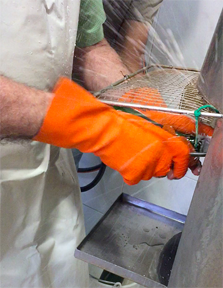
052715aThat dream came true while in the Penedés region of Catalonia, Spain. We were visiting Fèlix  Massana Ràfols and were asked if we wanted to disgorge a bottle by hand. I jumped at the opportunity. Unknown at that time, I was to disgorge the bottle without freezing the plug in the neck. This is more challenging. You don’t want the cava in the bottle fizzing out after you opened the cap. I have previously observed cava producers disgorging bottles by hand. They froze the plug in the neck of the bottles. They could take a bottle with a frozen plug and tilt it slightly upright and quickly open the cap. This time I had to keep the bottle pointed down until the last moment before removing the cap and then cover the bottle’s opening with my thumb. All had to be done quickly.

Fèlix demonstrated how to remove the cap. Very little of the cava escaped his bottle. Of course he had a lot of practice. Donning an apron and a pair of gloves, I held the bottle tilted downward. I held the bottle by its neck with my left hand ready to plug the opening with my thumb. With my right hand I took a special designed bottle opener and place it on the cap. Here’s the trick. You have to look at the bubble in the cava bottle. Since the neck of the bottle was pointed down, the bubble was at the bottom of the bottle which was pointed up. You quickly, or in my case slowly, begin to raise the neck of the bottle and watch the bubble. As soon as the leading edge of the bubble reaches the neck remove the cap and cover the bottle opening with your hand.

I did not work fast enough. But given a case or two of cava, I am sure I would improve. As soon as I removed the cap, a shower of cava spray hit me. I did lose about two inches more cava than Fèlix, who topped up my bottle with cava from the bottle he opened.

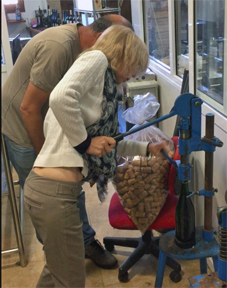
052715bIt was then Kathy’s turn to cork the bottle. Using a hand corker similar to ours at home, Kathy followed the steps and corked the bottle. She then put a wire cage (muselet) over the cork and went to another machine that had a wheel to tun by hand. Kathy needed to turn the wheel three times but became a bit carried away, because it was so easy to turn, and gave it an extra turn. Turning the wheel causes the little circle of wire to twist and tighten around the cork and under the ridge of the bottle. I then placed a capsule over the cork and used a double heater to heat and shrink the capsule. This was a two-step process and worked much better than a heater at a winery where I attached capsules to our wine. Fèlix then took the bottle and used a section of a bottling machine to affix a label to the bottle. He signed the bottle and gave it to Kathy and me. We will cherish and remember this bottle that we disgorged and corked.

We are going to visit several more cava producers over the next several weeks. If any of them want help disgorging by hand I’ll volunteer. I’d like to increase my speed and lose less cava.

Cheers,
Terry

My First Franciacorta

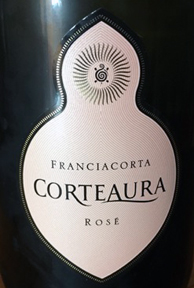
052615aJudging cavas and sparkling wines opens access to some sparkling wines that I have not tried. One of these is Franciacorta. This sparkling wine hails from the Brescia Province, Lombardy, Italy. Like cava and champagne, franciacorta is made in the traditional method where the second fermentation takes place in the same bottle as the wine is sold to consumers. There are different types of franciacorta based on the length of time the sparkling wine ages. The Franciacorta non?vintage is aged for 18 months whereas the Franciacorta Satèn sees 24 months of aging. The Franciacorta Rosé is aged for 30 months and the longest aging goes to the Franciacorta Riserva that has to age for 60 months. These are just minimum aging times. Compared to cava and champagne, Franciacorta sparkling wines are aged longer.

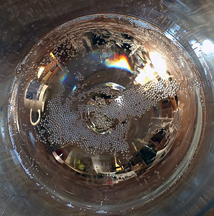
052615bWe tasted the Corteaura Rose. The wine was an even blend of Pinot Noir and Chardonnay. It was aged for 36 months. The sparkling wine is a reddish orange color with multiple columns of beads forming a mousse in the surface. Red berry fruit like strawberries and raspberries tickled the aroma and were confirmed on the taste. Also on the taste there were freshly baked bread nuances. This is a delightful sparkling wine. The alcohol was 12.5%. We drank the sparkling wine as an aperitif that wet our appetite for dinner.

As of last year, there were 109 producers of franciacorta. The vineyards used to make this sparkling wine are planted in 82% Chardonnay, 14% Pinot Noir and 4% Pinot Bianco. In 2014, there were over 15 million bottles produced and exports accounted for ten percent of the sales.

Cheers,
Terry


info@winetrailtraveler.com            Sitemap                      Privacy Policy

Copyright: Terry and Kathy Sullivan 2006-2013