About     FAQ     Contact      Advertise With Us      Press   

Qvevri Coming to United Nations, Geneva

A qvevri is a winemaking vessel made from clay.

A qvevri is a winemaking vessel made from clay.

To help celebrate the 70th anniversary of the United Nations, the country Georgia is sending a qvevri to the UN offices in Geneva, according to a report in Agenda.ge. The qvevri will become a permanent display.  The relationship between a qvevri and the United Nations dates to late 2013. Qvevri winemaking was added to the UNESCO list of Intangible Cultural Heritage. Qvevri winemaking is the only winemaking process on the UNESCO list. Yet, in the United States, qvevri wines are mostly unknown to the wine enthusiasts.

However knowing about this unknown wine is beginning to change as more education and qvevri wines are introduced to the American public. Of the three books that Kathy and I have written, Georgia, Sakartvelo: the Birthplace of Wine, is the best selling. Soon we will need to reorder books for our use in author talks where we discuss qvevri making and qvevri winemaking. Some of our author talks include wine tastings of Georgian appellation wines and qvevri wines. We had a private qvevri wine tasting for a few people while at the 2015 Wine Bloggers Conference in Corning, New York.

Qvevris made by Zaliko Bodjadze, one of the few artisan qvevri makers in the country Georgia.

Qvevris made by Zaliko Bodjadze, one of the few artisan qvevri makers in the country Georgia.

While in the Finger Lakes we visited several wineries. Some of the winemakers we interviewed show an interest and a curiosity about qvevri winemaking. Perhaps not enough interest to make a commercial qvevri wine in the United States, but enough interest to make a qvevri wine. The interest is there, the qvevris are not. A qvevri is a clay vessel that is shaped in somewhat like an egg. The vessel is fired and as it is cooling down the interior is coated with beeswax. If you get the temperatures correct, the beeswax is absorbed into the qvevri. We had to apply beeswax to the small qvevri we brought back to Maryland from Georgia. Once applied, when we cleaned the qvevri, water beaded up on the inside of the qvevri like water beads up on an automobile after it is waxed.

Qvevris are then buried in the ground, this helps maintain a constant cool temperature throughout the year. While in Georgia, we tasted qvevri wine from qvevris that were hundreds of years old. If taken care of, a buried qvevri will last for generations. Compared to oak barrels and stainless steel tanks, qvevris are the most cost effective winemaking vessels.

There is a qvevri maker in the United States. Billy Ray Mangham of Sleeping Dog Pottery, in San Marcos, Texas traveled to Georgia to learn qvevri making from the few remaining artisans in the country. He is selling handmade qvevri in three sizes ranging from 38 liters to 227 liters. His prices are competitive when compared to the much lower cost of qvevris in Georgia and the shipping cost to ship the qvevri over 6,000 miles. United States winemakers that would like to experiment with qvevri winemaking should contact Billy Ray through the Qvevri Project to place an order. Another option is to travel to Georgia and see how qvevris and qvevri wine is made. It is fascinating!

Amber wine made at Keuka Lake Vineyards, although not made in a qvevri, the wine was fermented on the skins.

Amber wine made at Keuka Lake Vineyards, although not made in a qvevri, the wine was fermented on the skins.

Another challenge in the United States is whether the American wine drinkers are ready for qvevri wines. In the case of the reds, they are. In the case of the amber wines, education will need to precede the wine tasting. Kathy and I are continuing to visit wineries in the United States that are producing a white wine with extended skin contact mostly until the end of fermentation, occasionally a week or two of maceration after that. That is enough time for the wines to extract color from the skins and extract tannins. Most American wine enthusiasts are not accustomed to a white wine with tannins. Red wine drinkers that enjoy tannins may enjoy these amber wines though.

While in the Finger Lakes we were treated to a wine that had undergone fermentation on the skins. Keuka Lake Vineyards in Hammondsport, New York crafts a Vignoles Dry Amber wine. The wine had a floral aroma and floral and dried fruit notes on the taste. The Vignoles wine had bold tannins. Generally speaking, we spit and dump wines while visiting several wineries per day. I drank this wine. Little by little, Americans are learning about qvevris and qvevri winemaking. So is the rest of the world. Visitors to the United Nations in Geneva, will pass by a qvevri and perhaps desire to taste a qvevri wine.

Cheers,
Terry

Plum Chicken Recipe with Plum Wine

Heading out to the grocery store this weekend? Pick up some chicken breasts and create this easy Plum Chicken recipe from Shade Mountain Winery and Vineyards.

We visited Shade Mountain Winery and Vineyards this month, where we discovered prolific vineyards, numerous wines and a friendly family-owned winery. When you have the opportunity visit the winery and be sure of a warm welcome.

Check out the Wine Trail Traveler article about our experience at the winery.

Plum Chicken

Ingredients

3 chicken breasts
1/3 c Shade  Mountain Plum Wine
1/4 c soy sauce
1/4 c salad oil or olive oil
2 T water
1 clove garlic
1 t ginger
1 T brown sugar
Sliced fresh mushrooms or 1 1/4 oz jar sliced mushrooms

Directions

  1. Combine wine with soy sauce, oil, water, garlic, ginger, mushrooms, and brown sugar.
  2. Arrange chicken breasts in baking dish. Pour wine mixture over top.
  3. Cover and bake at 375 about 1 1/2 hours until chicken is tender. Reduce cooking time if using chicken breast fillets.

*Good served over rice.

*Pork chops can be substituted for chicken breasts.

Recipe provided by Shade Mountain Winery and Vineyards in Pennsylvania.

Cheers,
Kathy
An Unusual Class at a Napa Winery: Ampelograhy

St. Supery

St. Supéry Estate Vineyards & Winery, Napa

I have always been intrigued with the grape leaves. While identifying grapevines seems easy, when it comes to identifying the grapevine variety by the leaf, it seems almost mysterious. However, there is a field of science, ampelography where students learn to identify grape varieties by the leaf. If you visit many vineyards, you will notice that the leaf shapes of grapevines do vary as well as the color of the leaves and the stems.

Perhaps the most well known ampelographer is Pierre Galet in France who devised a systematic approach to identifying grape vines. He wrote a book on the subject, “Ampélographie Pratique” published in the early 1950s.

A winery in Napa Valley is now offering a class for anyone interested in this area of grapevines. St. Supéry Estate Vineyards & Winery has set up an Ampelography Master Class. Participants in the class will learn to identify varieties by their leaves. After returning to the winery, the class will enjoy more wines paired with small bites.

The 45 to 60 minute class includes a brief tutorial before a visit to the Ampelography Vineyard. Only six participants are in each class. This mini ampelography class sounds perfect to get a hands-on feel for identifying grape varieties by the leaf.

The next time I visit Napa Valley, I hope to take part in the Ampelography class at St. Supery.

Read our article about our first to St. Supery here.

Cheers!
Kathy

The Spectrum of Dry Riesling

082515aOne of the wine discovery sessions at the 2015 Wine Bloggers Conference was titled The Spectrum of Dry Riesling. I attended this session, in part because I enjoy dry Rieslings and this session was featuring Rieslings from Alsace in France. Louise Jordan DWS talked about the region and conducted a tasting of three Rieslings from different producers.

During the presentation, I learned that Alsace produces 10% of the world’s Riesling, and Riesling accounts for 22% of vineyards in the region. This land in the northeast of France has 13 soil types, making it the most diverse range of soils in the country. The majority of grapes grown are white, Pinot Noir is the only red grape grown in Alsace accounting for 10% of vineyard plantings. Because of the Vosges Mountains separating Lorraine from Alsace, Alsace enjoys sunny days and dry weather. The weather is ideal for aromatic white grapes. Other white grape varieties planted in Alsace include Pinot Blanc, Gewürztraminer, Pinot Gris, Sylvaner and Muscat. The region has 53 AOCs and unlike many other French wine regions, producers often place the name of the grape on the label.

Grapes in Alsace were planted in the 900s and by the 1600s the region was as important as Bordeaux. Over the centuries, there was a tug-of-war between France and Germany for this region.

082515bWines

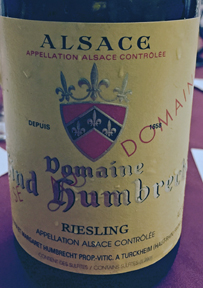
The presentation included tasting three wines from Alsace. the 2013 Zind-Humbrecht Riesling was a yellow color with 12.5% alcohol. The aroma reminded me of flowers, yellow stone fruit and a hint of petrol. The smooth taste had citrus and mineral notes. The finish was crisp and fruity.

The 2010 Schoenheitz Riesling Herrenreben, with 12% alcohol, was also a yellow color. There were floral and mineral notes on the wine’s aroma, while the taste offered citrus, some yellow stone fruit and mineral. The wine had a very crisp finish.

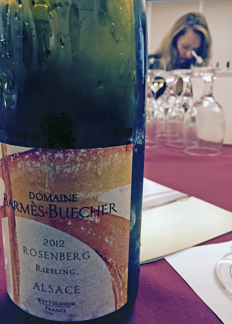
The 2012 Barmès-Buecher Rielsling Rosenberg had 13% alcohol and also a yellow color, although slightly darker than the first two wines. The aroma and taste was fruity, notable yellow stone fruit and had mineral notes. The crisp finish had mineral yielding to fruit.

The presentation made me want to travel again to France and visit wineries in Alsace.

Cheers,
Terry

Ribera Y Rueda Regions Focus: Millennials

Ribera Y Rueda Wine Regions of Spain

Ribera Y Rueda Wine Regions of Spain

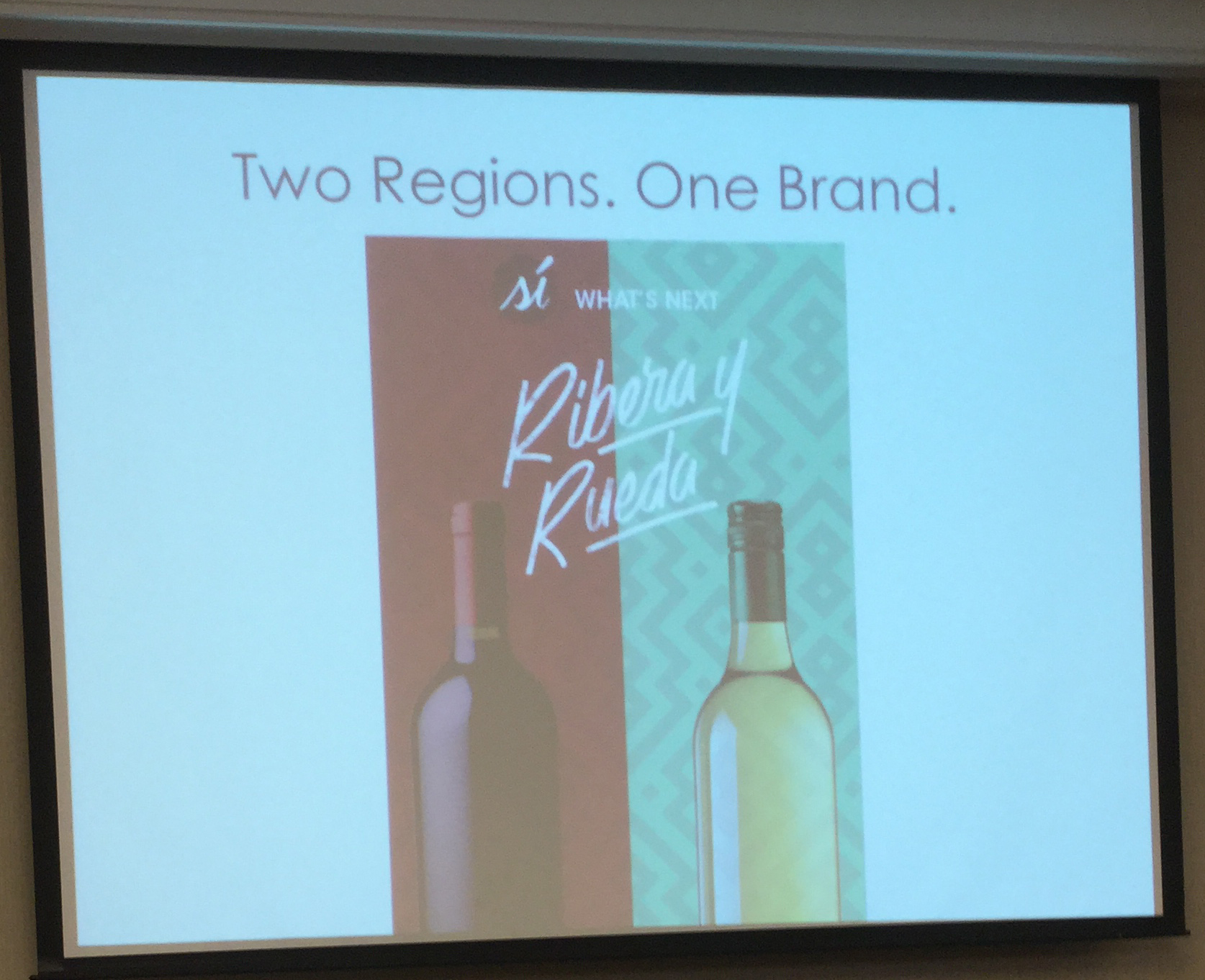
One of the featured Wine Discovery sessions at the Wine Bloggers Conference 2015 held in the Finger Lakes in August was Ribera Y Rueda. The presenters were enthusiastic and made the two regions of Spain north of Madrid enticing to explore. Ribera Y Rueda Wine Regions are working together creating one brand.

The mission of the Ribera del Duero  and Rueda  is to “Put the wines of Ribera del Duerro and Rueda on the top of the next gen wine drinkers’

  • radar screens
  • -gotta-taste-it/shopping lists
  • tables.”

The Ribera and Rueda wine regions want to prove that their Spanish wines speak to and for the next generation wine drinkers. The speakers noted that in Rueda the Verdejo grape variety is the region’s signature grape. In Ribera, the focus is on Tempranillo.

A leaflet provided at the presentation notes, “With ripping hot summers, frigid winters and a rocky, rigid terrain, Ribera del Duero is an absolute paradise for the Tempranillo grapes grown here. Rueda’s climate is simply perfect for the Verdejo grapes that flourish here: hot days and cool nights. Rueda wines are basically everything that most popular white wines aren’t these days: Full of flavor, interesting, unique and as game for oysters and sushi as they are pizza or cheese and crackers.”

Attendees learned the winemaking history of the two regions:

Rueda Emoji Tasting

Rueda Emoji Tasting

Rueda

  1. The region is the number one market leader in Spain
  2. Today Rueda has 63 wineries
  3. Verdejo is thought to have originated in Northern Africa.
  4. The first production dates back to the 11th century.
  5. Vineyards lost two-thirds of the vine to phylloxera.
  6. The D.O. established in 1980 focuses on Verdejo.

Ribera Del Duero 

  1. Winemaking has taken place in the Ribera Del Duero for thousands of years. Romans were making wine here 2000 years ago.
  2. Medieval monasteries developed winemaking traditions. This included storing wine in temperature controlled cellars and introducing Tempranillo.
  3. Today the area has 299 wineries.
  4. Tempranillo (Tinto Fino) is the major grape variety. This grape variety is 95% of the D.O.
  5. In 2012 Wine Enthusiast named the region Wine Region of the Year.

The presenters went on to talk about the terroir and the wines themselves using emojis to demonstrate the aromas and tastes of the wines.

Portia from

Bodegas Portia Crianza

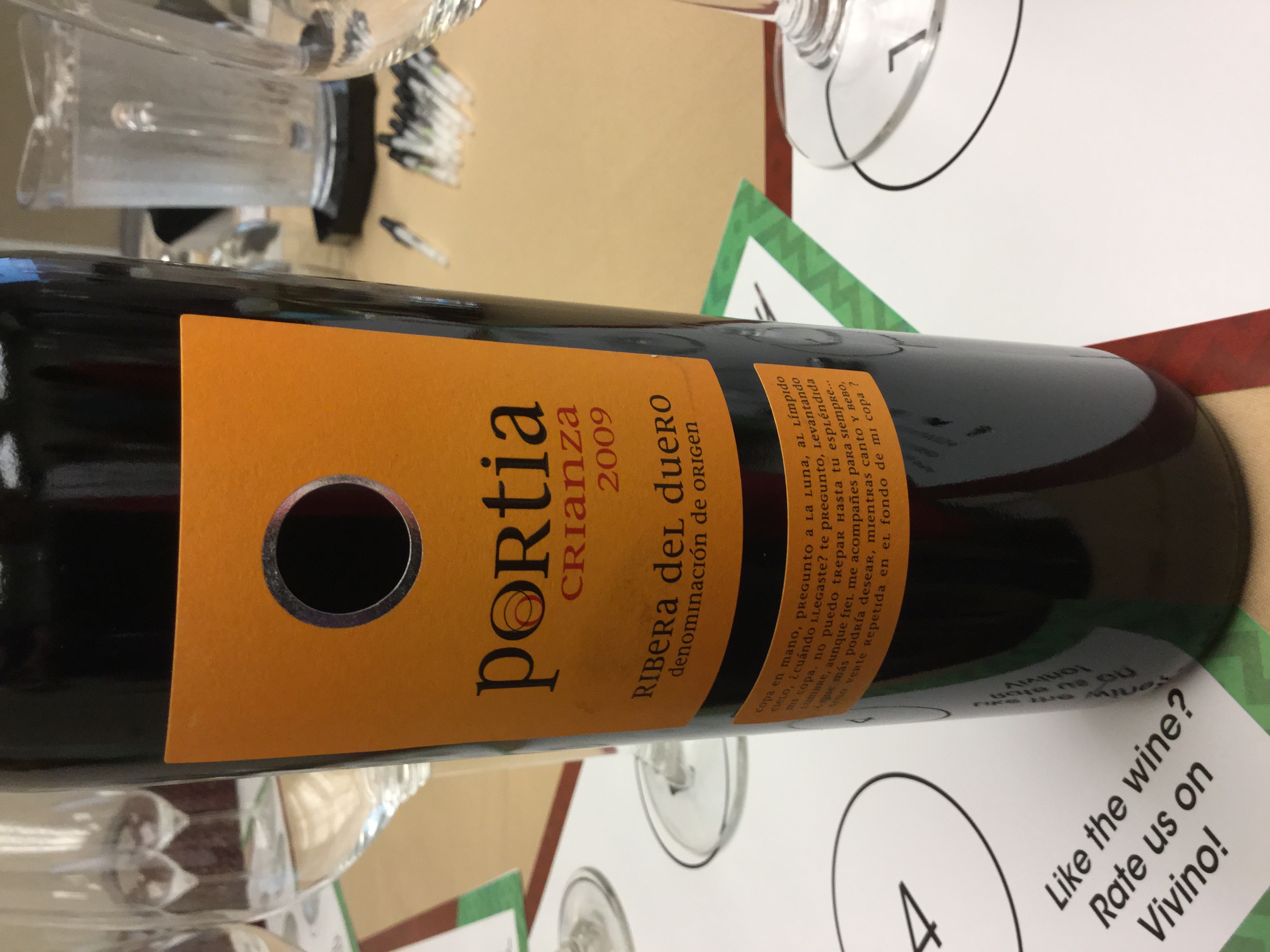
During the presentation we tasted wines from the region including from Bodegas Avellino Vegas and Bodegas Portia. The Bodegas Portia Crianza  was 100% Tinta Fina del Pais. It was aged in French and American oak.

The next time you enjoy a wine from the Ribera or Rueda regions tweet about it and use the hash tag #SiWhatsNext.

For more information about these two special Spanish wine regions visit the Ribera Y Rueda website.

Cheers!
Kathy

Fero Vineyards: First Friday Charity Events

DSC_0982Fero Vineyards and Winery is located in northern Pennsylvania. We stopped in at Fero’s tasting room and visited their vineyards on our way to the Wine Bloggers Conference in New York. In addition to producing traditional wines, Fero also hosts public and private events.

We discovered that Fero Vineyards and Winery hosts First Friday of the month events which support charities. Each month the winery supports a different charity. Plus, 10% of the sales between 6pm and 8pm benefits the charity.

Below is a list of the First Friday events coming up.

September 4: Friends of Shikellamy includes entertainment by Michael Lundy & Prairie Dogma.
Cover charge: $5

October 2: Breast Cancer Coalition

November 6: Lewisburg YMCA

December 4: Toys for Tots

The vineyards and tasting room are located at:

Fero Vineyards and Winery
965 JPM Rd
Lewisburg, PA 17837

In addition to the First Friday events, Fero Vineyards also participates in the Susquehanna Heartland Wine Trail events with 12 other wineries.

Tip: One of Fero Vineyards and Winery specialties is growing the Saperavi grape variety. When visiting be sure to ask about tasting

Saperavi wine in Pennsylvania

Saperavi wine in Pennsylvania

this unusual grape that is indigenous to the country Georgia.

Saperavi grape variety. When visiting be sure to ask about tasting this unusual grape that is indigenous to the country Georgia.

Watch for our article about visiting Fero Vineyards and Winery coming in the next couple of weeks.

Cheers!
Kathy

Gewürztraminer Coconut Curry Soup from Zugibe Vineyards

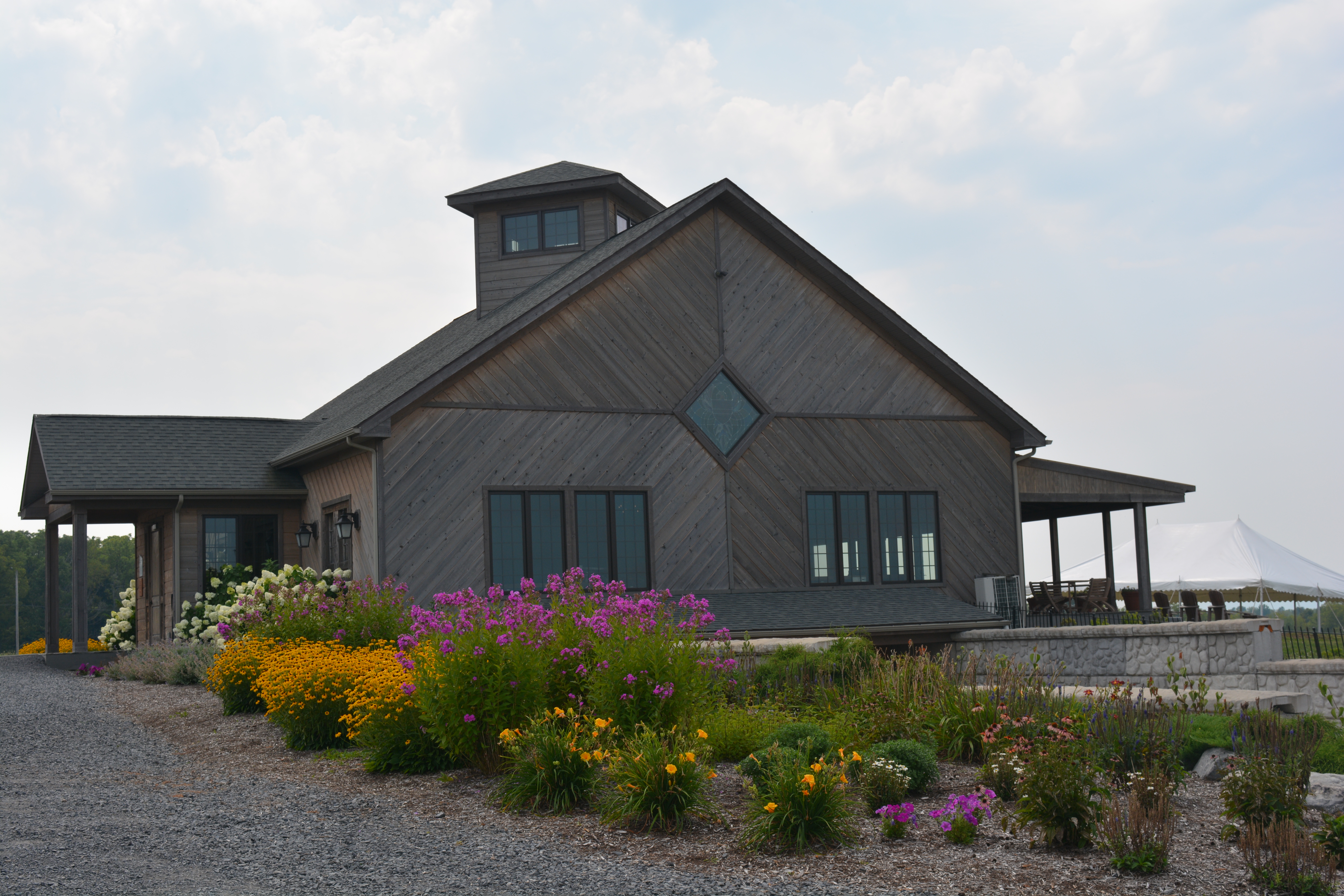
Zugibe Vineyards, Finger Lakes, NY

Zugibe Vineyards, Finger Lakes, NY

After the Wine Bloggers Conference in Corning, New York, we spent a few extra days visiting more wineries in the Finger Lakes’ region. In the earlier years of Wine Trail Traveler we had visited numerous wineries in the area; however, since then many new wineries have opened. Over the next few weeks we’ll be writing about each individual winery.

Below is a recipe from Zugibe Vineyards, a winery owned and operated by three brothers. The winery has just added a professional kitchen, so be sure to take a look at the selection of offerings when visiting the Zugibe tasting room. Watch for our article about the winery coming up soon!

Many thanks to the Brendan Zugibe for the recipe.

Cheers!
Kathy

Gewürztraminer Coconut Curry Soup

Makes 4 cups

This version of a Thai curry soup finishes with a perfectly balanced marriage of flavors, and not overly spicy like some can be (add more heat if you wish). We have adapted this recipe to pair seamlessly with the layers of flavors and spice that Gewurztraminer wines normally exhibit.

¼ C Cream of Coconut
1 Can (13.5 oz) Coconut Milk
2 C Chicken Stock (not broth)
½ C Gewürztraminer wine
1 tsp Salt
½ tsp Onion Powder
½ tsp Garlic Powder
½ tsp Ginger
¼ tsp Curry
1/8 tsp ground Thai chili pepper (double if you like spicy)
Juice of one lime
1 Bunch Cilantro Leaves (no stems), coarsely chopped

  1. Combine everything except the cilantro into a medium saucepan in the order of ingredients listed (the coconut cream is thick so this helps to wash it all into the soup).
  2. Bring soup to a boil, cover, then reduce to a simmer on medium-low heat. Simmer for 25-30 minutes and remove from heat.
  3. Stir in the cilantro, cover, and let sit for 5 minutes before serving.

Enjoy with a glass of chilled Gewurztraminer.

Recipe provided by Zugibe Vineyards.

Twenty-year Old Saperavi Vines in the Finger Lakes

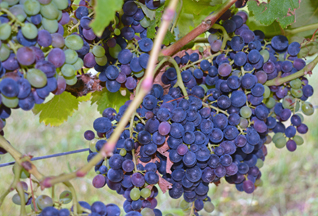
Twenty-year-old Saperavi grapes at Standing Stone Vineyards, Seneca Lake, New York

Twenty-year-old Saperavi grapes at Standing Stone Vineyards, Seneca Lake, New York

Our search for Georgian winemaking techniques and Georgian grape varieties continued during and after the Wine Bloggers Conference in Corning, New York. During the conference, there was a speed tasting of red and rosé wines from the Finger Lakes. One of the wineries pouring wines poured a Saperavi. Standing Stone Vineyards poured their 2013 Saperavi and it was well received at our table. The speed tasting consisted of a winemaker or winery staff pouring and talking about a wine. The bloggers were paying attention, tasting the wine and tweeting about it in five minutes. Then the producer went to the next table. We tasted, learned about and tweeted about ten wines in 50 minutes.

Kathy and I spent a few days visiting wineries along Seneca, Keuka and Cayuga Lakes after the conference. One of our winery stops was Standing Stone Vineyards along the east side of Seneca Lake where we trekked to the rows of twenty-year old Saperavi. Standing Stone Vineyards has left its mark on this Georgian grape planted in the United States. Prior to 2014, the name “Saperavi” could not be placed on a bottle label as the name of a wine made from that grape. The TTB did not recognize the name. In December 2013, Standing Stone Vineyards filed a petition and the name was approved by the government in January 2014. Now winemakers that make wine with Saperavi grapes may call it Saperavi. Prior to 2014, the wine would have a  proprietary name. For example McGregor Vineyard along Keuka Lake uses Saperavi in a blend it calls “Black Russian Red.”

While at Standing Stone Vineyards we tasted two wines made with Saperavi. The 2014 Saperavi had the typical black inky color and black fruits profile. The 2013 Saperavi Reserve was made with the 20 year-old Saperavi grapes. We located the two rows of these two decades old vines and noticed that veraison had already begun. Many of the grapes were already developing the dark-blueish purple to black color. The twenty-year old vines attest to the steadfastness of these vines in this region of New York.

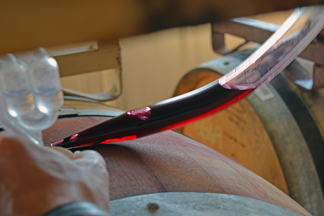
Tasting Saperavi from a barrel at Hazlitt 1852, Seneca Lake, New York

Tasting Saperavi from a barrel at Hazlitt 1852, Seneca Lake, New York

Later, while visiting a neighboring winery, we ran into Saperavi again. Hazlitt 1852 is the 2015 New York State Fair Winery of the Year. Winemaker, Michael Reidy took us to the barrel room where we tasted a Saperavi. Typical of Saperavi wines, it had the dark purple to black color. Also typical were the dark fruits. The wine in barrel will age for awhile before bottling, and wine consumers will enjoy another example of this wonderful Georgian grape that is finding a home in a few American vineyards.

Cheers,
Terry

The Fizzyology of Lambrusco

082015aOne of the sessions at the 2015 Wine Bloggers Conference was The Fizzyology of Lambrusco. Bill Whiting, Director of Wine Education for Banfi Vintners presented the wines and talked about the region of Italy. Lambrusco is a slightly sparkling red wine from the Emilia-Romagna area of Italy. Emilia-Romagna is sandwiched between Toscana to the south and Lombardia and Venito to the north. The Emilia-Romagna region of Italy is planted with 187,000 acres of grapes, and is lovingly referred to as Italy’s stomach because of the great food and easy drinking wines that match the food.

The tasting focused on two wineries, one in Riunite and Albinea Canali and four wines made from a grape variety in the Lambrusco family. Lambrusco was a wild vine that became domesticated. Lambrusco wines have the polyphenols that help break down fat, and make these wine pair so well with the cheeses and meats from this region. In the Lambrusco family of grapes, there are13 different varieties. We tasted several of these varieties in the four wines featured during the presentation.

082015bThe first two wines were from Albinea Canali. The FB – Methodo Ancestral, IGT Albinea Canali was made with Lambrusco Corbara grapes. The dark pink colored wine was slightly effervescent and offered red berry fruits on the aroma and taste. This easy-to-drink wine paired well with the hard cheese offered during the tasting. The FB refers to “fermentation in bottle” an indication of the traditional method of making a sparkling wine.

The second wine from Albinea Canali was the Ottocentro Nero, IGT, Albinea Canali. This wine was a blend of Lambrusco Salamino, Lambrusco Grasparossa and a non-Lambrusco variety Lancellotta. This inky colored wine reminded me of black raspberries with a touch of fizz. It was very dry and crisp.

Two wines were tasted from the producer Riunite. Lambrusco Ros?, Cantine Riunite was a blend of Lambrusco Salamino and Lambrusco Marani. The pink colored wine was perfect to pair with a rocking chair on a porch. It offered floral and red berry fruit notes. During the tasting, the wine was matched with soft cheeses from the Emilia-Romagna region.

The Riunite Lambrusco, Cantine Riunite was a blend of Lambrusco Maestri, Lambrusco Marani, lambrusco Monteericco, Lambrusco Salamino and Lancellotta. The dark ruby colored wine had black berries and black cherries on the aroma and taste. It was slightly bubbly and paired well with the cheeses.

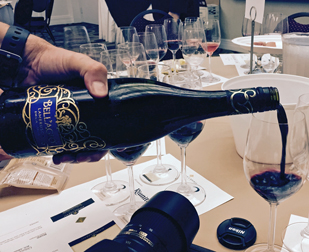
082015cBill did present one additional wine from Banfi. The Bell’Agio Lambrusco Emilia, IGT was blended with Lambrusco Grasparossa and Lambrusco Salamino. This black colored wine was slightly fizzy and was reminiscent of raspberries, both black and red. It matched well with the meats and cheeses.

The Lambrusco wines were slightly fizzy and had lower alcohols in the 6% to 9% range. They would make perfect afternoon wines to pair with fatty snacks when you need that afternoon “pick me up.”

Cheers,
Terry

The Flying Winemaker of Chile and Argentina

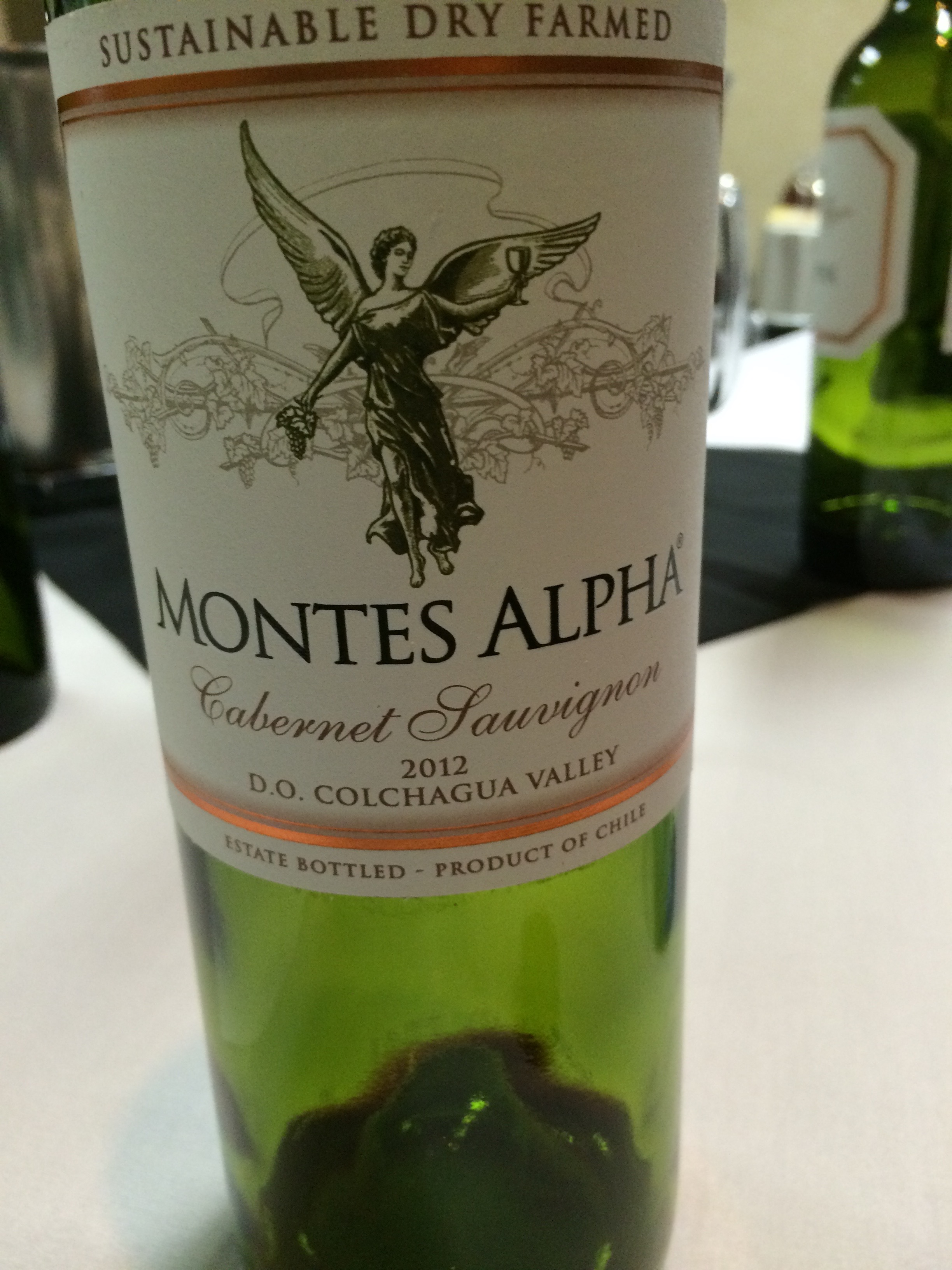
Montes wines from Chile

Montes wines from Chile

One of the Wine Discovery sessions at the Wine Bloggers Conference 2015 was “Wines Across the Andes” by Montes Wines.

The Montes winery owners are also known as flying winemakers. In this enthusiastic presentation by Aurelio Montes del Camp,  winery owner and winemaker, Montes takes a close look at the original Montes winery and vineyards in Chile and the later established Kaiken winery in Argentina.

The Montes family and partners are passionate about wine. Aurelio noted that when you make wine it is teamwork. The Montes winery was established in the central region of Chile in 1988. Describing Chile as long and narrow, Montes said that it is the width of the country where the temperature varies between cold and warm. He emphasized that the region has no phylloxera, no downy mildew, no Pierce’s disease and little summer rain. It normally rains in the winter. Due to its close location between the Andes and the ocean, this region is a virtual paradise. Aurelio said that they were the first winery to plant on the hillsides. The vineyards are farmed with sustainable methods.

At the winery, Aurelio has an unusual aspect to his barrel room. The barrel room is filled with the sound of Gregorian chants.

Montes at Work in the Community

Montes winery works with the community. They support the Millahue de Apalta School where the children of workers can study. The winery helps with language, communications and math. The winery also helps students obtain high school diplomas with the Study Completion program.

The Montes family enjoys flying. Flying over the Andes Mountains in 2001 Aurelio saw land that would be ideal for establishing vineyards. Eventually the Argentina winery Kaiken was established by the Montes in 2002.

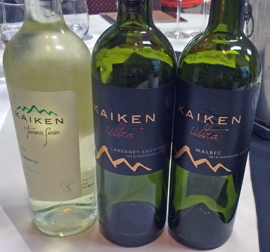
Kaiden wine, Argentina

Kaiken wine, Argentina

Kaiken Winery in Argentina

Kaiken winery in Argentina is on the other side of the Andes from Montes winery. Montes noted that from the Andes the land extends basically flat for about 1000 miles.  The eastern area is too warm for good wine. The best wines come from central region and Uco Valley. The vineyards included a vineyard that is 105 years old. The most extreme vineyard is mountainous with huge boulders. In the winery, the barrel room has a Feng Shui Philosophy.

Have you tried wines by Montes or Kaiken yet? Montes wines and Kaiken wines should be on your radar when shopping for quality wines.

Cheers!
Kathy


info@winetrailtraveler.com            Sitemap                      Privacy Policy

Copyright: Terry and Kathy Sullivan 2006-2013